A Day Trip to the Douro Valley & Port Wine Tasting from Porto
Port wine is inseparable from Porto — but its story begins an hour inland, along the steep terraced hills of the Douro Valley. And so does the first decision you’ll face when planning this part of your Portugal trip: do you head out for a day, or do you stay a while?
Both are worthwhile. It just depends on what kind of traveller you are and how much time you have.
A day trip from Porto gives you the highlights — a quinta or two, a river cruise, a long lunch, and enough Port to understand what all the fuss is about — before returning to the city in the early evening. It’s a full day, well spent, and exactly what we did. An overnight stay (or two) in the valley gives you something different entirely: the light changing over the river at dusk, a slower pace, tastings without a minivan schedule, and the particular quiet of waking up somewhere that isn’t a city.
We only had time for the day trip — and it was one of the best days of the Portugal trip. But the Douro Valley is firmly on the list for a longer stay next time. Once you’ve seen those terraced hills and sat by that river, you’ll understand why.
Here’s how our day unfolded — and everything you need to plan yours, whichever version you choose.
Port Wine & Douro Valley Summary
Best for: Wine lovers, scenic landscapes, slow travel days
Ideal time needed: Half-day in Porto OR 1–2 days in the Douro Valley
Vibe: Historic, relaxed, quietly spectacular
Don’t miss: Port wine cellars in Vila Nova de Gaia, Douro Valley viewpoints, a river cruise
Good to know: You don’t need to be a wine expert to enjoy Port—tastings are approachable and beginner-friendly
Worth it if: You want a deeper understanding of Porto beyond city streets and tiled façades
Jump to these sections:
Which Tour Should I Book?
We booked this tour through GetYourGuide and had a great experience — small group, knowledgeable guide, well-paced itinerary. Note that tour details and stops may have evolved since our 2020 visit, so confirm the current inclusions when booking.
Why the Douro Valley — and Why Port Starts Here, Not in Porto
Here’s the thing most people don’t know: Port wine isn’t actually from Porto. It’s shipped from Porto — or more precisely, from Vila Nova de Gaia, the town across the river where the great Port houses have their cellars. But the wine itself comes from somewhere else entirely.
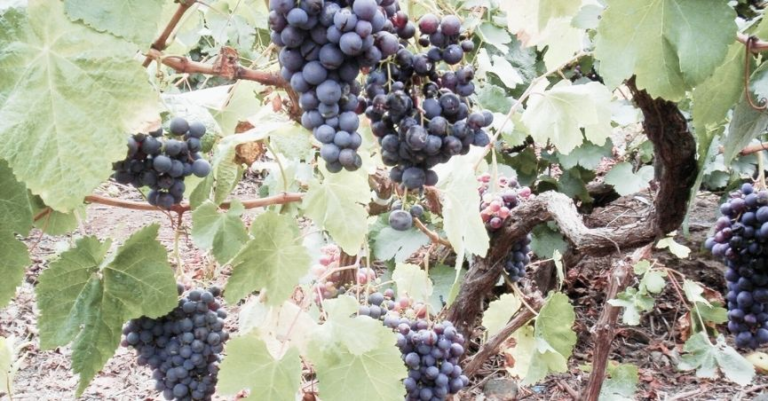
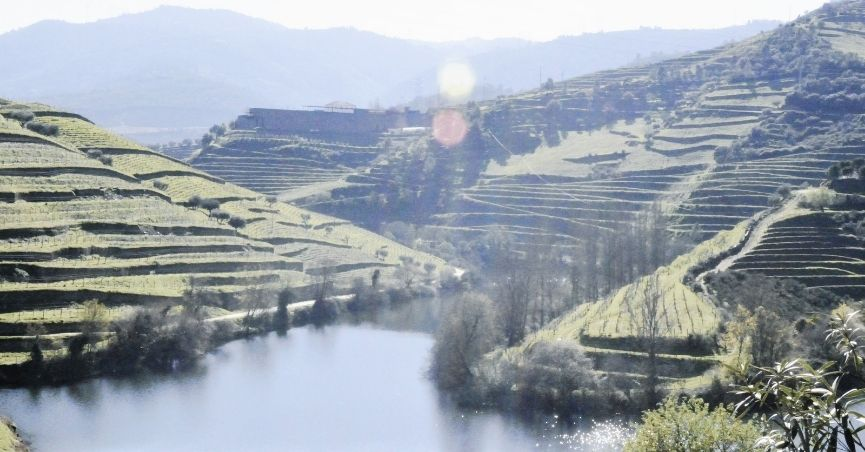
In the Douro Valley, the grapes grow on steep, terraced slopes rising from the Douro River — some of the most dramatic vineyard landscapes in the world. A region that has been producing wine for over 2,000 years. The valley is divided into three sub-regions, each with its own character:
- Baixo Corgo (lower): cooler, wetter, better suited to white grapes
- Cima Corgo (middle): warmer and drier, producing some of the finest Port grapes
- Douro Superior (upper): the hottest and driest zone, especially good for robust red varieties
The story of how Port came to be is equal parts trade, politics, and accidental genius. In the late 1600s, England and France were frequently at war, which disrupted the English supply of French wine. British merchants turned to Portugal as an alternative, but the problem was that regular wine didn’t survive the long sea voyage north. The solution was to add grape brandy during fermentation, halting the process early and preserving residual sweetness. The result was stronger, sweeter, and far more stable. Port wine was born.
Until 1986, the rules were strict: grapes had to be grown in the Douro, transported downriver by traditional wooden boats called rabelos, and then stored and bottled in Gaia. The opening of free trade changed that, allowing smaller estates to bottle and sell directly, which is part of why the quinta experience now exists. The Port Wine Institute (IVDP) still regulates everything: which grapes, which vineyards, which ageing methods, which labels. It’s one of the most tightly controlled wine regions in the world, keeping quality consistent and the name meaningful.
Tip: if you see “Quinta” in the name of a Port, that means it comes from a single named estate rather than a blend from multiple sources — generally a mark of particular character.
The Day Trip
The Drive
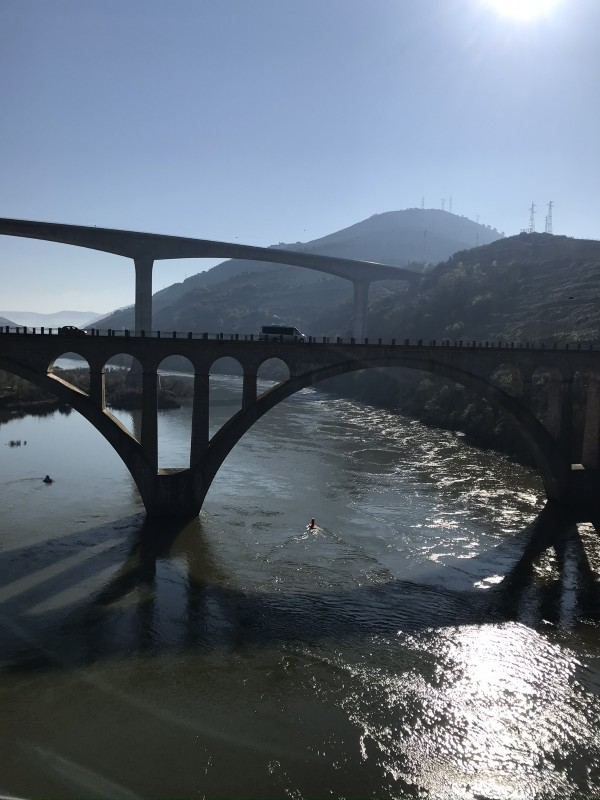
We were collected from Porto by a minivan in the morning, a small group. The drive to the valley takes about an hour. The first stop was a coffee and bathroom break near Régua, at a vantage point overlooking three bridges spanning the Douro: the Ponte Metálica da Régua, the Ponte Rodoviária da Régua, and the Ponte Miguel Torga. We walked across the Metálica for a better view of all three — a good leg stretch and a proper introduction to the scale of the river.
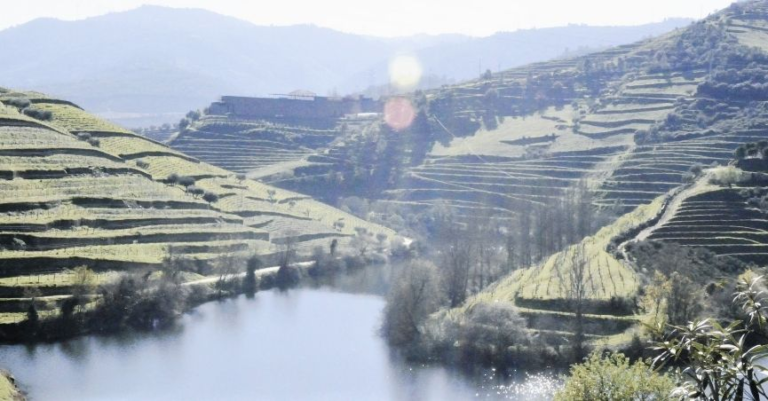
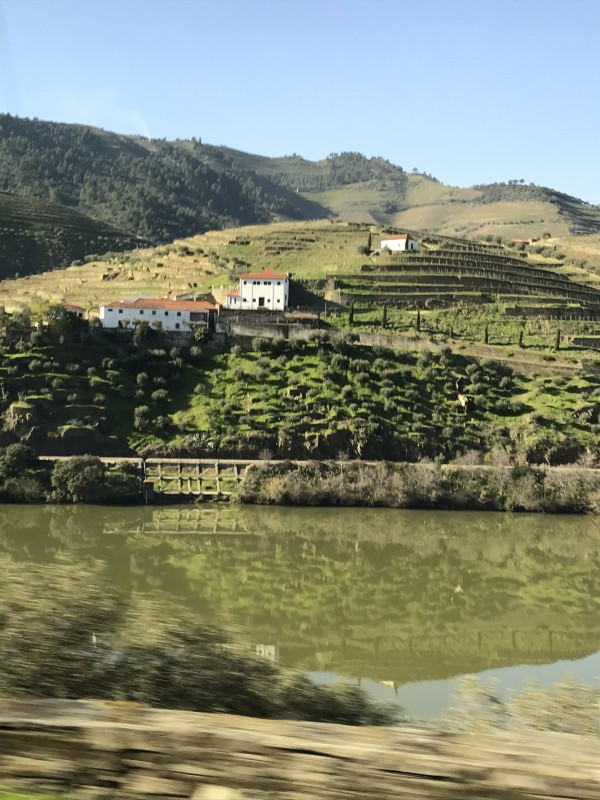
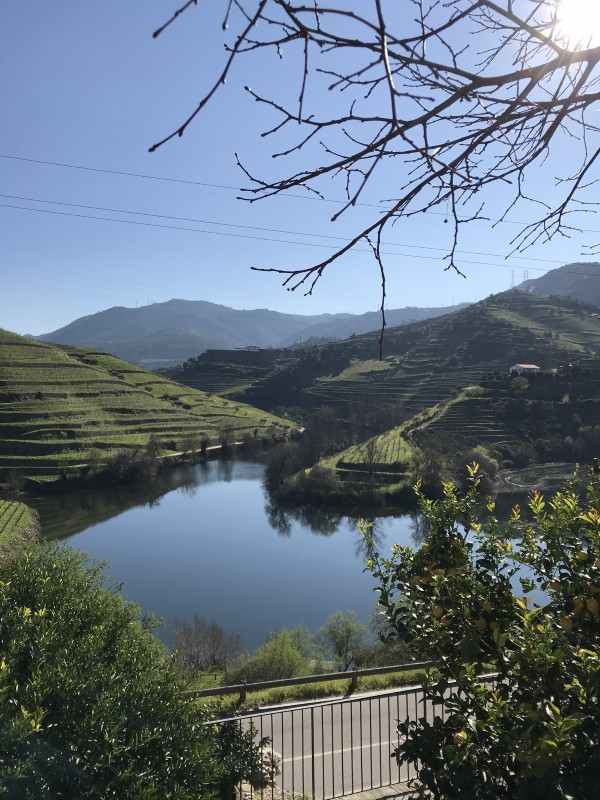
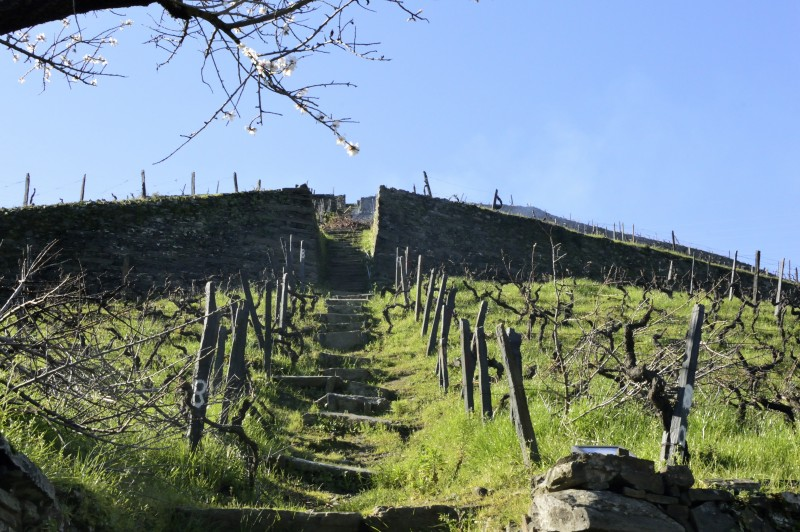
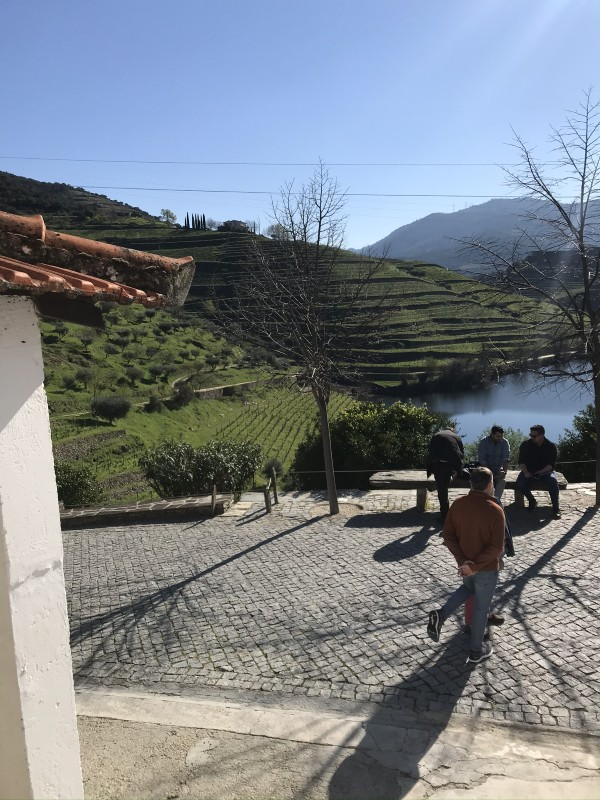
From Régua, the road follows the river into the valley proper, and this is when the landscape takes over. The hills on both sides rise steeply from the water, almost entirely terraced. Stone walls built by hand, tier upon tier, climbing as far as you can see. In late February, the vines had no leaves yet, just gnarled woody stems emerging from pale soil, which gave the terraces a spare, graphic quality: all structure, no softness.
It was still cool in the late morning, and as the sun warmed the river and the hillsides, mist rose in slow columns from the water — drifting across the terraces, catching the light, making the whole valley feel like something from a dream.
Tip: The scenery is genuinely extraordinary from the road, but sitting on the river-facing side of the minivan gives you the best views during the drive.
First Stop: Quinta de Marrocos
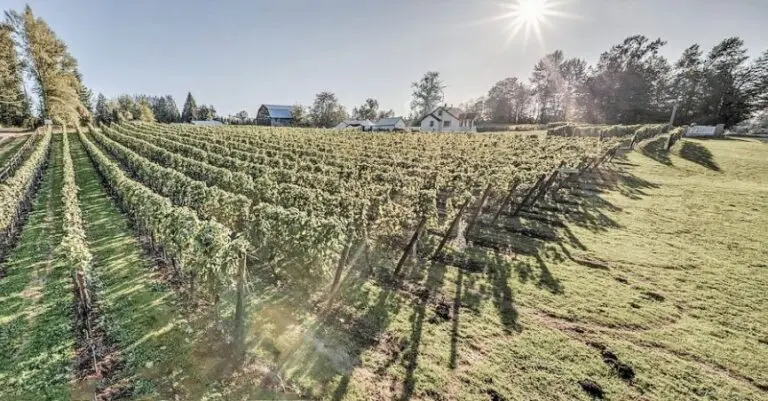
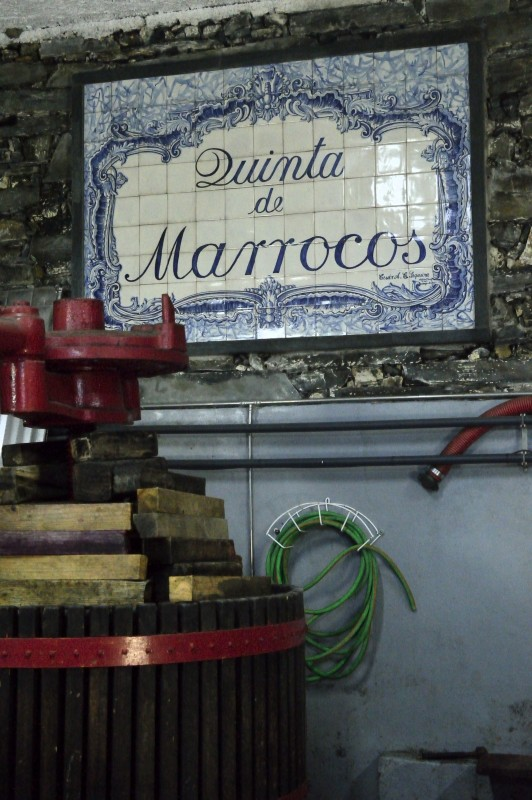
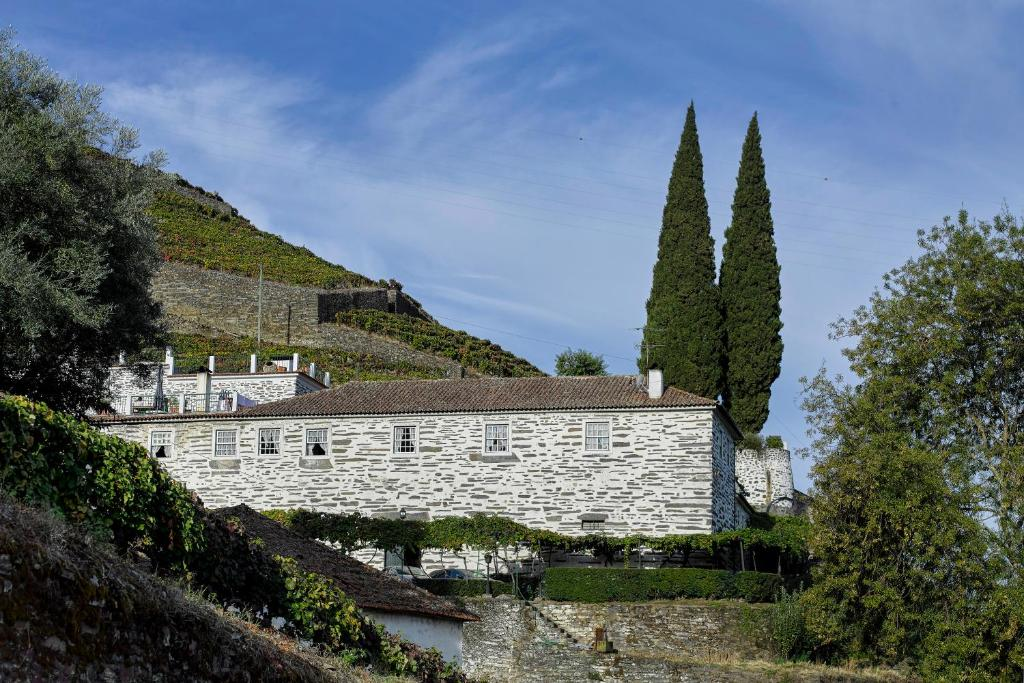
Our first quinta was Quinta de Marrocos — a smaller, family-owned estate that has been producing Port for generations. This is not one of the big commercial names; it’s the kind of place where the family is still present, still involved, and where the history is worn into the buildings rather than displayed in a visitor centre.
Since it was late February, the vines were still dormant — no leaves, no fruit, just the architectural bones of the vineyard. The terraces here climb a hillside in overlapping tiers, and walking among them even in their winter state gives you a sense of the sheer physical work involved in managing them. Every task on a slope this steep — pruning, harvesting, maintaining the stone walls — is done by hand. There are no machines that can work at this angle.
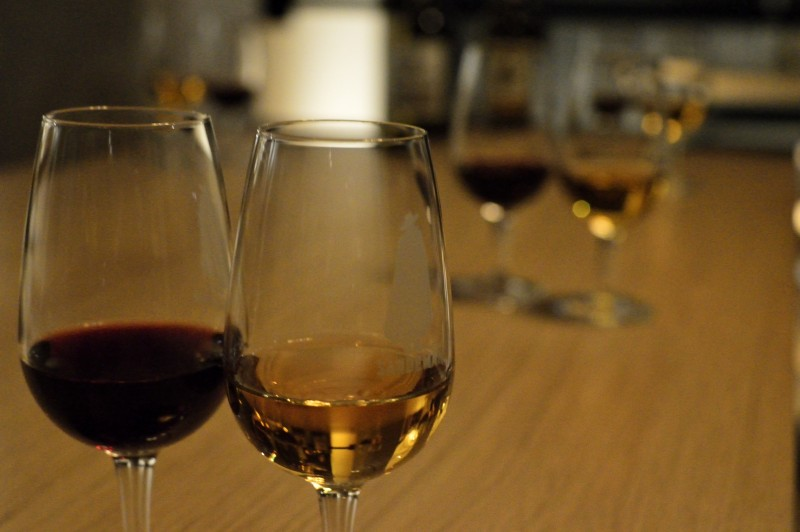
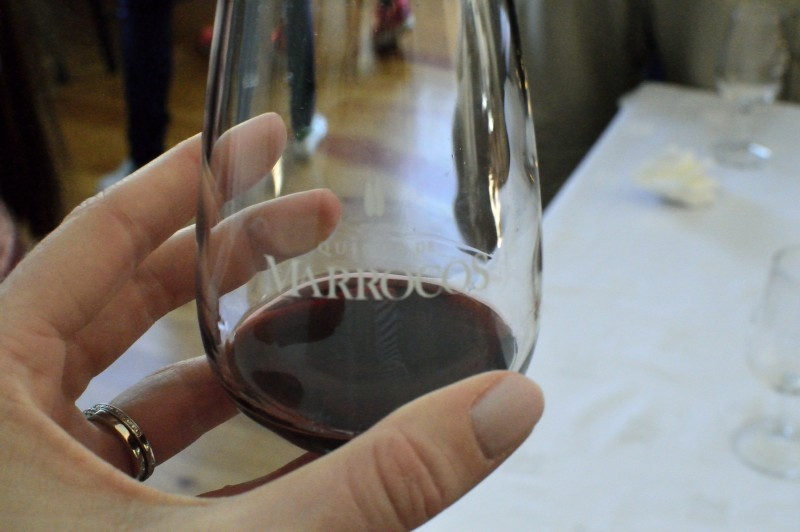
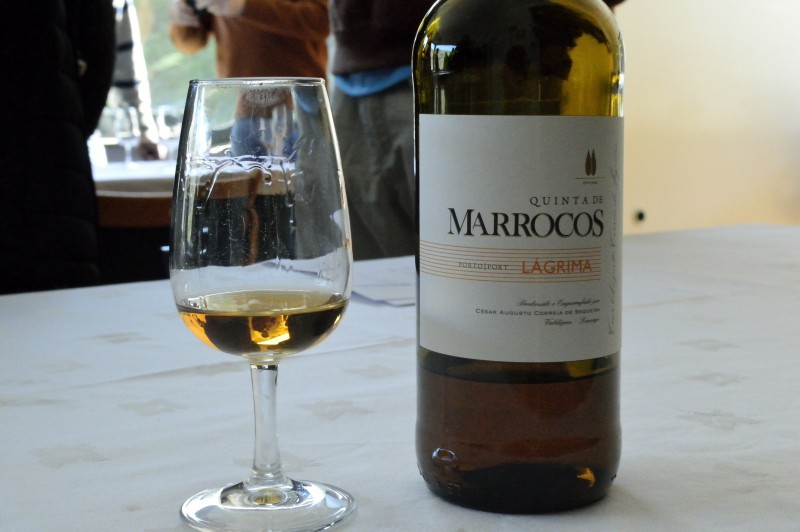
We walked through the processing area before the tasting — barrels, tanks, and the equipment of winemaking in a working family operation. Then we sat down to taste two Ports: a White Port and a Ruby.
This was my introduction to White Port, and it was a genuine surprise. I’d expected something syrupy and heavy. What I got was something chilled, almost crisp, with a lighter body and a refreshing quality I hadn’t associated with Port at all. The guide mentioned serving it with tonic water as an aperitif — and then, almost as an aside, suggested trying it over vanilla ice cream. We filed that away. We tried it the next night. It was, as promised, excellent.
The Ruby was exactly what I already knew Ruby to be: fruity, bold, easy-drinking. Good. But not the revelation. That was coming.
Tip: White Port is drastically underrated as a warm-weather drink. If you try nothing else outside your comfort zone on this trip, try the White Port with tonic.
Lunch: The River Restaurant, Régua
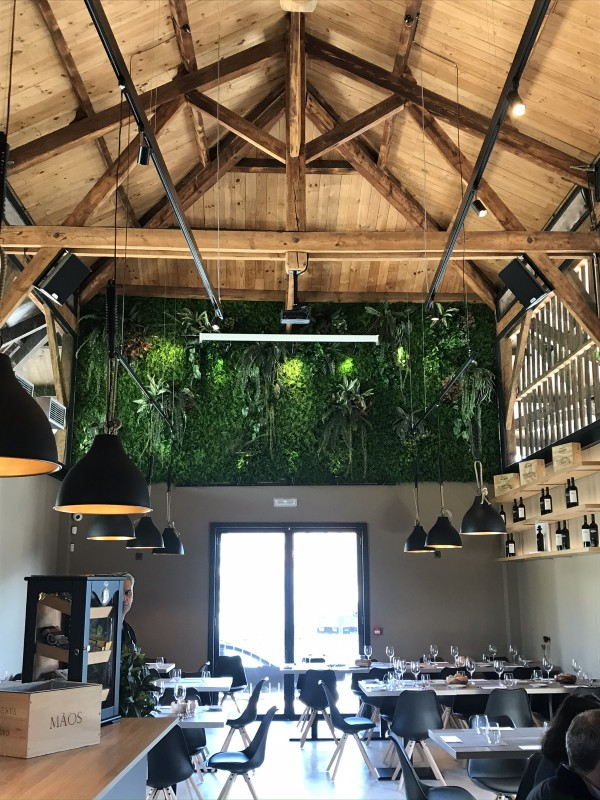
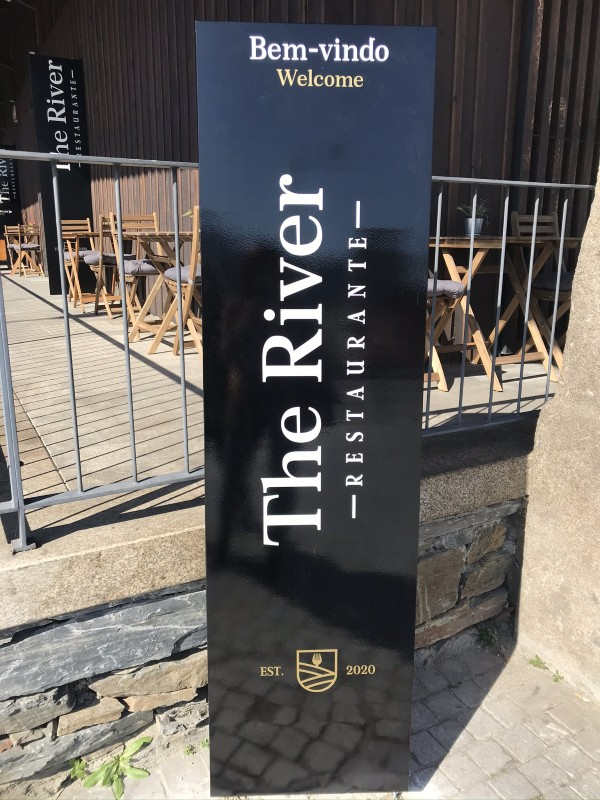
Back over the bridges to lunch at The River Restaurant in Régua — overlooking both the river and the railway line that was, for much of the valley’s history, its main connection to the outside world.
The menu specializes in local fish and regional dishes with a modern touch. For us, it was a set menu, with a few options to choose from. I had a pasta dish with fish in a white sauce; my travel companion went for a meat dish with sides. Both were generous, beautifully done, and entirely too much food for a day that still had two more tastings ahead.
Note: the tour may have changed its lunch arrangements since our 2020 visit — confirm the current itinerary and inclusions when booking.
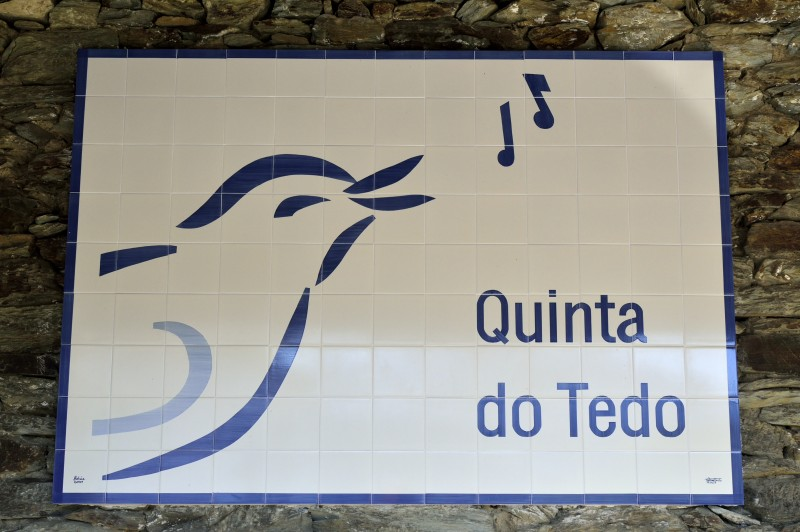
Second Stop: Quinta do Tedo
Fifteen minutes further along the river, Quinta do Tedo sits at the confluence of the Tedo River and the Douro. Meaning two rivers, two valley views, and an exceptional position for a winery.
Since the 1990’s, the quinta has been restored, converted to organic viticulture, and developed into a full wine tourism experience. It has a B&B, a bistro, and certified walking trails in addition to the winery itself. Just in case you are more curious about an overnight option.
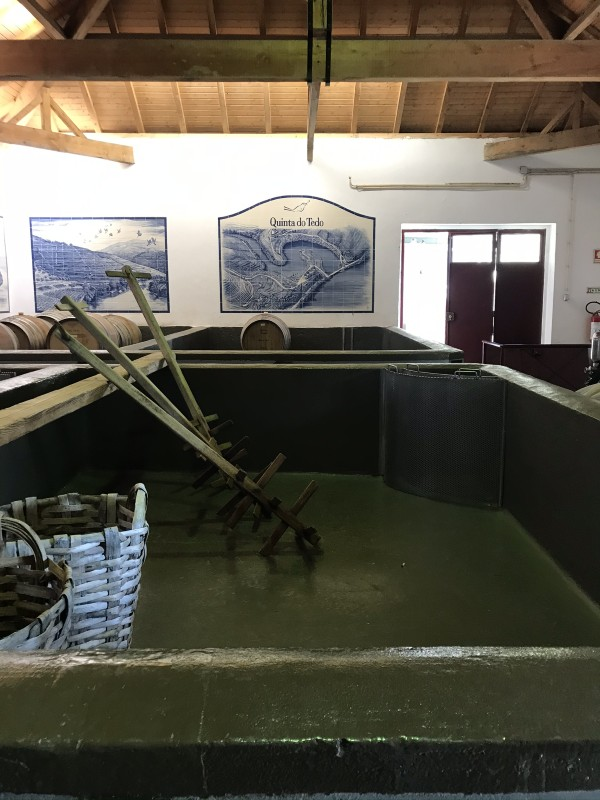
The highlight of the tour here was the historic lagar — the shallow stone trough where grapes were traditionally foot-trodden during harvest. Standing beside it, you can understand immediately why the method persisted for so long: the human foot applies exactly the right pressure to extract juice without crushing the seeds (which would release bitter tannins), and the warmth of the foot promotes fermentation. It’s a technology that modern science has largely confirmed as optimal, which is a satisfying vindication for several thousand years of winemakers.
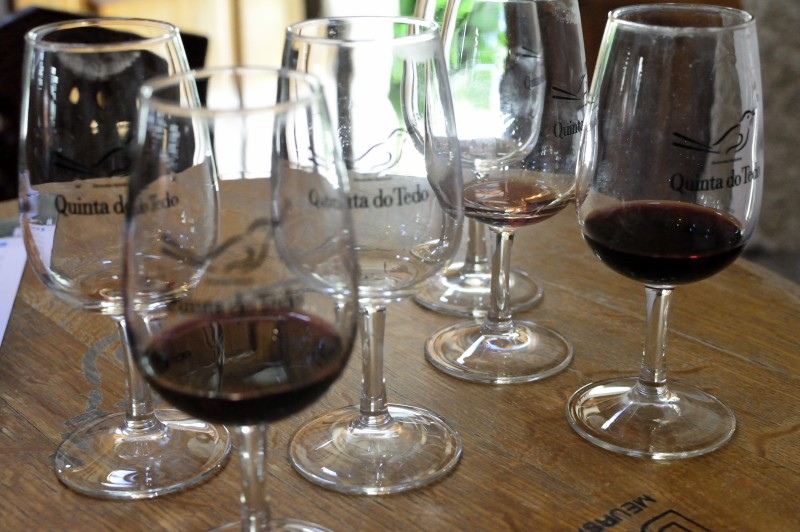
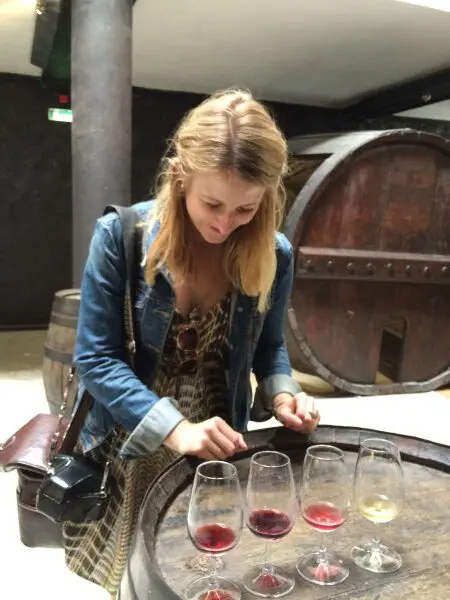
Then the tasting — three Tawny Ports, with crackers and jam, in the quinta’s tasting room.
This is where I found a love of Port. Tawny Port is aged in small wooden barrels rather than large tanks, which means it’s exposed to gradual oxidation over time — developing a lighter, amber-brown colour and a completely different flavour profile from Ruby. Where Ruby is fresh fruit and bold structure, Tawny is dried fruit, nuts, caramel, and a gentle warmth. It’s complex without being heavy. It’s one you want to sip on. I had arrived that day as a Ruby person. I left as a Tawny convert.
Tip: Quinta do Tedo labels their Tawnys by age — 10, 20, 30 years. The 20-year-old is usually the sweet spot between complexity and approachability.
The River Cruise from Pinhão
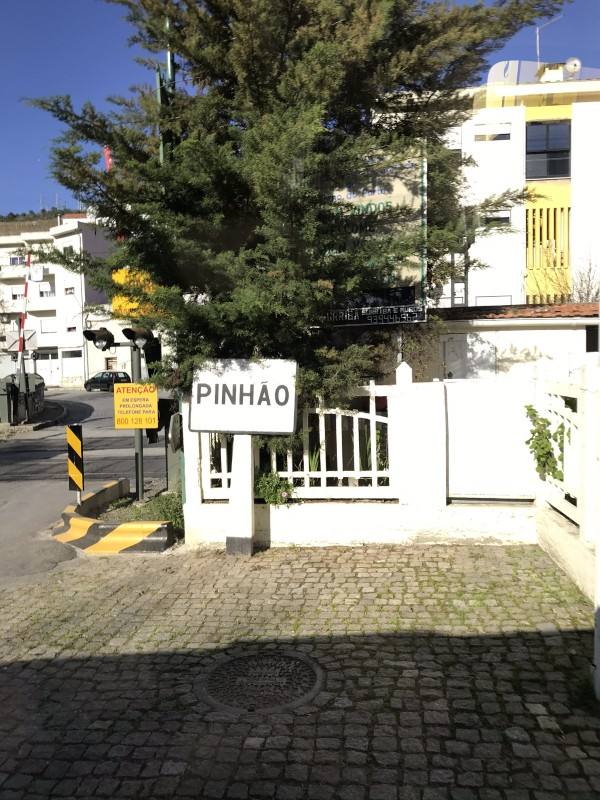
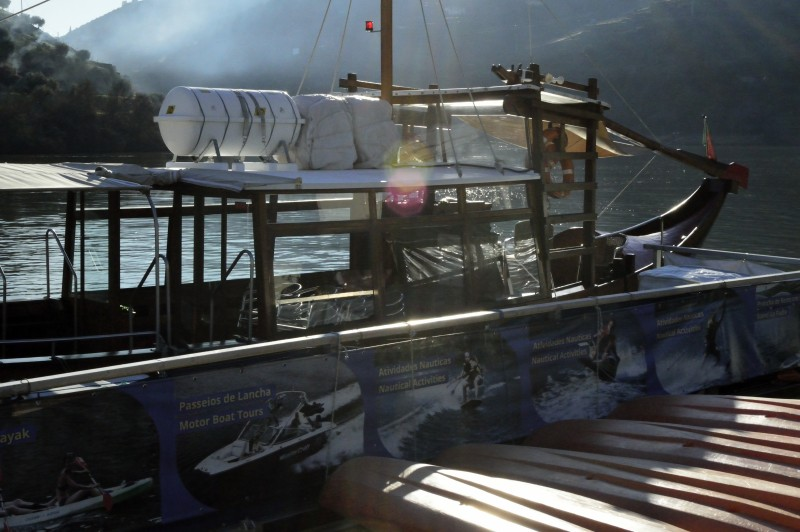
Another fifteen minutes along the valley and we reached Pinhão — one of the most photogenic towns in the Douro. If you are visiting outside of a tour, check out the azulejo-tiled train station. Our tour had us boarding a boat for a cruise further up the river.
An additional glass of Port appeared, as these things tend to do in the Douro Valley. We sat back and watched the terraced hills slide past on both sides.
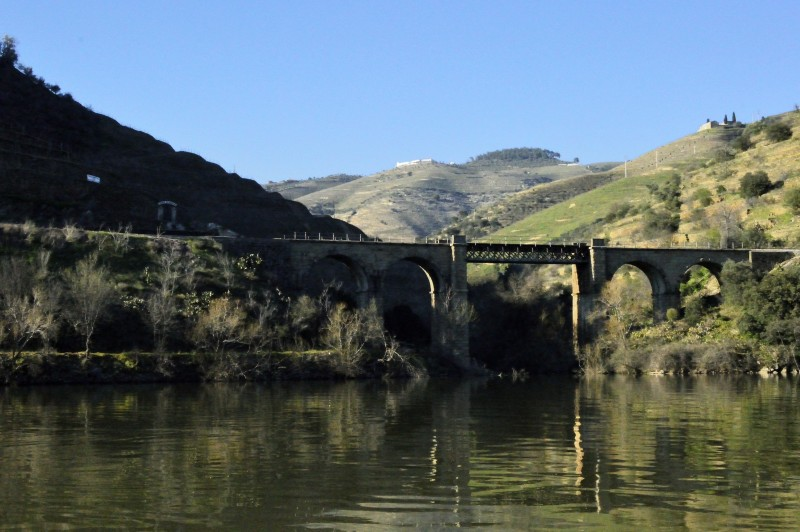
There’s something about seeing the valley from the water that reframes everything. Roads are relatively new here — for most of the valley’s history, the river was the road. The rabelos that carried Port barrels downriver to Gaia navigated the same bends we were drifting around, laden with wine that would become famous across Europe. Seeing the terraces from the water, at the angle the boatmen would have seen them, makes the history feel a little more present.
The Viewpoint: Miradouro S. Cristóvão do Douro
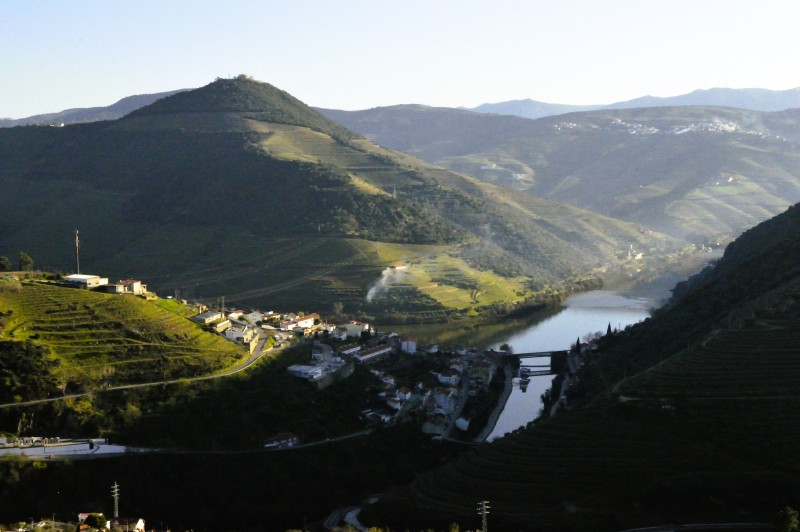
The final stop before the drive home was a viewpoint above the valley — Miradouro S. Cristóvão do Douro.
From up here, the full scale of what humans have done to these hills becomes visible all at once. The terraces cover almost every slope in every direction — stone walls stacked by hand, one on top of another, over centuries, transforming the natural hillside into something geometric and extraordinary. It’s beautiful. It’s also worth pausing on, as I found myself doing: this is not how these hills looked before. Every terrace was built by someone, by hand, at considerable effort, on a very steep slope. The landscape you’re admiring is the result of generations of back-breaking agricultural labour.
Both things can be true simultaneously. The beauty and the recognition of what it cost to make it.
Soak in this last view of the gorgeous area!
An hour and a half back to Porto, mostly highway, mostly in sleepy silence. We were full of food, saturated with wine and views. A day well spent!
Port experience without leaving Porto
For a full-circle Port experience without leaving Porto, the Vila Nova de Gaia side of the river is worth an afternoon or evening in its own right — and pairs beautifully with the Douro Valley day trip if you want to bookend the story of Port wine from vineyard to cellar.
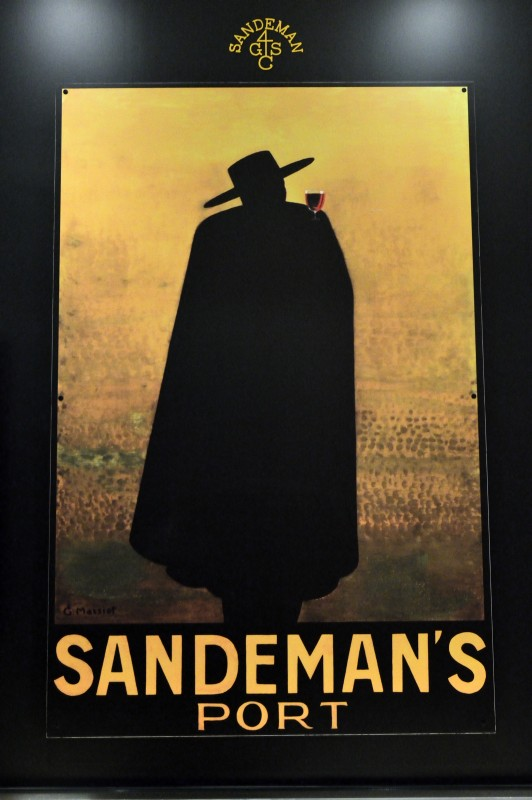
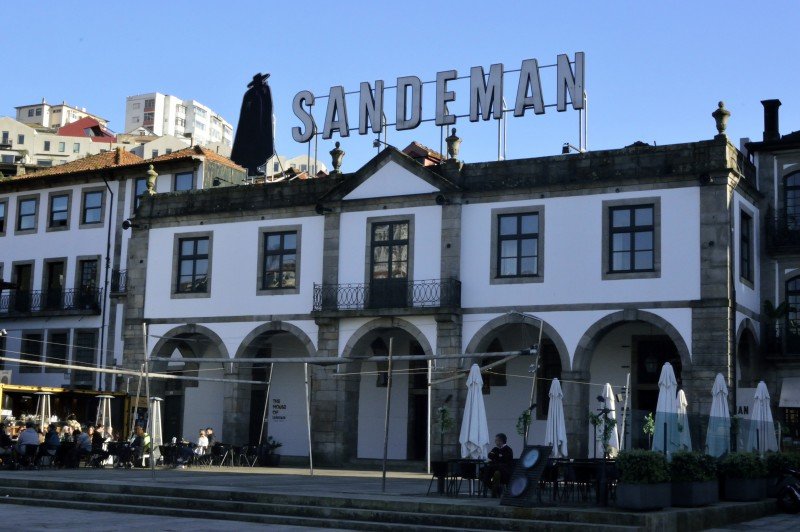
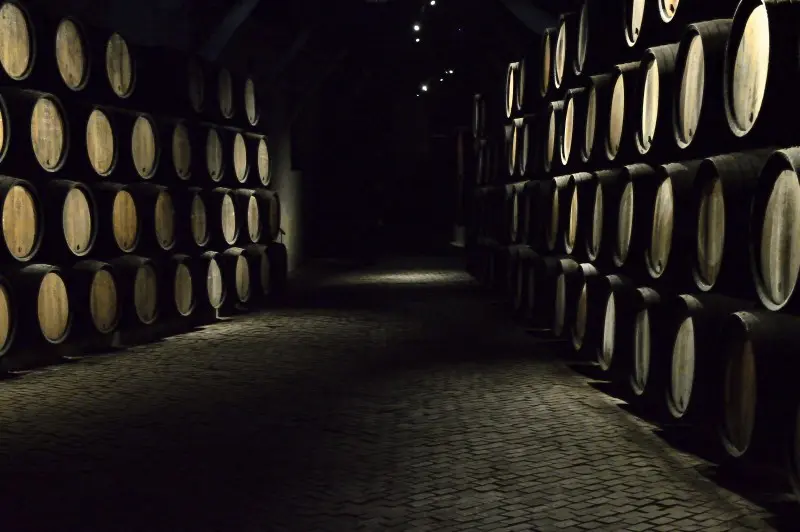
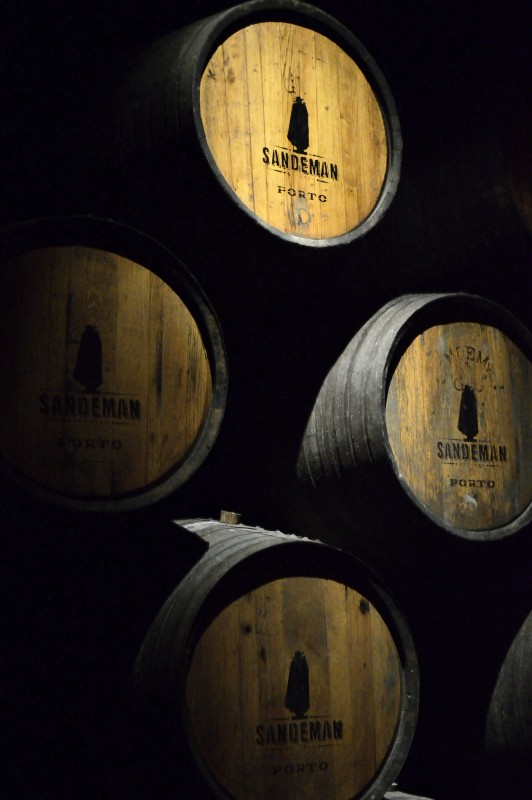
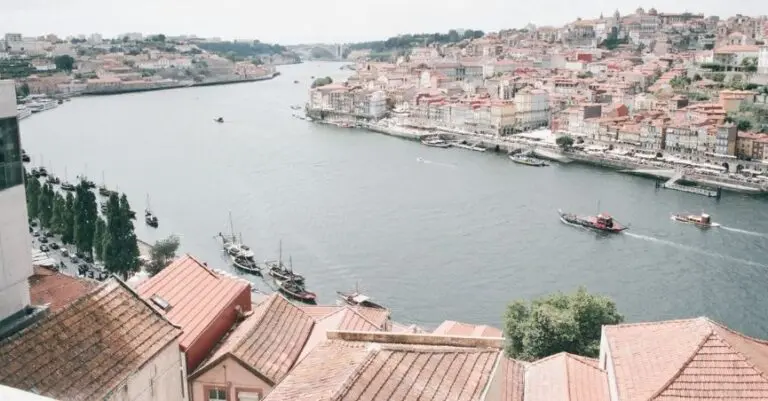
We took the cable car down from bridge level — the views over the Douro, the Porto skyline, and the terracotta rooftops are exceptional from up there, worth the ride for the perspective alone — then walked into the Gaia cellars district to visit Sandeman. The tour takes you through the aging and storage process: the cool darkness of the cellars, barrel upon barrel of Port at different stages, the guide connecting the production you may have seen in the Douro Valley to the blending and aging that happens here before it ever reaches a bottle. It rounds out the story well.
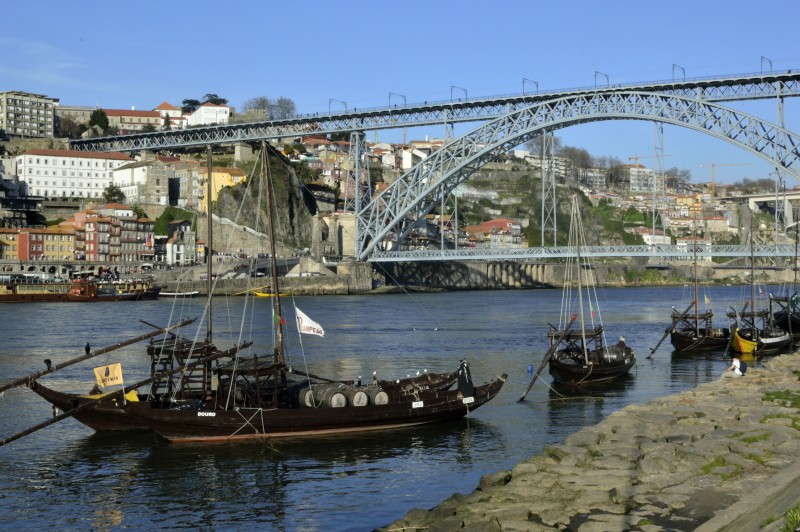
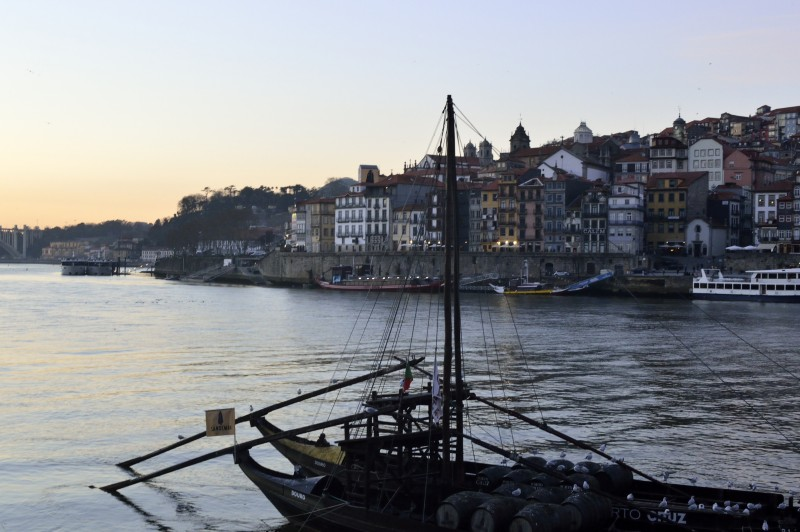
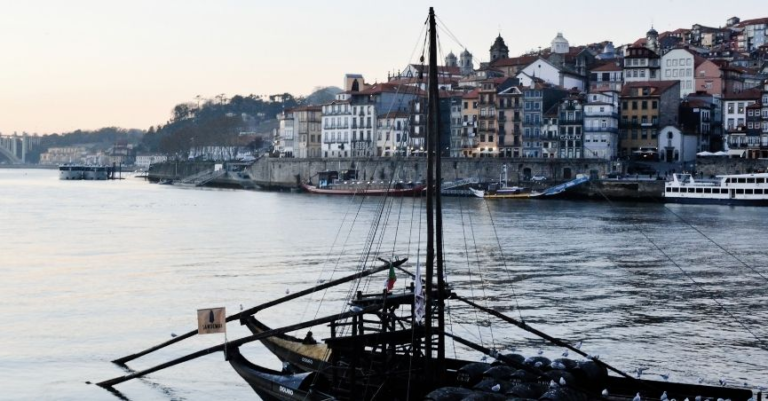
Along the riverfront, you’ll see the rabelos — the traditional flat-bottomed wooden boats that historically carried Port barrels downriver from the Douro Valley quintas to the Gaia cellars. They no longer work the river commercially, but they’re moored along the bank as a living reminder of how this industry moved before roads made the journey easier. In the evening, with golden light settling across the water and the shadows of the boats lengthening on the river’s surface, the whole scene is quietly magical — one of those Porto moments that earns every photograph you take of it.
Port Wine: A Quick Reference Guide
You don’t need to know this before you go — the tour will teach you everything in context. But if you want a cheat sheet for ordering Port in Porto, here it is:
Ruby — the classic entry point. Fruity, bold, aged for a shorter time in large tanks. Approachable and affordable. Good starting point.
Tawny — aged in small oak barrels, developing nutty, caramel, dried-fruit flavours. Often labelled by age (10, 20, 30, 40 years). My personal favourite — and the one most likely to convert a skeptic.
White Port — made from white grapes, served chilled. Lighter and more refreshing than you’d expect. Try it with tonic water as an aperitif, or over vanilla ice cream (not a joke — it’s genuinely good).
Late Bottled Vintage (LBV) — from a single year, aged longer before bottling. More complex than Ruby, more accessible than true Vintage.
Vintage Port — the prestige tier, only declared in exceptional years. Powerful, rich, age-worthy. Not something you need to understand to enjoy, but it exists.
Final Thoughts
Could not have asked for anything different on our day trip – a full, satisfying day. Next time, I’ll be planning to stay a few nights in the area. More Port tastings, maybe some hikes, river cruises, and exploring the smaller towns.
Pin me for later…
More Iberian Peninsula posts to read:
More Food & Drink posts: