A Day Trip to Bruges, Belgium from Ghent
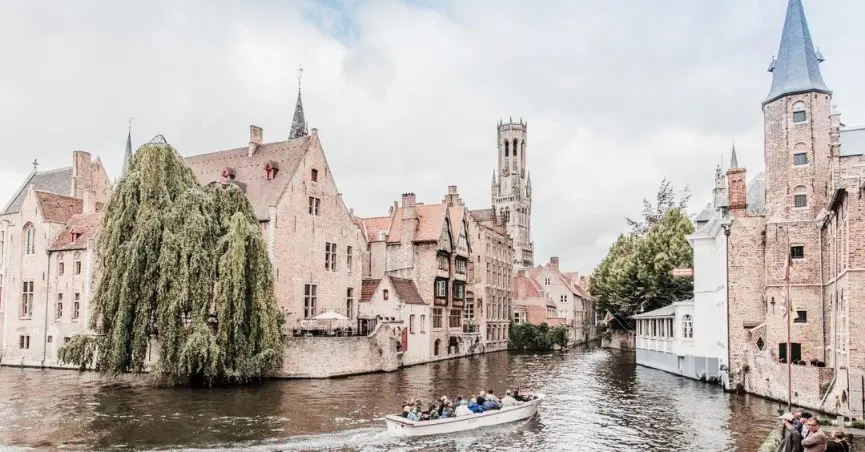
Bruges feels almost suspiciously perfect. Just a short train ride from Ghent, the city unfolds in a compact tangle of cobbled lanes, medieval brick buildings, stone bridges and quiet canals, with swans gliding past as if they’ve been hired to complete the scene. It is undeniably beautiful—and undeniably busy as a popular destination. Let me be upfront about something: I didn’t do Bruges as well as I could have.
Arriving later than intended, without a firm plan, by the time I’d found my rhythm the crowds were already building toward their afternoon peak. I missed the folk museum, the hospital museum. I didn’t climb the belfry. These were all things I’d have enjoyed, and I ran out of time for them. That being said – I still had a wonderful day discovering Bruges’ old world charm.
Bruges Summary
Location: West Flanders – northwest toward the coast
Getting there: Train from Ghent — approximately 30 minutes
Highlights: Outer ramparts walk, windmills, canal swans, Brewery Bourgogne des Flandres
Honest take: Started my day too late, missed museums I wanted — go early and plan ahead
Best for: Romantic city breaks, history lovers, canal wanderers, beer enthusiasts
Skip if: You hate crowds — come in the morning or off-season instead
In this post
Getting There
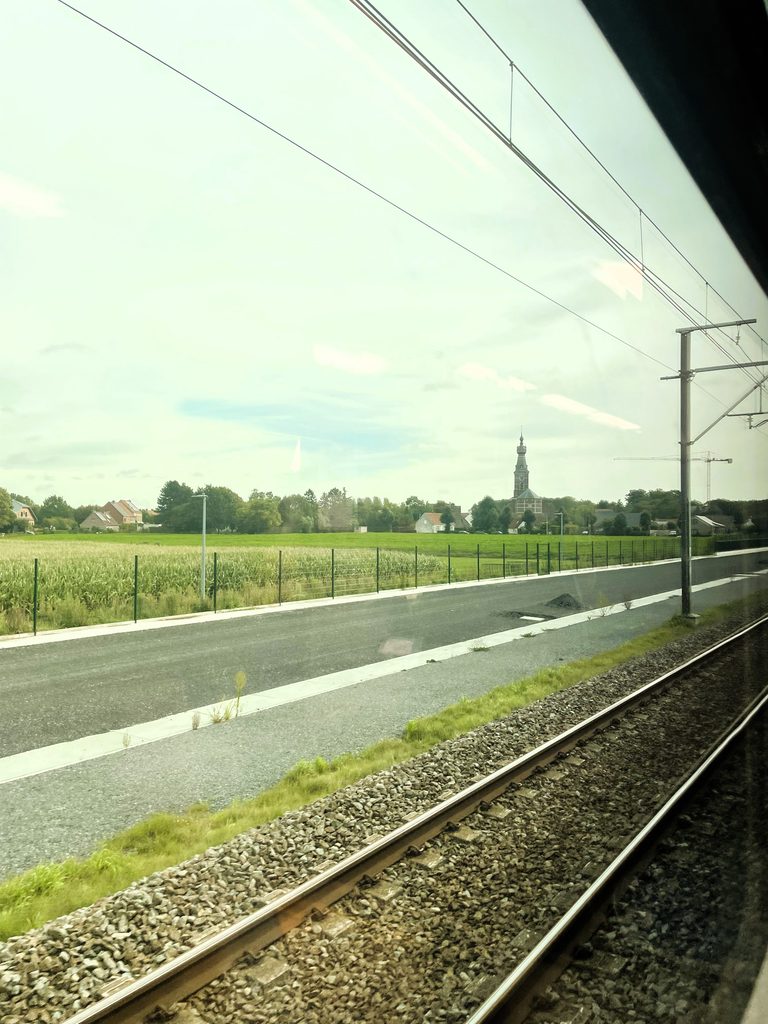
I came by train from Ghent — about 30 minutes, frequent departures, easy and inexpensive. From Brussels the journey is around an hour. Bruges station sits just outside the historic centre; it’s a 15–20 minute walk into the heart of the old city, or a short bus or taxi ride.
Tip: trains from Ghent and Brussels run regularly enough that you can be flexible with your return. Check times before you leave but don’t lock yourself in — Bruges rewards lingering when the crowds thin in the late afternoon.
Itinerary for the day
Bruges rewards a specific sequence more than most day trips — the compactness that makes it walkable also means everyone is trying to see the same handful of things at the same time. Here’s the order I’d follow now, knowing what I know:
- Arrive by 8:30–9am. Walk the Minnewater.
- The outer ramparts loop — windmills, green space, entering through one of the historic gates.
- Church of Our Lady and the Beguinage — both sit near the southern edge of the centre, close to where the ramparts walk drops you.
- The Belfry — climb it mid-morning while the queue is still manageable.
- Volkskundemuseum and/or Sint-Janshospitaal — the two museums worth prioritizing, both quieter earlier in the day.
- Rozenhoedkaai and the main canal circuit — after lunch, once some of the morning crowd has thinned.
- Brewery Bourgogne des Flandres — mid-to-late afternoon, so you’re not rushing the tasting room.
- Canal walk or dinner in the evening, if you are okay to linger, catching a later train back to Ghent.
What to see & do in Bruges
The Outer Loop
Minnewater
Here’s the thing I’d recommend to anyone visiting Bruges for the first time: don’t walk straight into the centre from the station. Walk around the outside first.
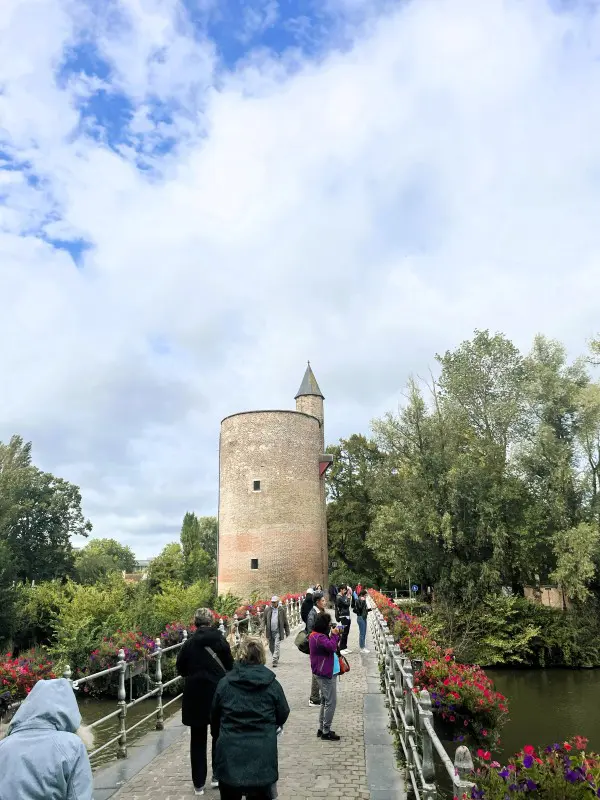
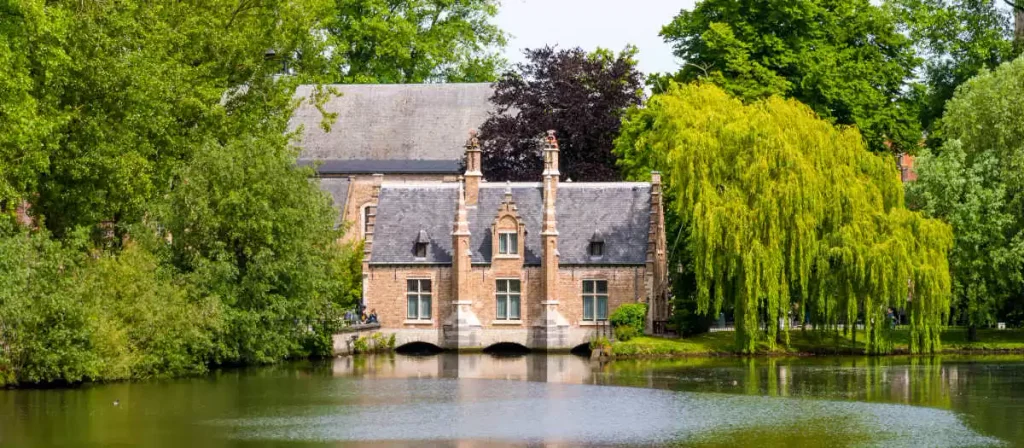
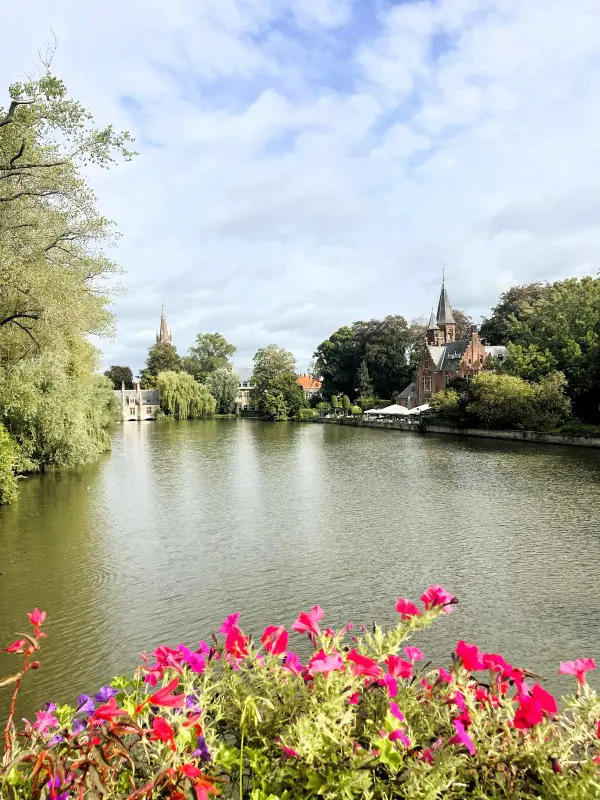
This takes you past a medieval gun tower and down toward the Minnewater — the Lake of Love — one of Bruges’s most quietly beautiful spots. A small bridge crosses the water here, hung with planters overflowing with flowers — the so-called Lover’s Bridge — with a view across the lake toward the Sashuis (the old sluice house) at the far end. The water is still and reflective, the setting charming, and on a clear morning it’s one of the loveliest things in the city. Along the path you’ll also pass a handful of old circular brick water towers, easy to walk past without noticing.
The old city is encircled by a ring of canals and green rampart walks — a peaceful gravel path through open green space that traces the former city walls. Walking the outer loop means you approach the city the way people once did: from outside the gates, through parkland, past windmills.
Windmills
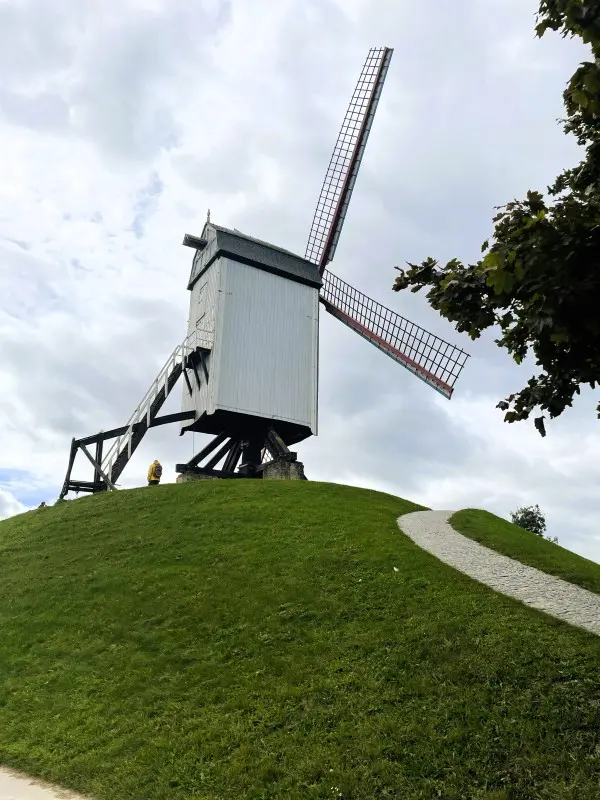
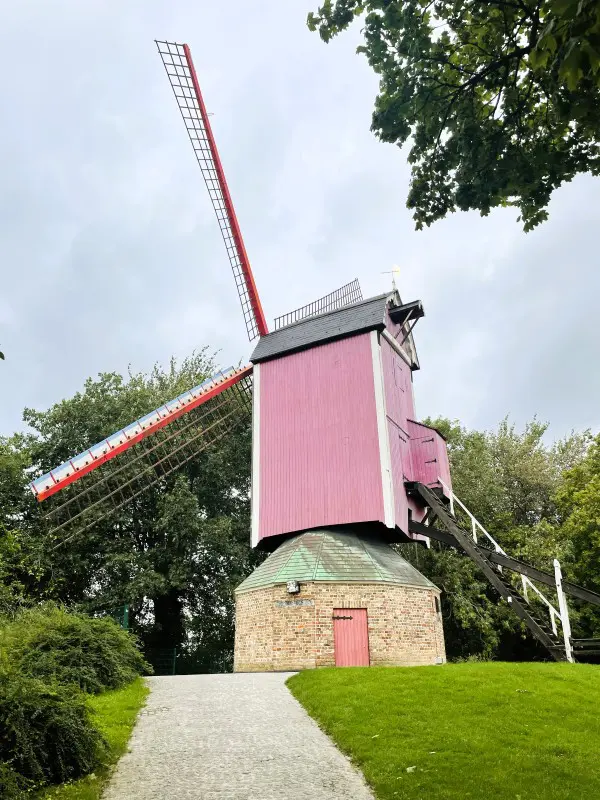
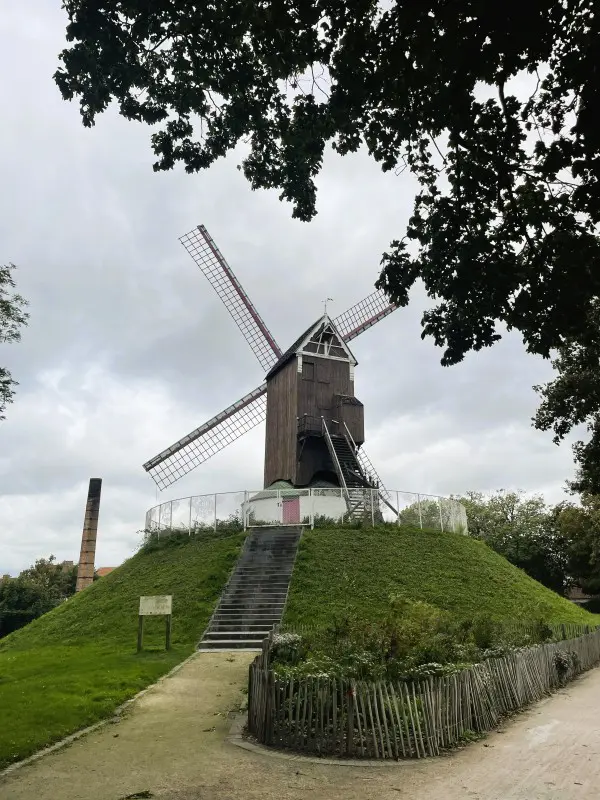
The windmills appear far off along the ramparts and you see them long before you reach them, getting bigger as you approach along the path. They’re the real thing, not decoration: working mills that once processed grain and oil for the city, each one distinct up close. One is painted a striking bubblegum pink, sitting atop a circular brick base. Another is white, raised on a wooden stilted structure. The third — Sint-Janshuismolen — is unpainted wood, the most traditional-looking of the three. This one is open to visitors from June through September so you can see the interior mechanism. All three sit atop small grassy hills along the ramparts, each one a little different. (Visiting info: Musea Brugge)
The path is quiet, genuinely peaceful, and almost entirely tourist-free. You see the more lived-in side of the city — residents walking dogs, cyclists cutting through, the city going about its actual morning rather than performing for visitors. It was a lovely way to arrive.
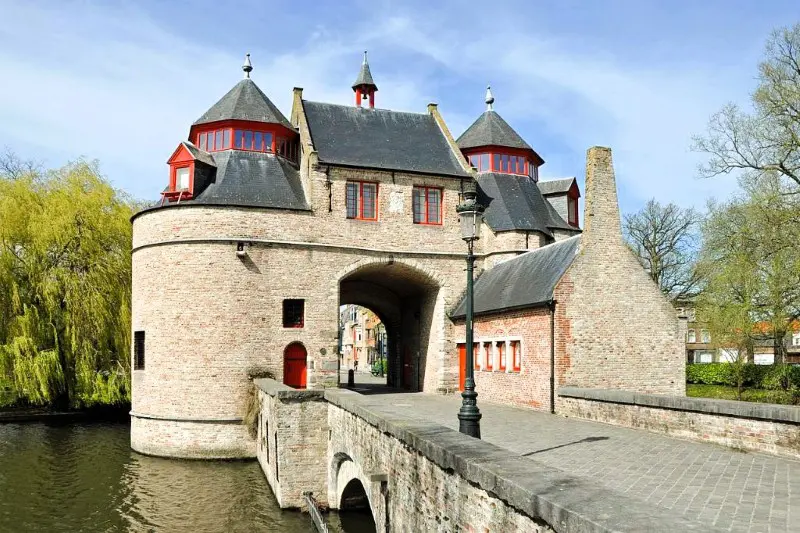
Tip: enter the city through one of the historic gates rather than retracing your steps — the Gentpoort or Kruispoort bring you into residential streets before the canal district, extending that quieter experience a little longer.
The Canals: Bruges as Storybook
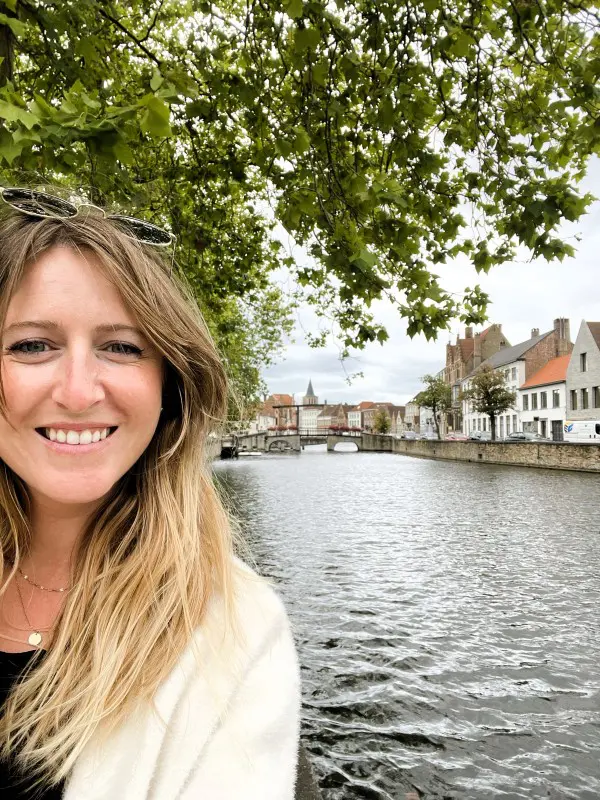
Once inside the historic centre, the canals take over — and this is when Bruges stops being a city and starts being something closer to a storybook.
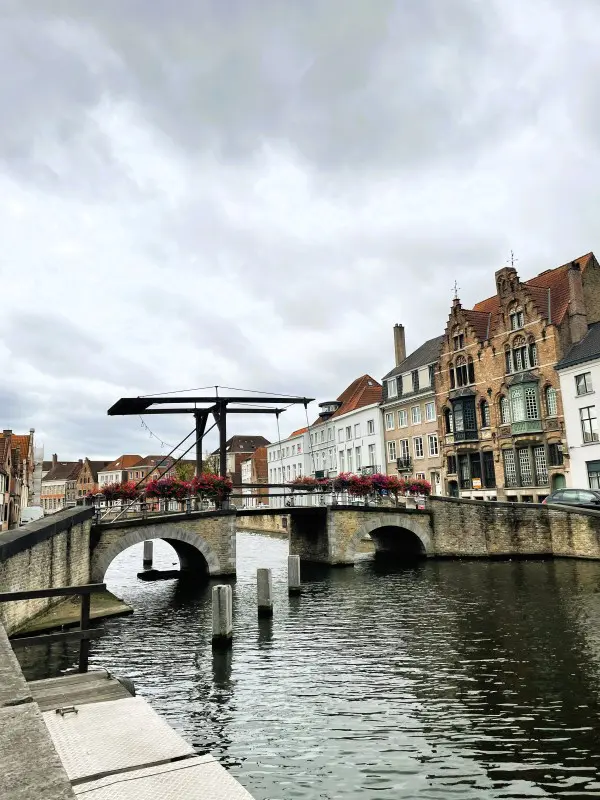
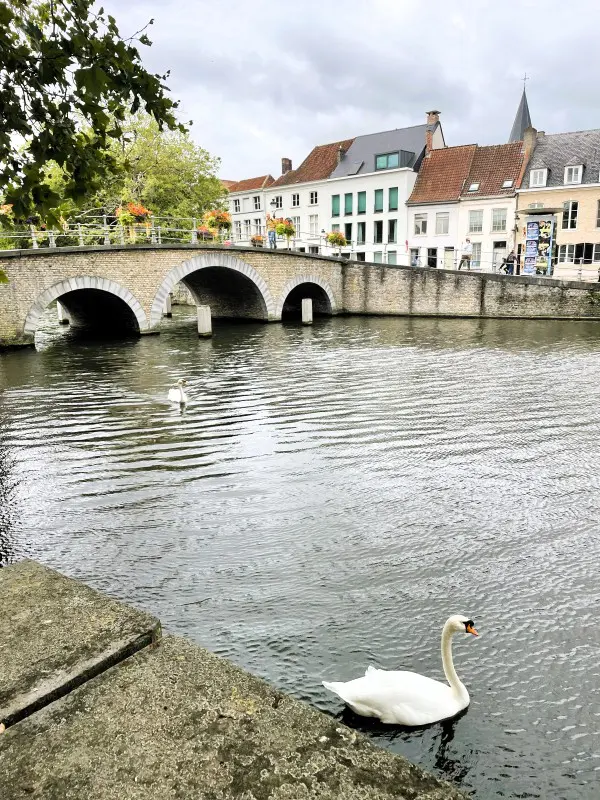
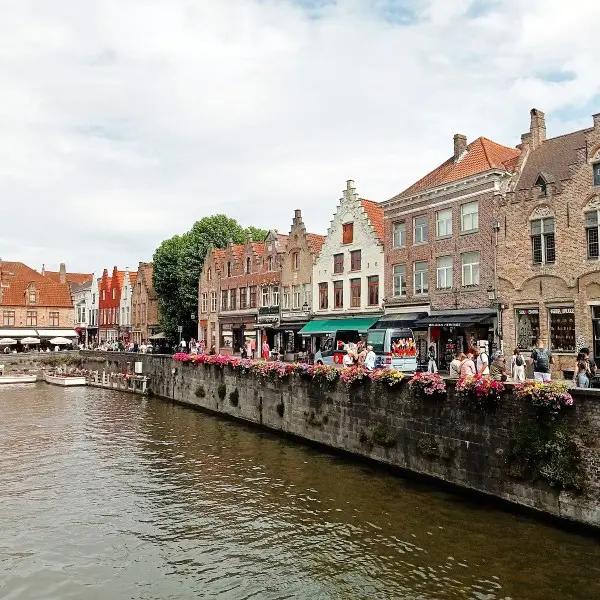
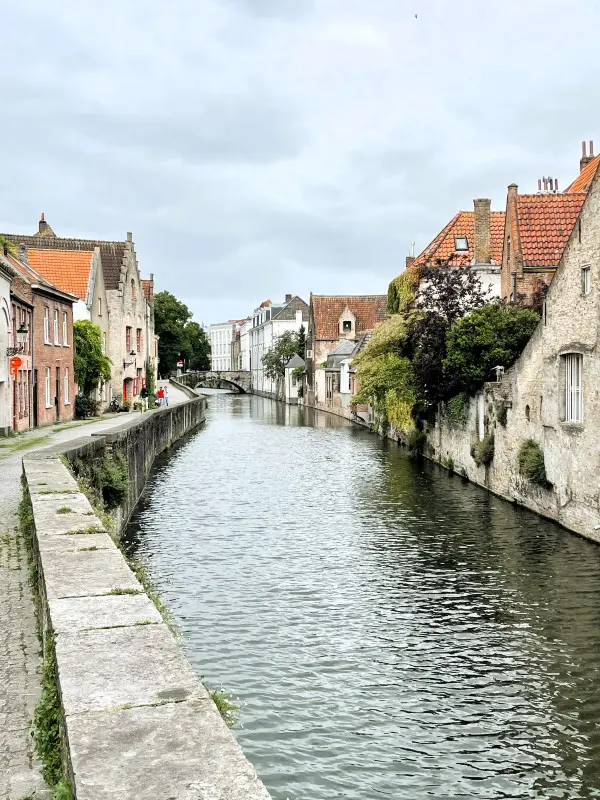
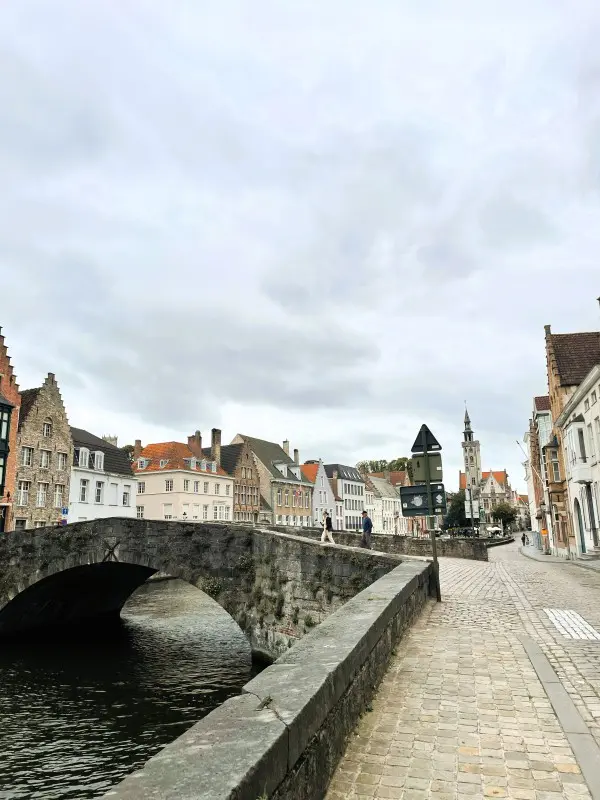
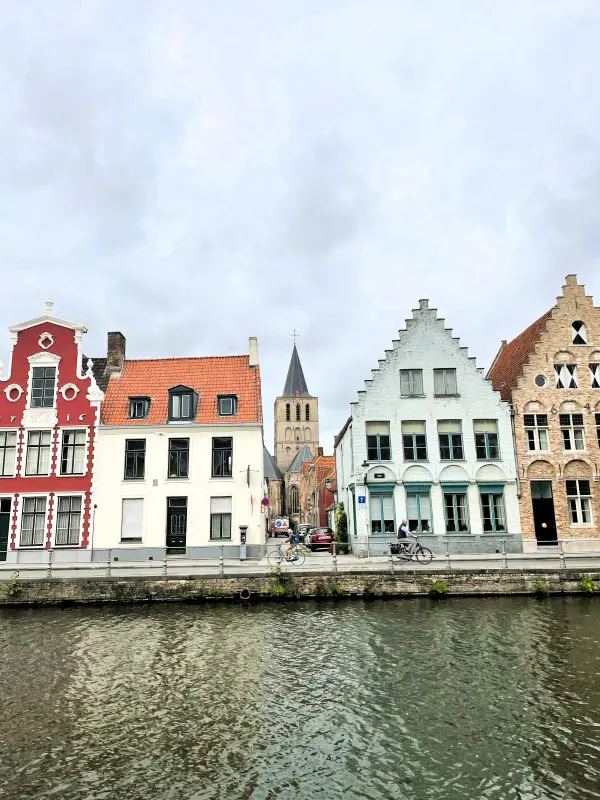
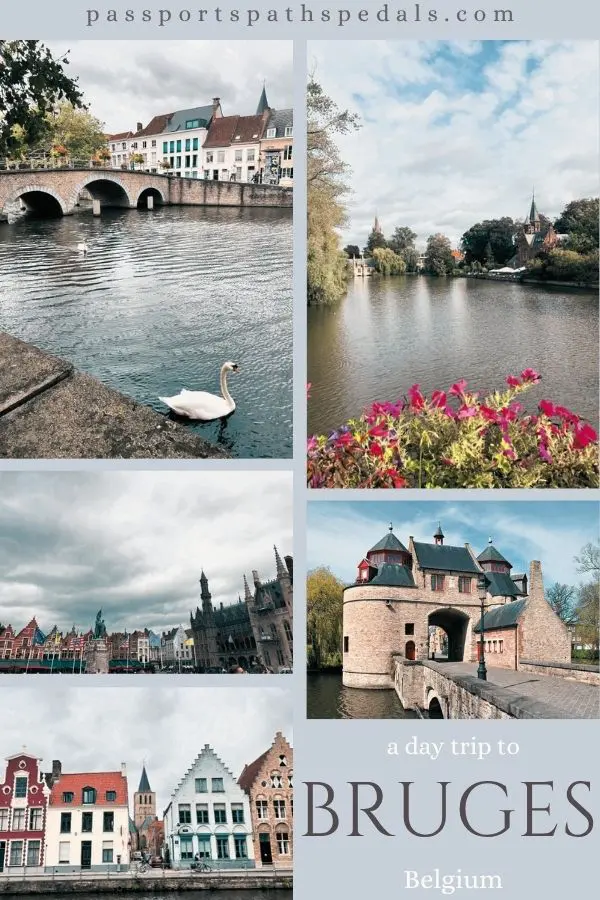
It’s not fake, not artificially preserved, not a theme park version of medieval Flanders. It’s genuinely historic, genuinely intact, and beautiful. Brick laneways running alongside the water, punctuated by the occasional burst of flowers. The colourful stepped-gable facades reflected in still water. Narrow stone bridges arching over the canals at intervals. And the swans.
Bruges’s canals are home to a permanent population of mute swans, and they glide through the whole scene with a complete, magnificent indifference to how perfectly they complete the picture. One drifted under a stone bridge while I was standing on it, entirely unbothered by my presence or my camera.
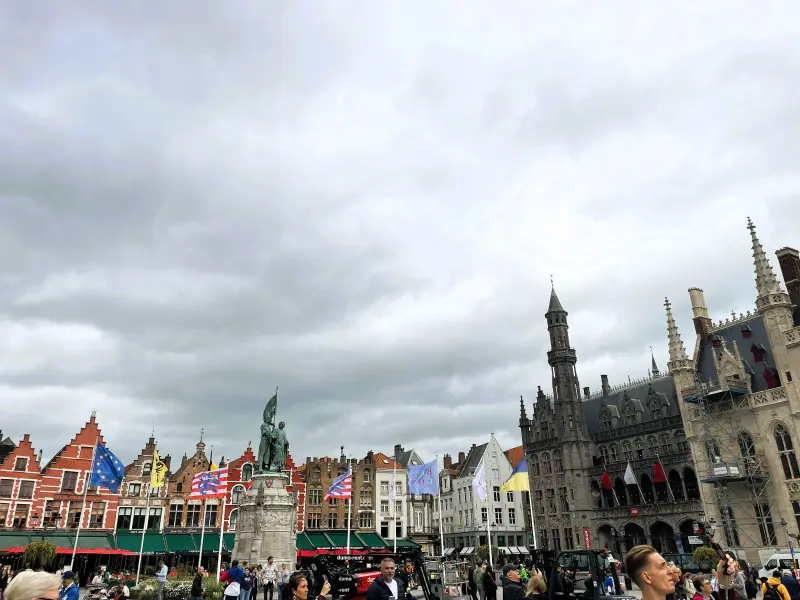
The crowds increase noticeably as you move toward the Grote Markt and Rosary Quay — the most photographed sections of the canal. If you want quieter canal walking, stay on the outer ring of the waterways rather than the main tourist circuit. The same water, the same architecture, significantly fewer people.
Bruges’ Historic Core
The Belfry (Belfort van Brugge)
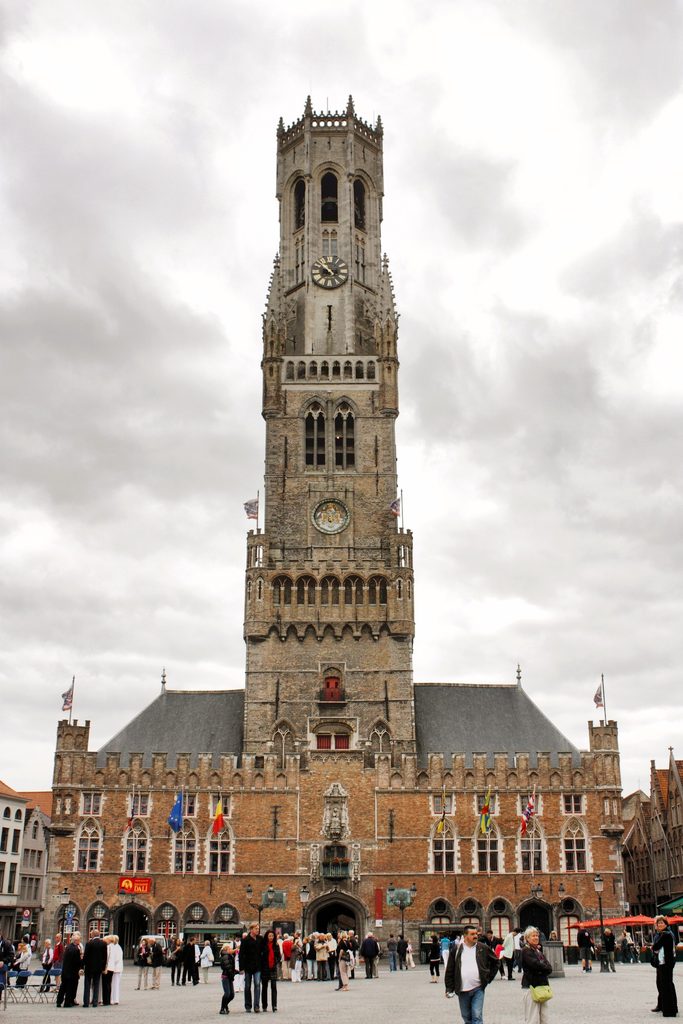
The medieval belfry towers over the Grote Markt at 83 metres — 366 steps to the top, with views across the Flemish rooftops and out to the flat countryside beyond. I didn’t climb it on this visit (see: flopped a little), but it’s considered one of the defining Bruges experiences, and I’d prioritize it on a return trip. Go early — queues build fast.
Rosary Quay (Rozenhoedkaai)
The most photographed canal view in Bruges, and therefore quite busy by mid-morning. Worth seeing — the perspective down the canal with the belfry in the background is genuinely as good as the pictures — but worth seeing early. I arrived at a reasonable hour and it was already getting crowded. You can also catch canal boat tours from here.
The Basilica of the Holy Blood
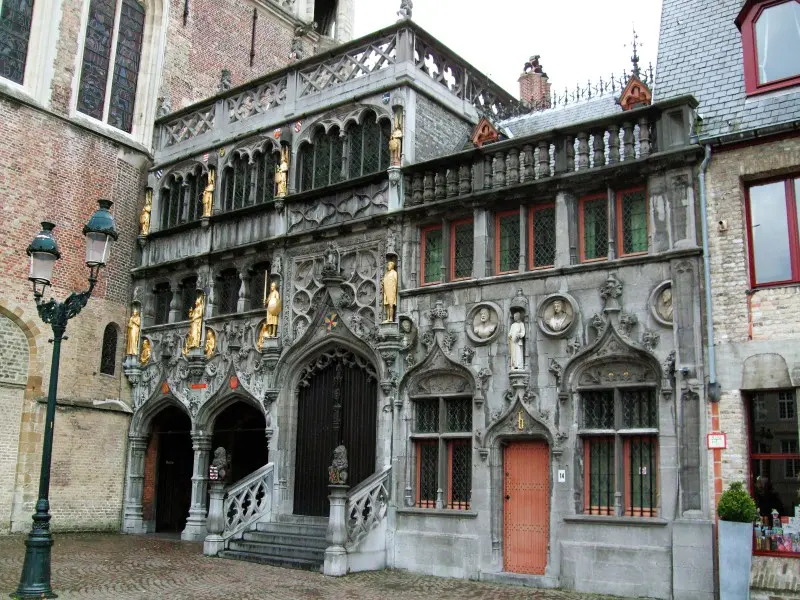
One of Bruges’s most unusual sights: a 12th-century basilica that claims to house a relic of the blood of Christ, brought back from Jerusalem during the Crusades. The lower Romanesque chapel is one of the best-preserved examples of Romanesque architecture in Belgium; the upper chapel is highly ornate Gothic. Worth stepping in even if the relic leaves you skeptical.
Church of Our Lady
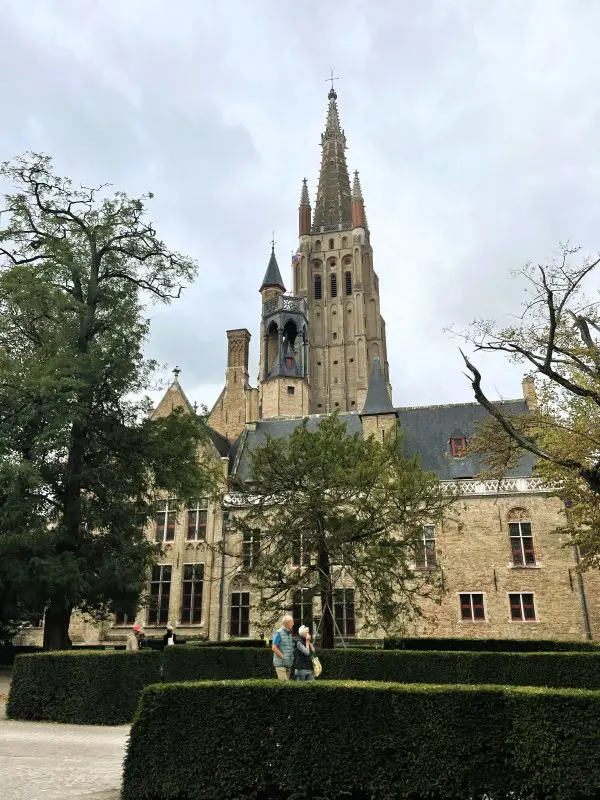
A Gothic church with the second-tallest brick tower in the world — over 115 metres — and home to something genuinely unexpected: Michelangelo’s Madonna and Child, the only sculpture he made that left Italy during his lifetime. It’s a small, quiet marble figure, roped off but close enough to appreciate, tucked inside a church most visitors walk straight past on their way to the Belfry. The church itself is free; seeing the Michelangelo requires a separate timed ticket for the museum portion, worth booking ahead in peak season.
The Beguinage (Begijnhof)
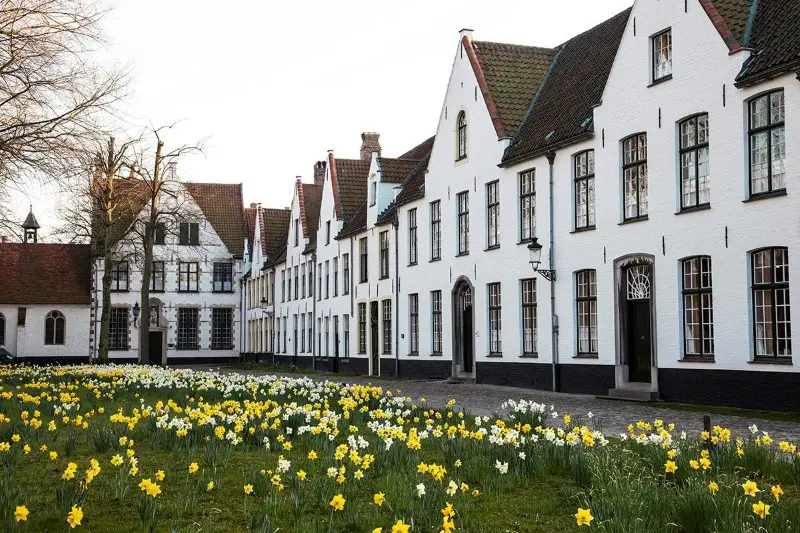
Just past Minnewater, across the Beguinage Bridge, is Ten Wijngaerde — the only surviving beguinage in Bruges. Beguinages were semi-religious communities of laywomen dating back to the medieval period, and this one, now home to Benedictine nuns rather than the original beguines, still has the hush and enclosure that made them what they were: whitewashed houses, a quiet courtyard, poplar trees. It’s free to walk through and one of the more contemplative stops in the city — a natural pairing with the Church of Our Lady since both sit close to the southern approach from the station.
Museums I Missed (But You Shouldn’t)
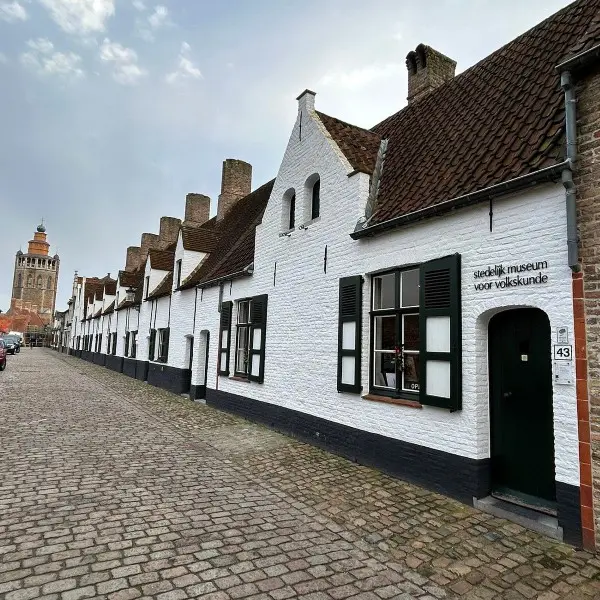
Volkskundemuseum (Folk Museum) — a series of restored almshouse cottages housing a collection of everyday Flemish life from the 18th and 19th centuries. By all accounts exactly the kind of lived-in, human-scale museum I love. On the list for next time.
Sint-Janshospitaal (Saint John’s Hospital) — a medieval hospital that operated for eight centuries and now houses a museum of medicine and an extraordinary collection of paintings by Hans Memling, a 15th-century Flemish master. One of the most important medieval art collections in Belgium, in an incredibly well-preserved setting. Also firmly on the next-time list.
Historium Bruges – An immersive historical experience recreating Bruges at the height of its medieval golden age. More theatrical than scholarly, but well-reviewed as an engaging introduction to the city’s history. Good option if you want context before you wander.
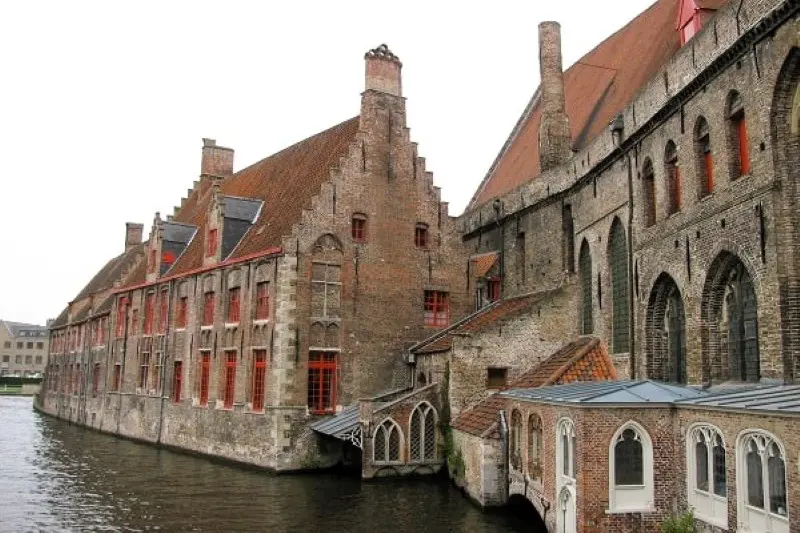
Brewery Bourgogne des Flandres
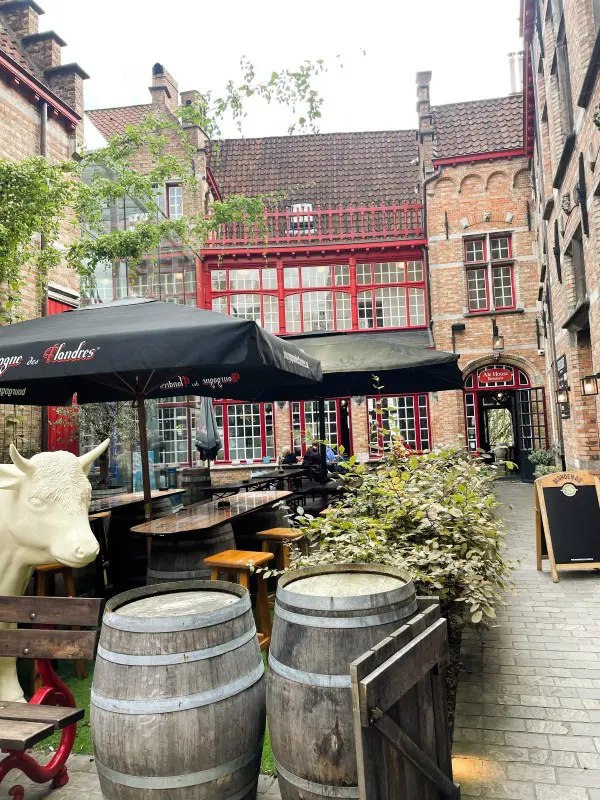
The brewery sits right on the canal in the heart of the old city. I’d recently been introduced to the Tripel style of Belgian beer and had immediately known I needed to understand it better. The Tripel is interesting: strong (typically 8–10% ABV), golden, complex, with a particular yeasty character that can veer almost toward something sour. More depth than a lager, less fruit-forward than a kriek. I was curious, and a brewery museum seemed like the right place to get curious properly.
The museum walks you through the history and brewing process of the Bourgogne des Flandres style — genuinely informative, well laid out, and good at explaining what makes Belgian brewing traditions different from the rest of the world. Worth going through properly rather than rushing to the tasting room, as tempting as that is.
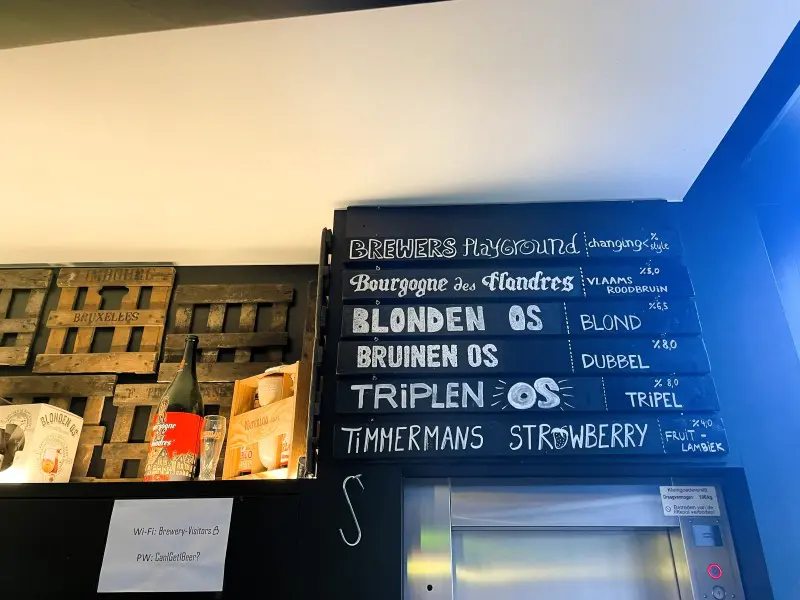
The tasting room at the end offers a flight of six beers across a solid range of styles — from rich and dark to light and fruity. Mine included:
- Den Bruinen Os – their special reserve, dark and complex
- Blonden Os – their signature blond
- Bruinen Os – signature brown ale
- Triplen Os –
- Timmermans Strawberry Fruit Lambic – that wonderful, slightly sour, fruit-forward corner of Belgian brewing
- A rotating special that changed with the season
I paired the beers with a pretzel and mustard. The spiciest mustard I have encountered in recent memory, the kind that clears your sinuses like wasabi. I likely could have had more food given I had a small but definite buzz by the time I left.
Entry: includes museum and tasting flight. Allow 1.5–2 hours if you go through the museum properly before the tasting.


Practical Notes
Getting around The historic centre is entirely walkable — it’s one of the most compact old cities in Belgium. Bikes are popular and rental is available, though the cobblestones make for an occasionally bumpy ride.
When to go Bruges is beautiful year-round but crowded in peak summer. September was excellent — warm, manageable crowds before 11am, golden light on the canals. December brings Christmas markets and a particular magic, but also significant crowds. Spring (April–May) is arguably the sweet spot.
How much time One full day is enough to cover the highlights if you plan ahead and arrive early. Two days lets you breathe, visit the museums properly, and experience the city in the evening when it belongs to itself again. Bruges is known for romance with its softly lit canals and flowers.
Plan this trip
Tours:
Pin me for later…
More posts about the Benelux region:
A Day Trip Cycling from Amsterdam to Muiderslot Castle
Mullerthal Trail Echternach Loop (E1): Day Hike in Luxembourg
A Day Trip Cycling from Amsterdam to Haarlem
4 Days in Luxembourg: Itinerary for First-Time Visitors