Parkhurst Ghost Village Loop: Whistler’s Most Unexpected Hike
Whistler has no shortage of ways to spend a day outdoors — mountain biking, gondola rides, alpine hikes with sweeping views, glacier walks. The Parkhurst Ghost Village loop offers none of those things. What it offers instead is something genuinely different: a quiet forest trail, a moss-carpeted ghost town of rusted cars and collapsed cabins, a glacier-green lake for a mid-hike snack, and a rickety bridge that will make you test every plank before you trust it with your weight.
It’s an easy hike by Whistler standards. No major views, no serious elevation. Just a slightly eerie, entirely compelling morning in the forest with a good story attached.
We drove up from home as a day trip — a bit of a haul, but absolutely worth it.
Trail Details
Location: Whistler, BC — Green Lake area
Distance: 7.5 km (miles)
Total elevation gain: 230 m (feet)
Type: loop
Time: 2–3 hours
Difficulty: Easy — suitable for families and casual hikers
Terrain: Gravel road + dirt trail + some rocky sections
Best for: History lovers, families, hikers who want something different
The History of Parkhurst
The “ghost town” has a proper origin story, which makes walking through it feel less like urban exploration and more like reading a chapter of local history.
Mr. and Mrs. Parkhurst pre-empted the land on Green Lake in 1902 and built a small homestead. The property was sold in 1926 following Mr. Parkhurst’s death and purchased by the Barr brothers of Mission — William, Malcolm, and Ross — who built a sawmill and a workers’ camp, naming the operation Parkhurst Mill after the original owners.
The story darkened quickly: in 1928, Malcolm drowned after falling into Green Lake. The Depression hit in 1930, and the mill went into receivership. The property changed hands again in 1932, reopened as Northern Mills in 1933, and the mill burnt down in 1938. It was rebuilt and continued operating into the 1950s — but by then, most of the original families had moved on.
What remained when the mill finally closed was left exactly where it stood. Decades later, the forest has been slowly reclaiming it.
(Source: Whistler Museum)
Getting There and Parking
We parked in what appeared to be a makeshift parking area near the trailhead — basic, unsigned, but functional. From there, the trail starts with 0.8km of gravel road walking before the mapped loop officially begins. The gravel continues for another 1.5km after that, for a total of about 2.3km of road walking before you hit proper trail.
If you have a 4×4 or high-clearance vehicle, you can drive further in and park closer to the trail start — cutting the road section considerably. Worth knowing in advance.
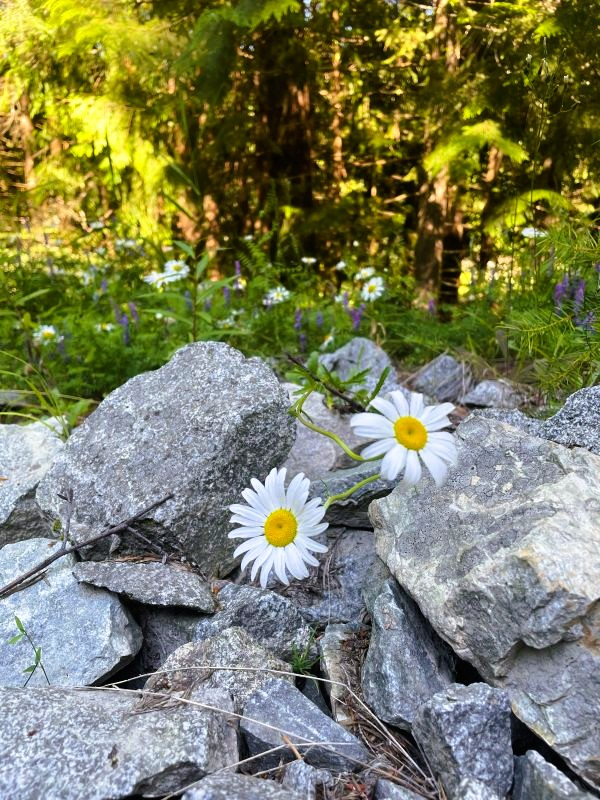
We were on foot the whole way, which was fine — the road is pleasant enough, lined with wildflowers in yellows and purples, and the sounds of the forest around us. It’s just not quite the same as being on trail.
Tip: Follow the trail maps carefully from the parking area — the route isn’t always obvious, and it’s easy to end up on the wrong gravel road early on.
The Walk: What to Expect
Wedge Creek Falls — The Early Reward
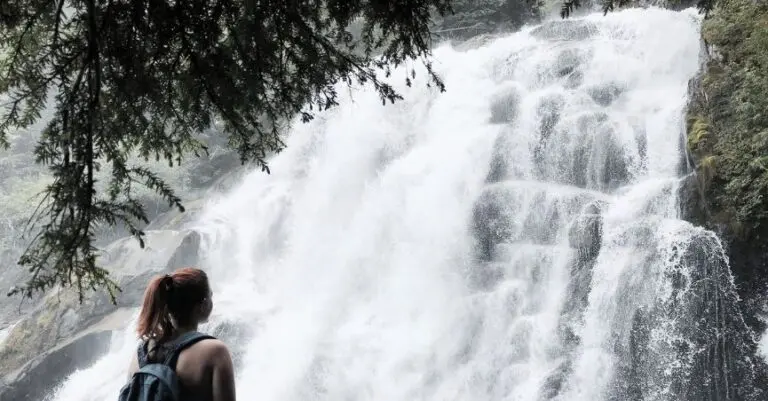
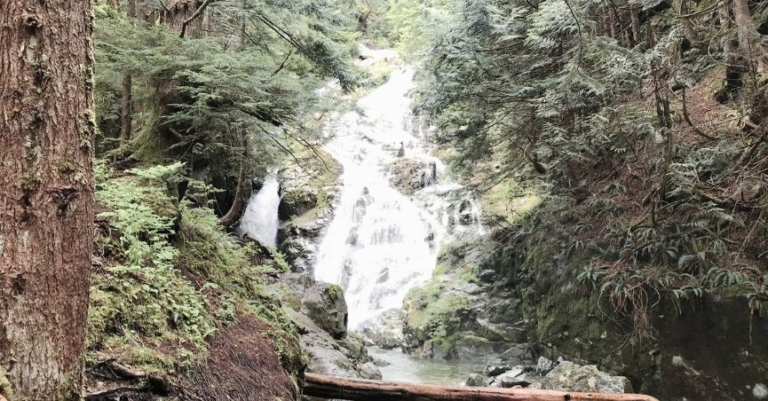
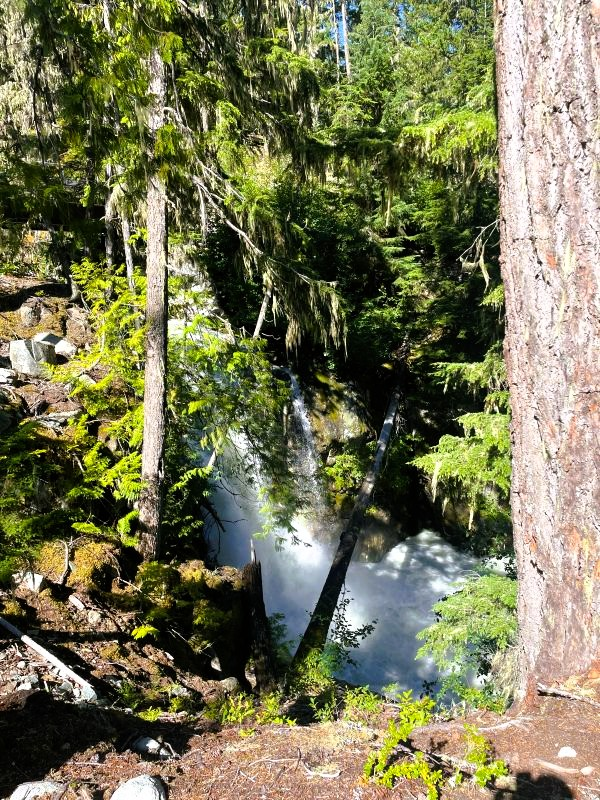
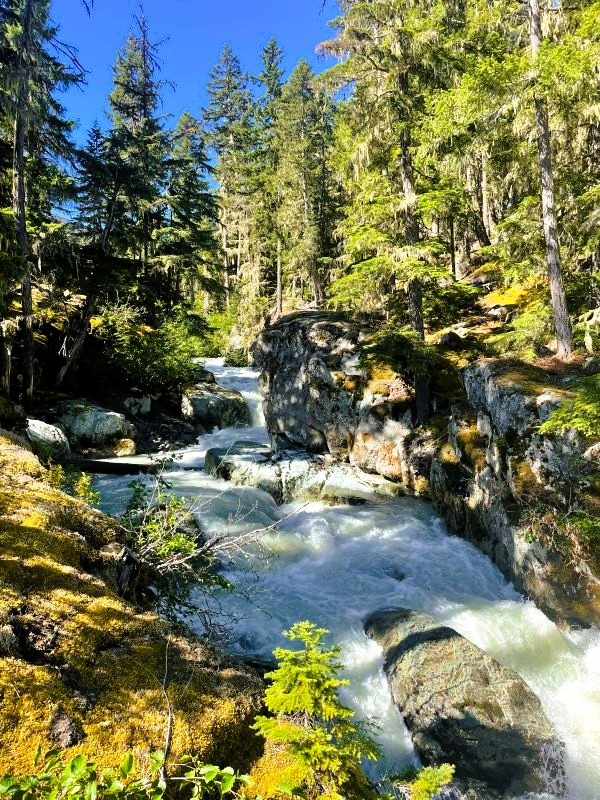
At kilometre 1.7, just as the gravel road starts to feel like it’s going on longer than it should, the trail crosses a small bridge over Wedge Creek and delivers a surprise: Wedge Creek Falls.
You hear it before you see it — a change in the volume and character of the water sound, rushing and louder, before the falls come into view. We climbed down the rocky hillside from the road for a better look, which was worth the short scramble. Early July meant the creek still had good volume from snowmelt, and the falls had real energy. Be careful on the rocks near the water’s edge — the footing is uneven, and the ledge is narrow in places.
The Rocky Opening
At the 2.3km fork, we had a few route options. We took the right-hand road — partly by accident, mostly because we were ready to get off the gravel — and quickly found ourselves in a section that felt unexpectedly alpine: a rocky open area with large boulders scattered across a shrubby landscape, fewer trees, more wildflowers, the trail winding through between them. A welcome change of scenery and character before the forest closed back in.
The Moss Forest
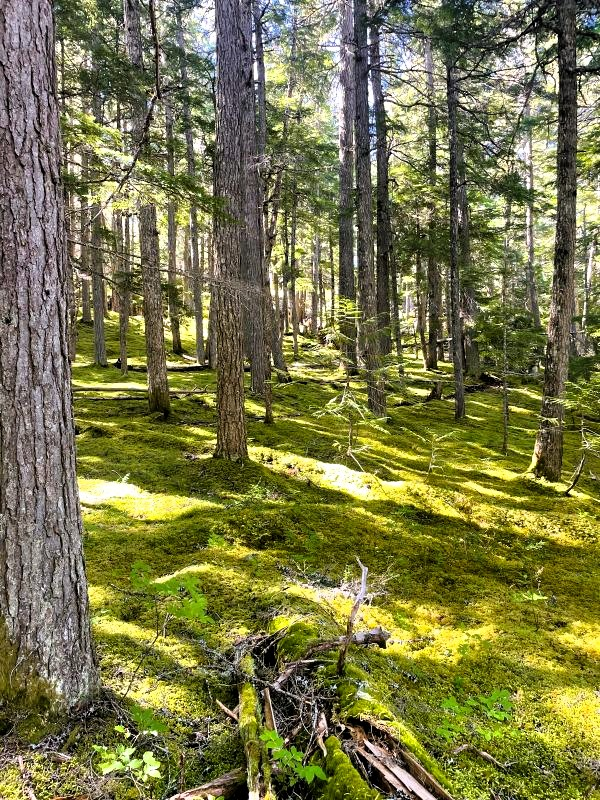
Half a kilometre on the Green Lake Loop trail, and you turn onto the Parkhurst trail proper — and the landscape shifts into something genuinely memorable.
The forest here is different. Thick, tall trees rise from a floor entirely carpeted in bright green moss — no ferns, no shrubs, no undergrowth. Just moss, as far as you can see between the trunks, so dense and uniform it looks almost intentional. Like someone had designed the floor of this particular section of forest and chosen one texture.
It was quiet here in a way that felt specific to the place. Whether the moss actually dampened sound or whether it just created the psychological impression of quiet, I can’t say — but the effect was the same. Birds, the gentle creak of trees moving in the breeze, our footsteps. Nothing else. The usual piney-loamy scent of BC trails was absent, too, replaced by something cooler and greener.
It’s one of the nicest sections of forest I’ve walked in the Sea to Sky corridor.
The Ghost Town
At kilometre 3.4, a sign announces the Ghost Town Loop — a small loop that can be walked in either direction. We went counterclockwise.
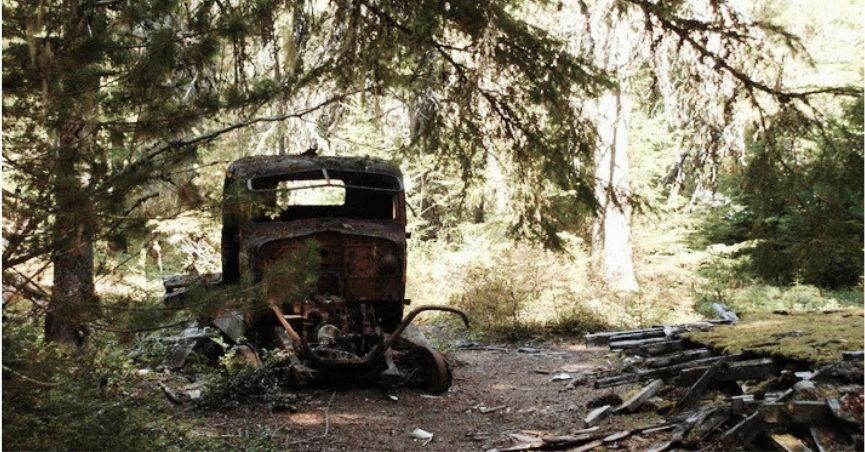
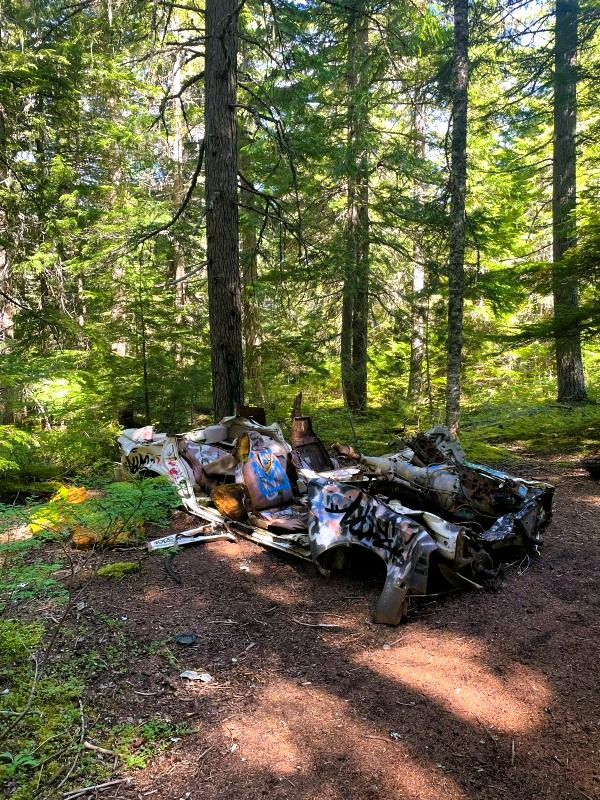
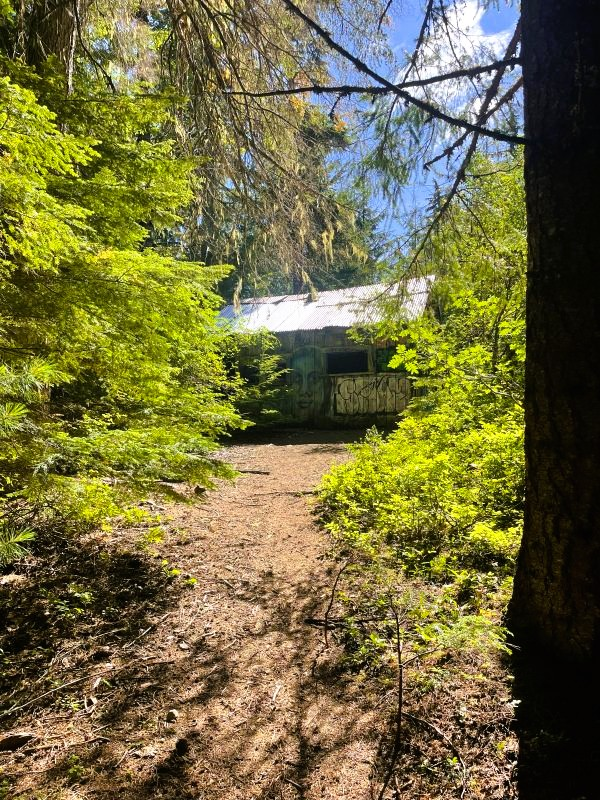
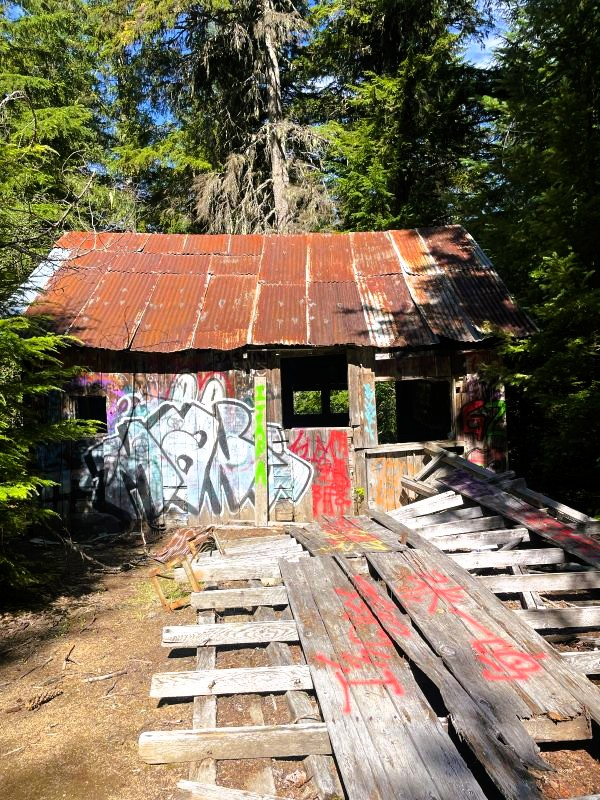
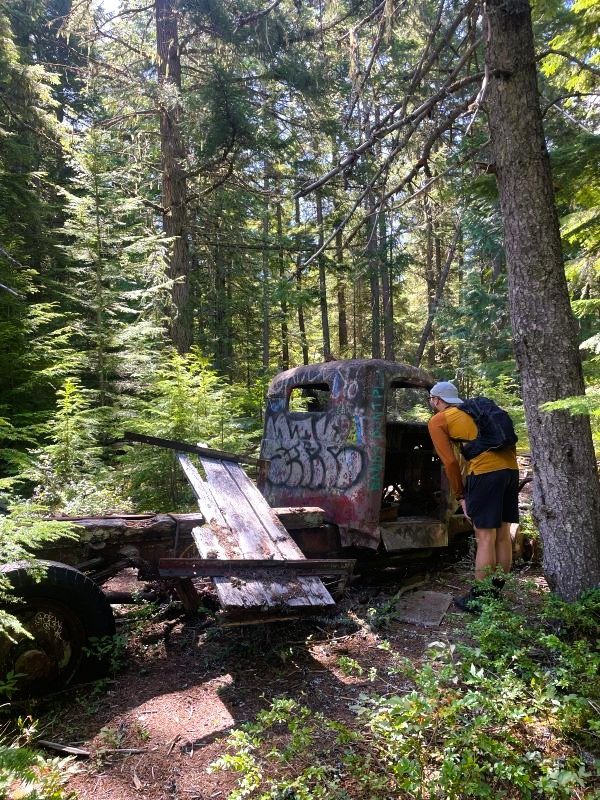
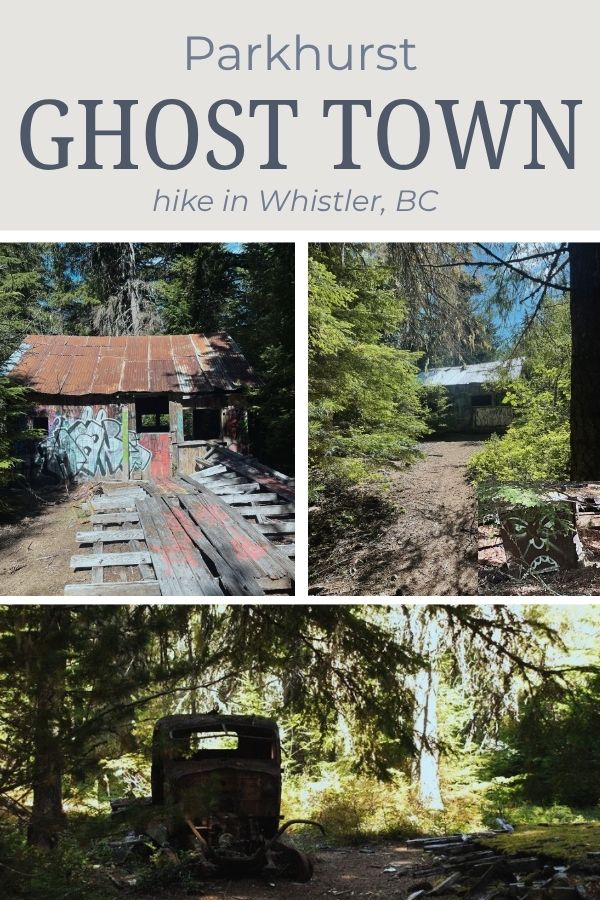
The first sign that something is different comes gradually. A shape through the trees that doesn’t look like a tree. It becomes clearer as you approach: an old car, roofless, collapsed in on itself, the seat bases still visible inside, and engine parts protruding from the hood. Then a cabin with a bright corrugated metal roof, spray-painted with graffiti. Then more — a truck, another structure, scattered debris of what was once a small working community. Wooden barrels with faces painted on them, tucked into the forest like sentinels.
It is, in the best possible way, slightly creepy.
The standing cabins are the most atmospheric. Stepping inside means stepping from the filtered daylight of the forest into real darkness — your eyes take a few seconds to adjust, and in those seconds you’re aware of shapes you can’t quite make out yet. Piles of old furniture. Existing walls with doorways leading into rooms you can’t see around. The particular unease of not being able to immediately identify what you’re looking at.
I don’t watch many horror movies, but this felt like a set for one. I was alert the entire time — not frightened, exactly, just very aware that I couldn’t always see what was around the corner.
It’s genuinely excellent.
Note: Visit in daylight. The ghost town in dimmer evening light would be an entirely different and considerably more unsettling experience.
Green Lake
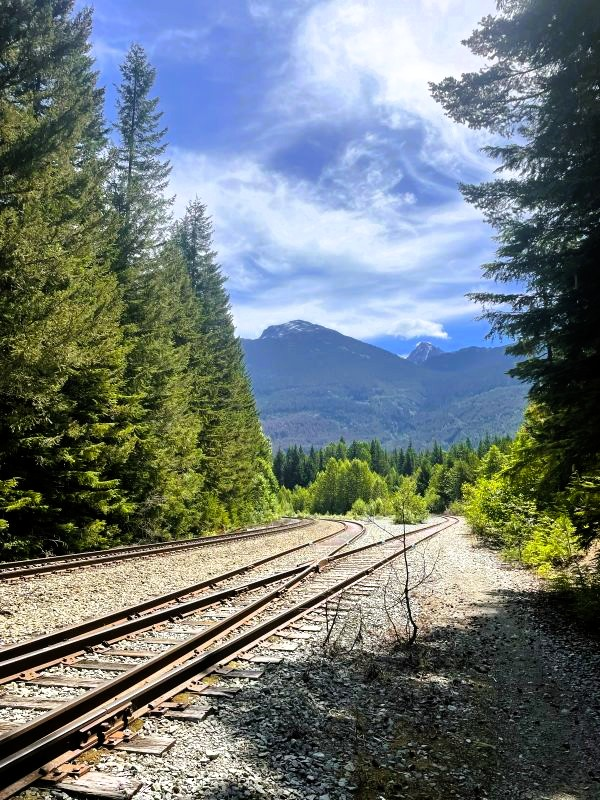
Two trails within the ghost town loop lead down to Green Lake, both crossing the still-active railway tracks — look and listen carefully before crossing, the tracks are clearly in use (no overgrowth between the ties, polished rail surface).
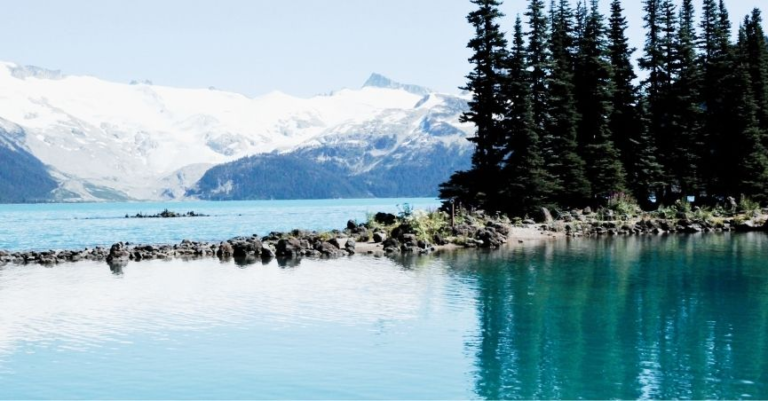
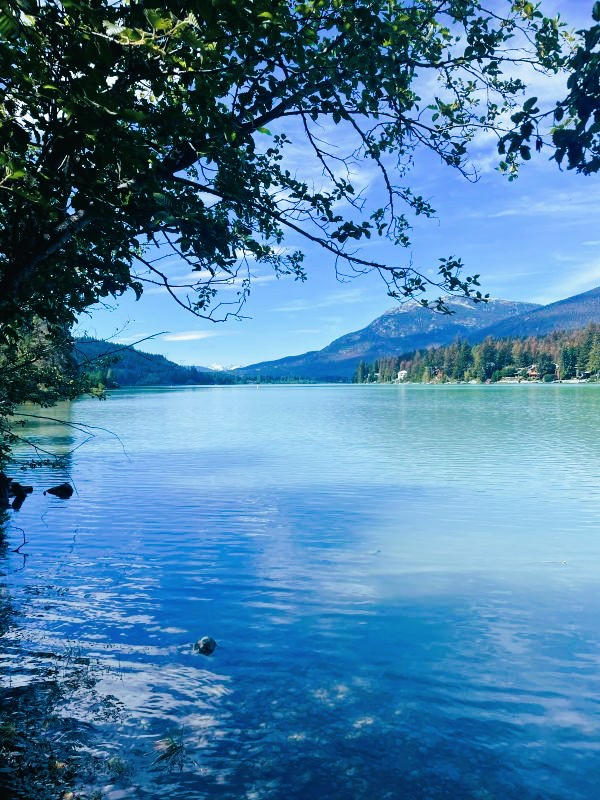
Push through the last stretch of forest to the lakeshore, and the reward is immediate. The lake is aptly named — the water has that specific glacier-fed turquoise-green colour that Southeast BC does so well, clear enough to see depth, vivid enough to photograph without a filter. We found a shaded spot on the shore, sat down, and had our mid-hike snacks.
It was cool in the shade — a nice reprieve, though the forest had kept us out of the worst of the sun anyway. Float planes landed farther down the lake while we sat there, the sound carrying clearly across the water. Peaceful and slightly surreal in equal measure.
Had it been hotter, we’d have been in the water immediately. File that for a summer return trip.
The Rail Trail and the Bridge
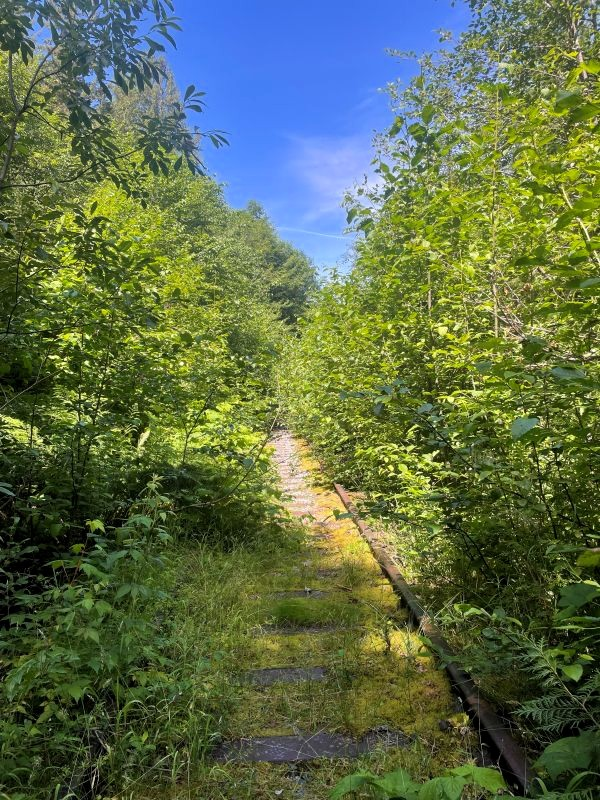
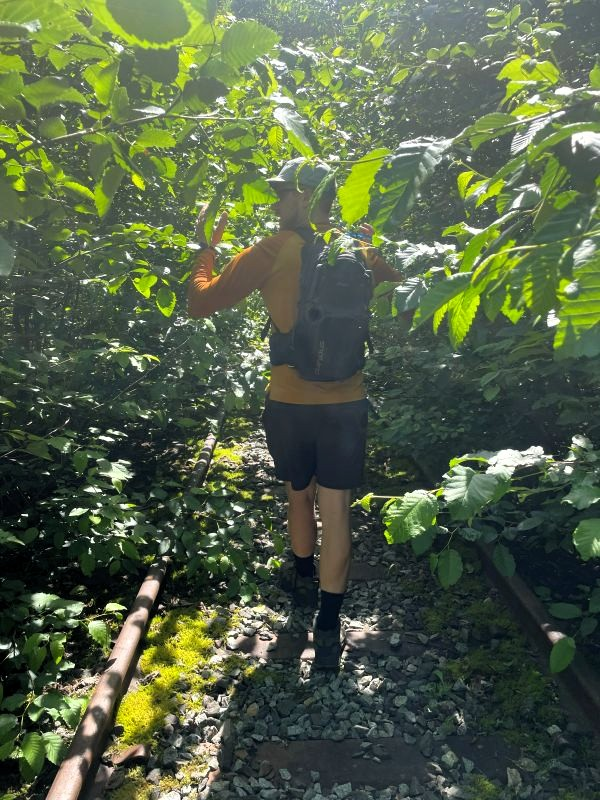
Back on the ghost town loop and heading toward the finish, the trail eventually runs parallel to the railway tracks. We lost the trail briefly here and ended up walking the wide gravel section alongside the mainline — still fine, but not technically the trail. We also accidentally turned down a decommissioned branch line that was starting to be reclaimed by vegetation: plants pushing up through the railway ties, rust spreading across the rails, the steel corridor narrowing as the growth closed in from both sides.
It was genuinely beautiful in that specific way that abandoned industrial things are — the contrast between the engineered precision of the original construction and the patient, indifferent work of nature undoing it. We pushed further than we should have before admitting it wasn’t the trail and turning back.
The tip: stay with the mainline gravel but not on the tracks themselves. The trail reconnects clearly once you’re back on the right section.
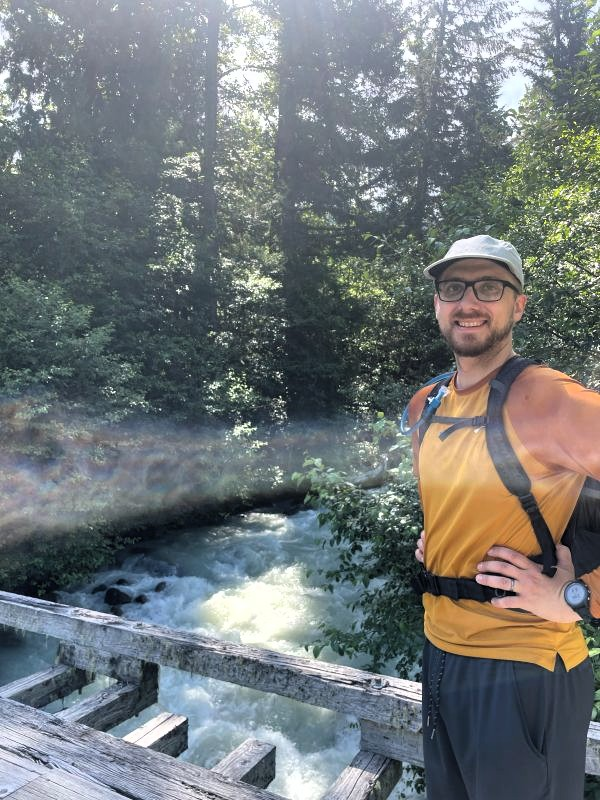
Shortly after finding the trail again, we crossed the bridge. It is dilapidated in a way that demands respect. Warped wooden planks, visible holes in the deck, the whole structure suggesting it has been here a long time and knows it. We crossed carefully — testing each section before committing weight, listening to the boards creak, moving one at a time. If it were genuinely dangerous, it would presumably be closed. It was more nerve-wracking than dangerous. Cross carefully, and you’ll be fine.
Past the bridge, some large concrete blocks mark the return to the parking area. Done.
Who Is This Hike For?
Anyone who wants something a little different from the standard Whistler mountain experience.
The Parkhurst Ghost Village loop is an easy hike — no serious elevation, no exposed ridgelines, no technical terrain. We saw families with children, couples, and people of various fitness levels. The gravel road section at the start is the least interesting part, but it’s flat and easy. The ghost town section is accessible to anyone who can walk comfortably for a few hours.
It’s a particularly good choice if:
- You want history and context with your outdoor time
- You’re not up for a strenuous alpine day
- You have kids who would find abandoned cars and cabins genuinely exciting (they would)
- You want a Whistler experience that isn’t about the ski hill
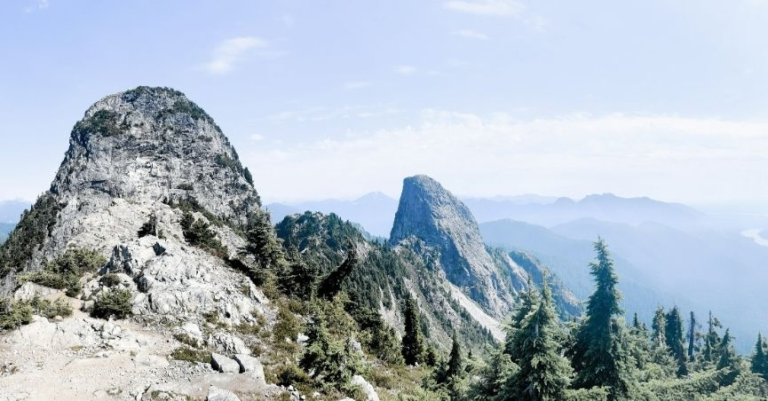
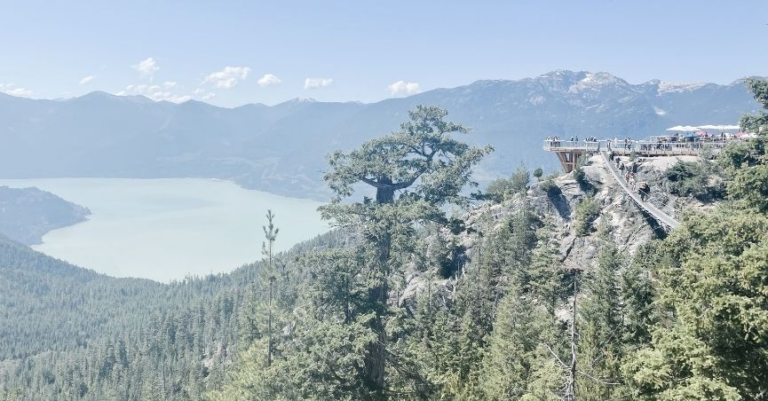
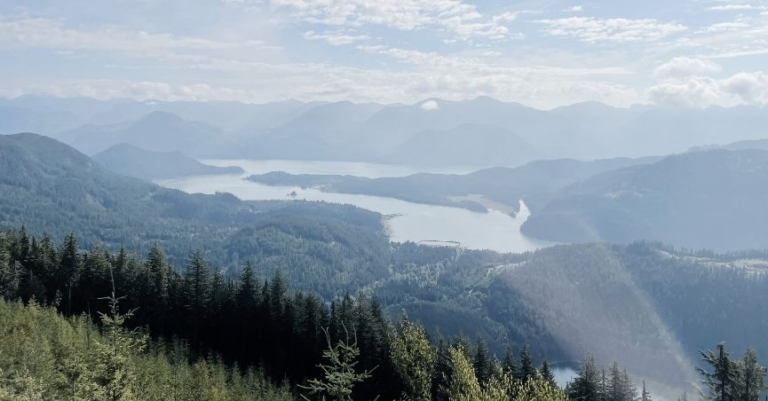
The lack of big views is a genuine trade-off — if panoramic mountain vistas are the goal, this isn’t your hike. But as a morning in the forest with a genuinely compelling story at the centre of it, it’s excellent.
Practical Notes
Getting there from Vancouver/Langley to Whistler is approximately 2 hours from Vancouver (add 30–45 minutes from Langley). It’s a long day trip but doable — we left early, hiked through the morning, spent the day at a few other stops and were home by early evening.
Parking: Look for the makeshift parking area near the Green Lake/Parkhurst trailhead. A 4×4 or high-clearance vehicle gives you the option to park closer to the trail proper and skip some of the gravel road.
The railway crossing. The tracks at Green Lake are still active. Stop, look both ways, and listen before crossing. This is not a formality.
Cross the bridge carefully. Test each plank. Move one person at a time. It’s fine, just pay attention.
Navigation Download the trail to an offline map (AllTrails has it) before you go — the route isn’t always clearly signed, and it’s easy to drift onto the wrong road or rail section, as we discovered. Cell service in the area is unreliable.
When to go July was excellent — wildflowers along the road sections, decent water volume at Wedge Creek Falls, the lake at its most vivid. The ghost town is accessible most of the year; avoid it in heavy rain when the trails get muddy, and the dilapidated structures feel even less stable than usual.
Pin me for later
You might like these other BC Hiking posts: