5 Places to See Azulejos in Porto
Why Porto for Azulejos
The red cliffs of the Algarve and the terracotta rooftops of Lisbon were what first pulled me toward Portugal. But once I arrived, it was the blue and white tiles that kept stopping me.
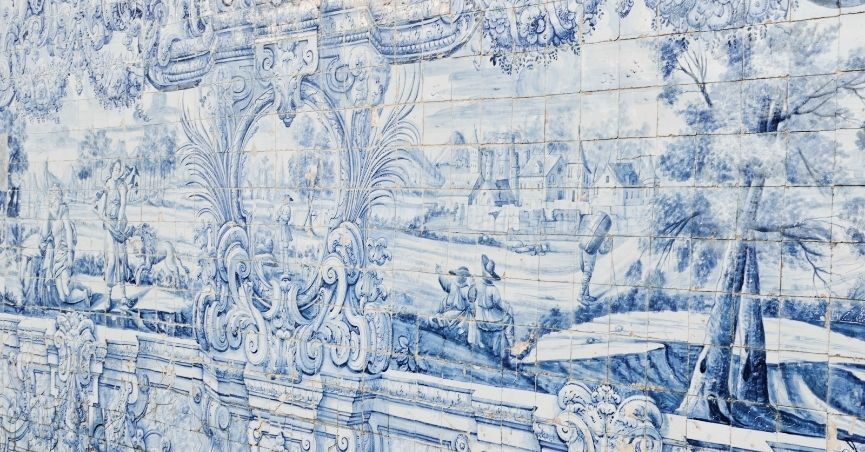
Azulejos — traditional Portuguese ceramic tiles, often depicting large narrative murals — appear throughout the country. Lisbon has them, the Algarve has them, and small towns have them on every church facade. Portugal is covered in tile art. But Porto does something specific with the blue and white that hits differently. Larger murals, more concentrated, and a particular vibrancy in the cobalt against white that makes the best examples genuinely breathtaking.
The best azulejos in Porto aren’t in a museum. They’re on buildings. On train station walls. On church facades in the middle of busy shopping streets. Part of what makes hunting them down so satisfying is that they exist in context. Sacred scenes alongside everyday life, centuries-old imagery on buildings that people walk past on their way to work.
Finding them becomes its own kind of game. You learn to look for blue around the next corner. And when you turn a corner and suddenly there it is — an entire wall of intricate narrative tilework — the reaction is the same every time.
Here are five spots not to miss, in no particular order.
1. São Bento Station — The Unmissable Starting Point
If you’re arriving in Porto by train, you’re starting in the best possible place.
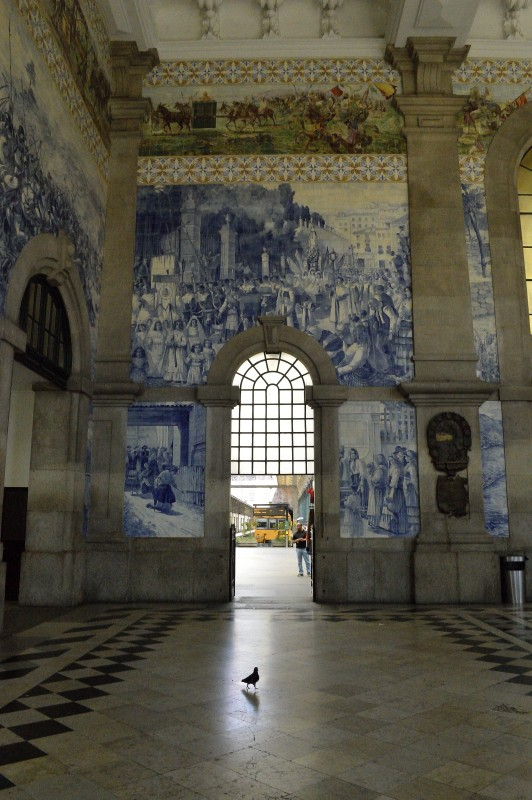
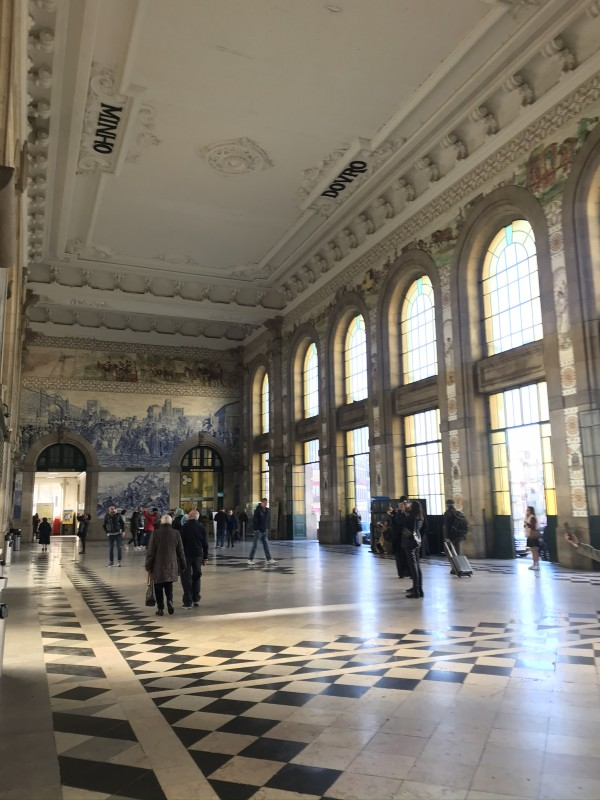
Step off the platform into the main hall of São Bento Station and stop. Just stop. The walls from floor to ceiling are covered in approximately 20,000 hand-painted blue and white azulejo tiles depicting Portuguese history. Royal processions, battle scenes, rural life, and the history of transport. The fact that this is a functioning train station, with commuters moving through it and arrivals dragging suitcases across the floor, makes the whole thing feel even more remarkable.
I remember walking in with my backpack on, not sure where to look first, and not being able to look away.
What makes São Bento exceptional beyond its scale is the authorship: all 20,000 tiles were created by a single artist, Jorge Colaço, between 1905 and 1916. Eleven years, one person, one cohesive vision covering the walls of a train station. The panels are not decorative in the generic sense — they tell specific stories, depicting identifiable historical events in careful narrative sequence.
Arrive early before the station gets busy — the light in the morning is softer, and the hall is easier to photograph without crowds. If you’re arriving by train, you get this for free as part of your journey.
2. Igreja do Carmo — The Church That Wears Its Art Outside
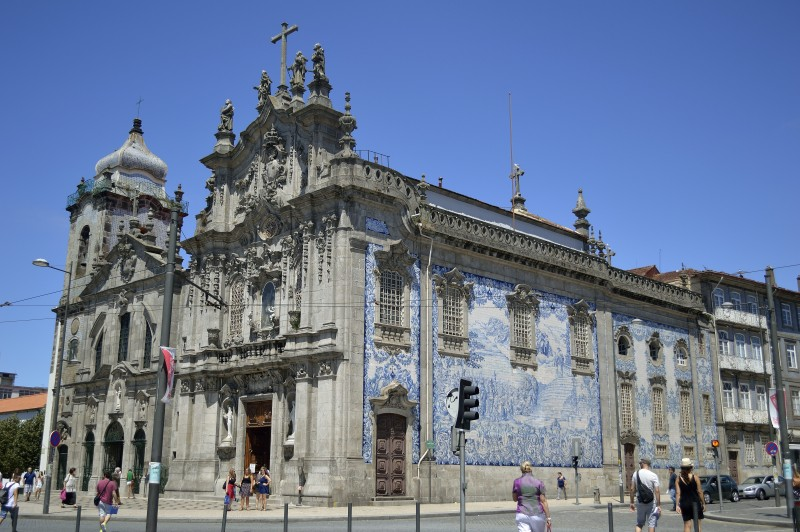
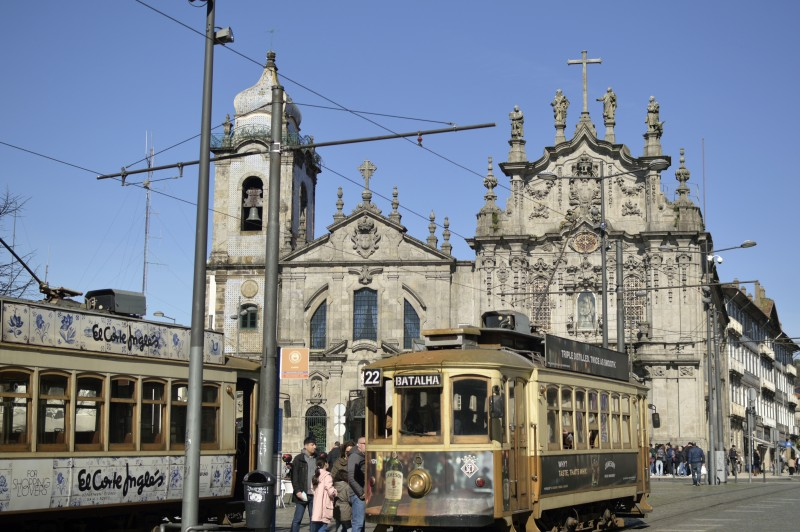
The Igreja do Carmo is likely already on your Porto list. It’s one of the most photographed buildings in the city, located near the Carmo tram line and well-known enough to appear on most itineraries. There’s a reason for that.
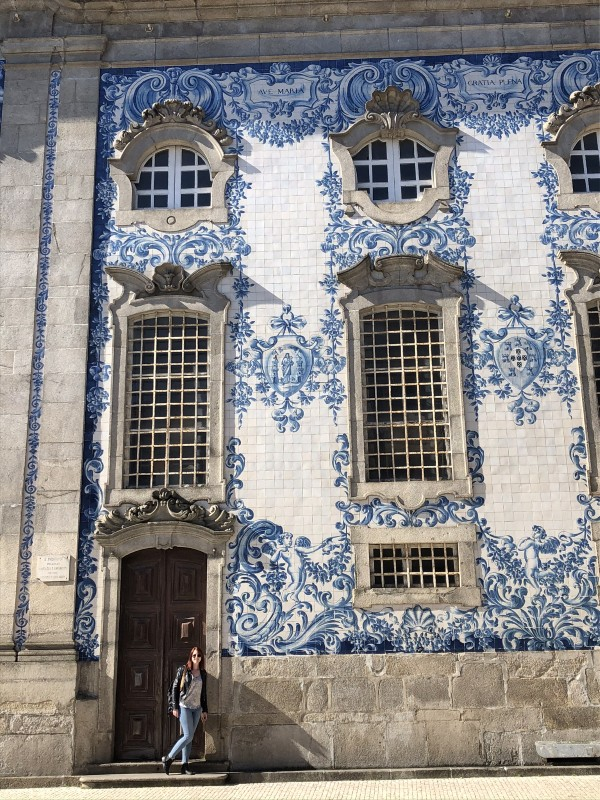
The entire side wall of the church — a single enormous facade facing the street — is covered in blue and white azulejos depicting scenes from the founding of the Carmelite Order. The religious symbolism, the figures, and the narrative moments from the order’s history were rendered in careful, detailed tile panels. As a single exterior wall of narrative tilework it’s one of the most impressive examples in Porto, and from across the street you can take in the full scale of it at once.
The church itself is 18th century Baroque — if you go inside, the interior is equally ornate. But for the tile art specifically, the exterior wall is the main event and can be appreciated for free from the street.
The Igreja das Carmelitas sits directly adjacent. The two churches are separated by a very narrow house (reportedly built to prevent the monks and nuns of the convents from interacting).
3. Igreja de Santo Ildefonso — The One That Beckons from the Square
Santo Ildefonso stands on an elevated platform above its square, near São Bento Station. It has a quality of beckoning — visible from multiple angles as you approach. The twin towers and tiled facade announcing themselves clearly above the surrounding streets.
The entire facade is covered in blue and white tiles depicting scenes from the life of Saint Ildephonsus and episodes from the Gospels. The tilework here was created by Jorge Colaço — the same artist responsible for São Bento Station — between 1932 and 1936.
Being close to São Bento makes this a natural pairing — walk from the station, look up at the tiles on both buildings, and take in the work of the same pair of hands across two very different contexts.
The elevated position makes it easier to photograph than some of Porto’s tile facades — you can step back into the square and get a full view without craning your neck.
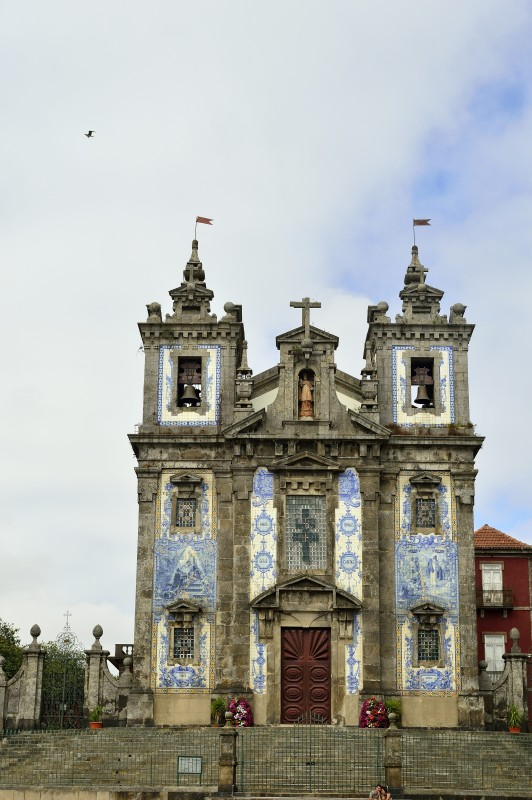
4. Capela das Almas — The Surprise on the Shopping Street
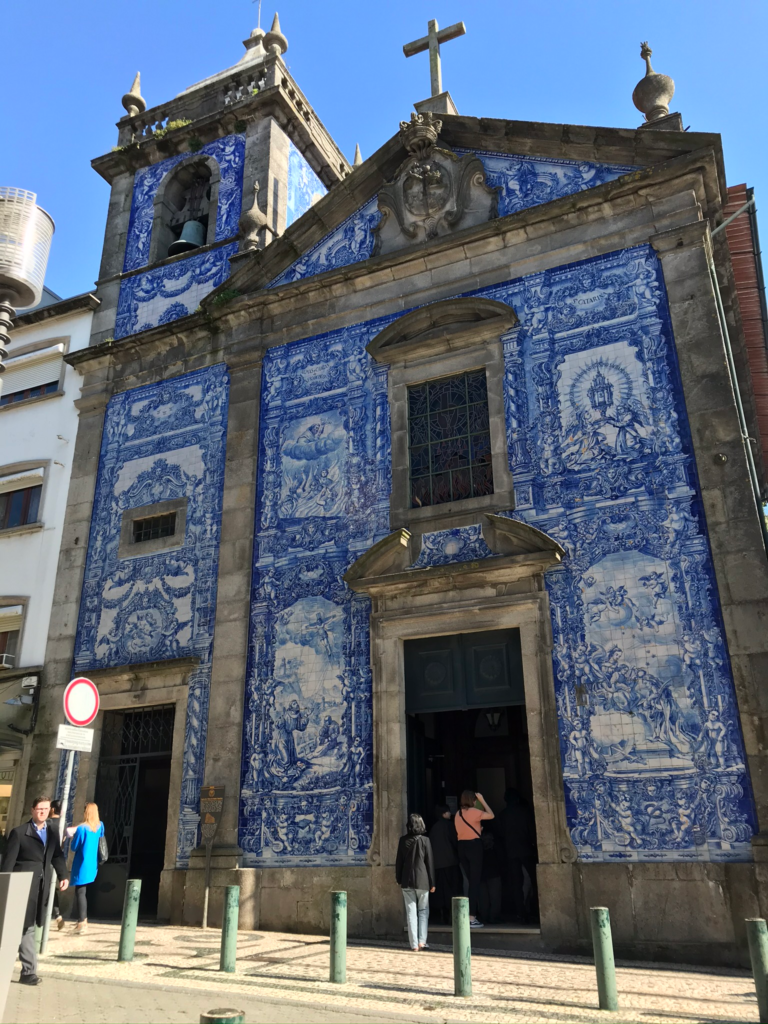
The Chapel of Souls (Capela das Almas) sits on Rua de Santa Catarina — one of Porto’s busiest shopping streets. Full of pedestrians, cafés, and the general noise of a commercial district. You’re walking along looking at shop windows and suddenly there it is: an entire chapel facade covered in approximately 16,000 blue and white azulejo tiles. The scenes depict the lives of Saint Francis of Assisi and Saint Catherine of Alexandria.
The contrast is the point. Sacred imagery beside modern shopfronts. People walking past on their way somewhere else, and then stopping.
The tilework was added in 1929, designed by Eduardo Leite and produced in Lisbon. The building itself dates to the 18th century; until the early 20th century the exterior was plain whitewashed — the transformation to what it is now happened almost overnight by historical standards.
Photography tip: Aim for early morning or late afternoon to capture the tiles in the best light, minimizing harsh shadows and enhancing the blue hues. Early morning is best for fewer people and cleaner angles, while late afternoon gives softer, more flattering light on the tiles.
Free entry. Hours vary — generally open daily from 7:30am but check current times before visiting as midday closures apply on some days.
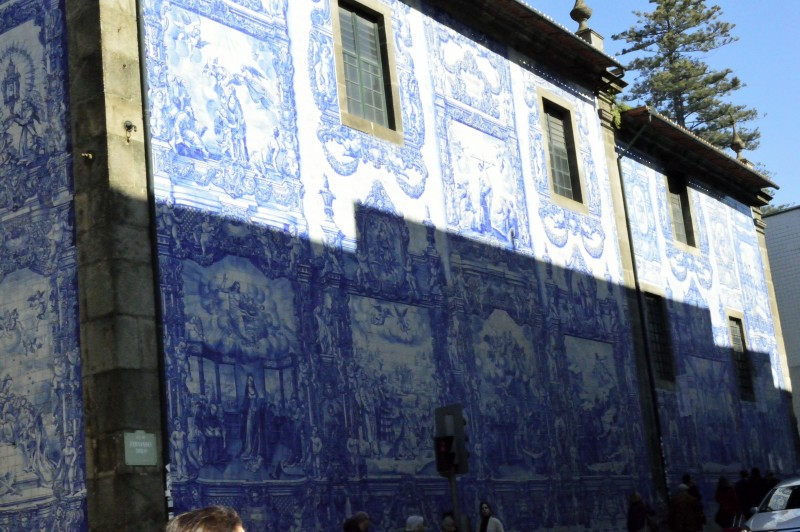
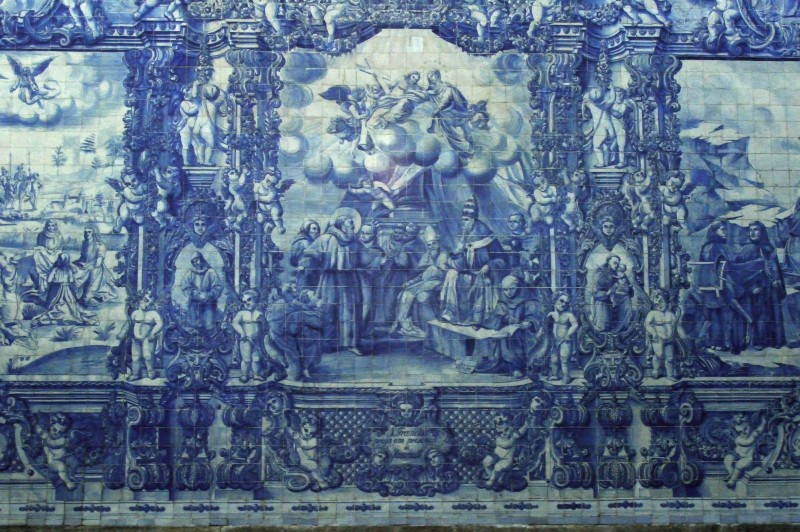
5. Cloister of Porto Cathedral (Sé do Porto) — The Peaceful Interior
The Porto Cathedral (Sé do Porto) is one of the oldest and most important monuments in the city. A Romanesque fortress-church that has been added to and modified across eight centuries. Most visitors come for the cathedral itself. The reason to seek out the cloister specifically is the tiles.
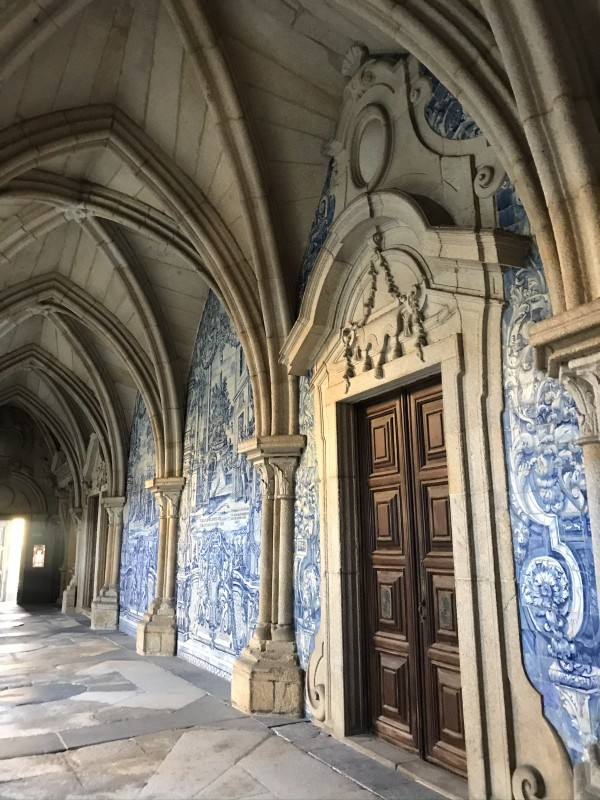
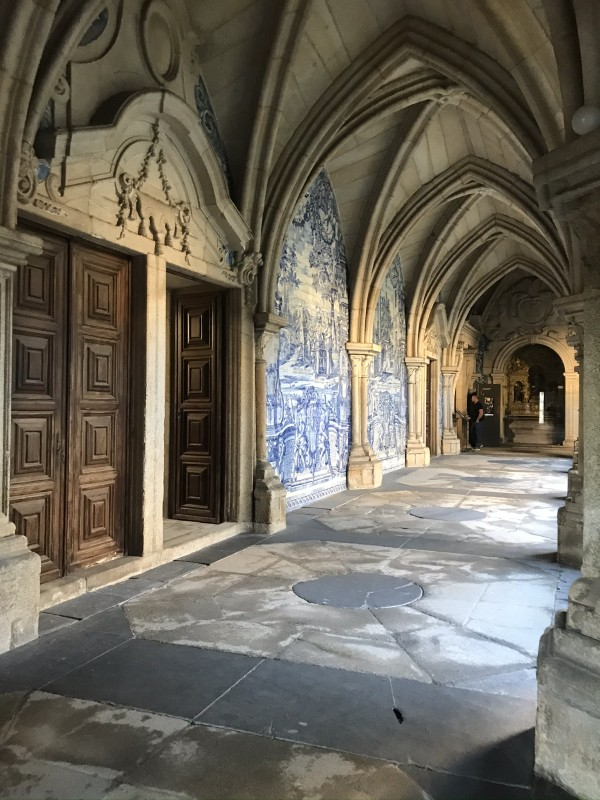
The Gothic cloister’s walls are covered in 18th-century azulejo panels painted by Valentim de Almeida between 1729 and 1731. The subjects are unusual: scenes from the life of the Virgin Mary, passages from the Song of Songs, and scenes from Ovid’s Metamorphoses. Classical mythology and sacred scripture side by side in the tiles of a cathedral cloister. The combination is quietly extraordinary once you’re aware of it.
But it’s not just the tiles. The cloister itself is one of Porto’s most beautiful interior spaces: stone Gothic arches framing a small central garden, the light filtering in softly from the courtyard, the overall atmosphere calm and slightly dim in a way that feels genuinely contemplative. Blue is a calming colour to begin with — in a space this architecturally serene, surrounded by it, the effect is cumulative. I found it peaceful in a way that the busier tile spots outside weren’t.
Entry to the cloister requires a ticket (separate from the cathedral nave). Worth it.
Tips for Hunting Azulejos in Porto
Mix planning with wandering. We knew we wanted to visit the cathedral cloister and the Carmo church. São Bento was by necessity of arrival. The others we found by walking with our eyes up. That combination — a few anchor points and the rest discovered — is the right approach for Porto’s tile art.
The hunt itself is the experience. More than any single tile facade, what makes Porto’s azulejo culture special is the way it’s embedded in ordinary urban life — in a train station, on a shopping street, on church walls you can approach freely. The turning-a-corner-and-seeing-blue feeling doesn’t get old. Lean into it.
Look up and look sideways. Tiles appear in places you don’t expect: interior staircases, small chapels, the sides of residential buildings, the walls of covered markets. The more time you spend in Porto, the more you find.
Pin me for later…
Read more Iberian Peninsula posts