The Best Miradouros in Lisbon: 10 Viewpoints Worth the Effort
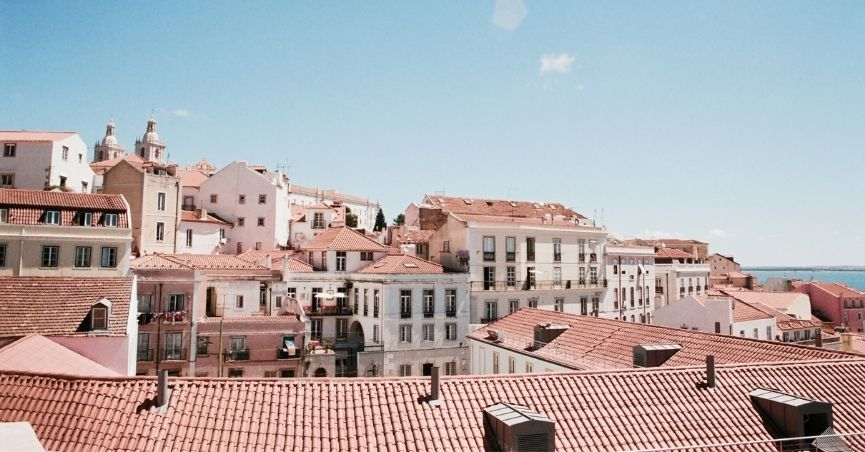
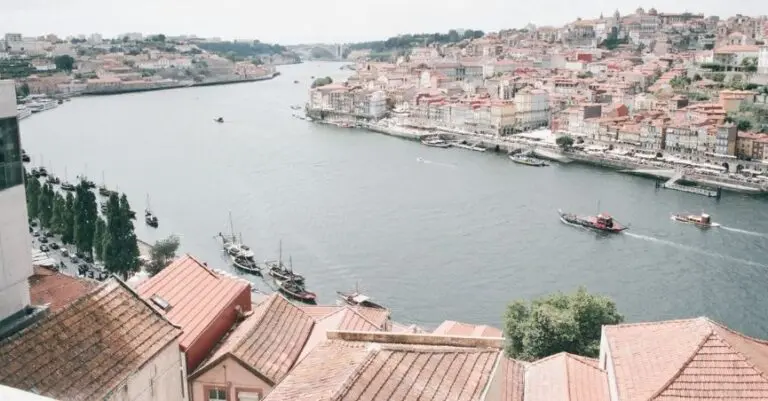
Lisbon is a city of viewpoints. The Portuguese word — miradouro — appears on signs all over the city, pointing you up staircases and along narrow streets toward terrace after terrace overlooking the same beautiful elements: terracotta rooftops, the silver-blue of the Tagus, and a quality of golden light that lingers longer than it has any right to.
What’s remarkable is that despite visiting from different angles and different heights, they all show you a similar picture — and they’re all different at the same time. The skyline hasn’t changed dramatically. The hills look as they’ve always looked. The rooftops are the same terracotta they’ve been for centuries. There’s no new skyscraper interrupting the horizon, no glassy tower inserted between the domes and the river. The beauty of preserving a city is that the view remains worth returning to. Lisbon’s miradouros are proof of that.
Here are ten worth your time — five I’ve stood at myself, and five that come well recommended for the days you want to go further.
The Viewpoints I’ve Visited
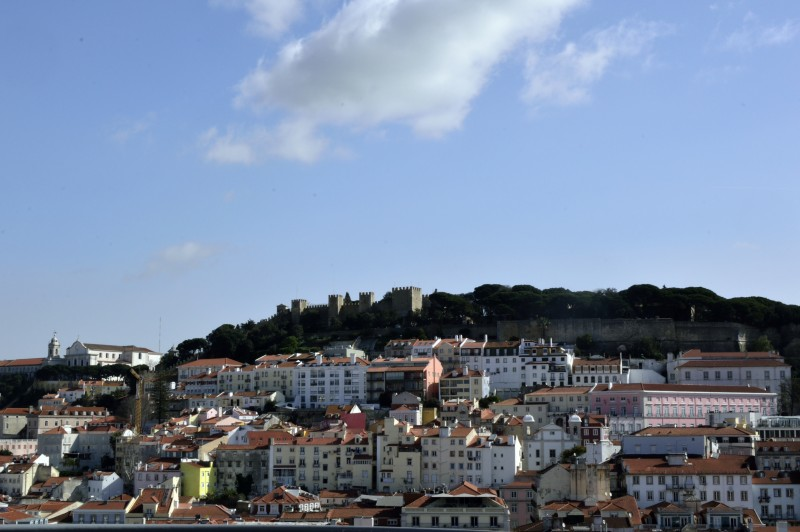
1. Miradouro das Portas do Sol — Alfama at Its Most Iconic
This is where you go to understand what people mean when they describe Lisbon as beautiful.
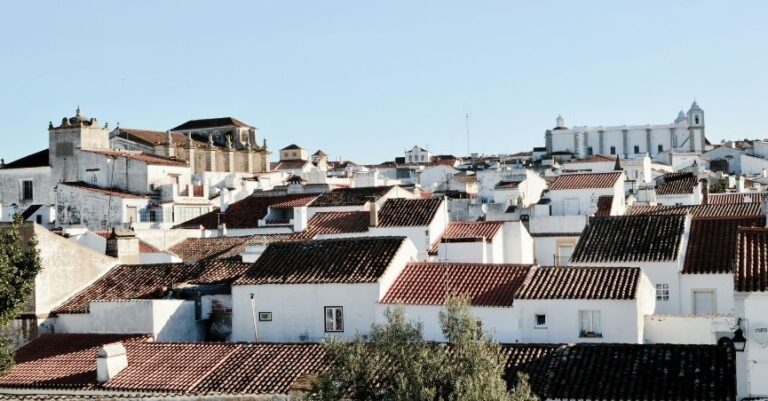
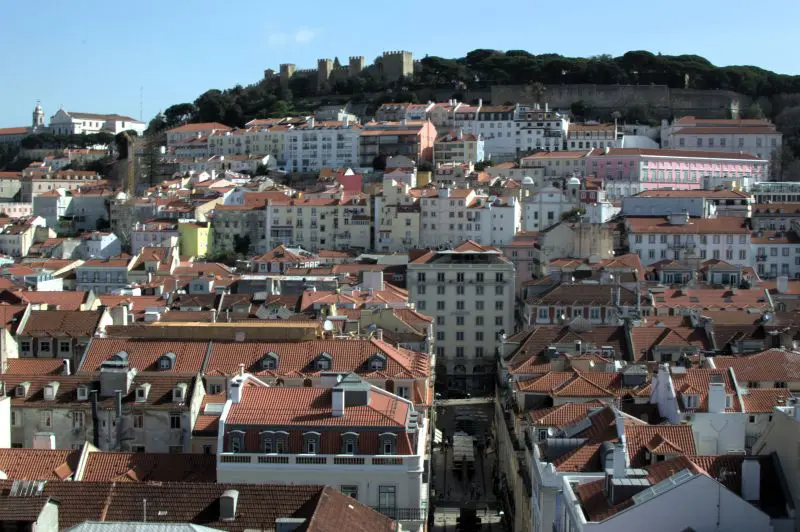
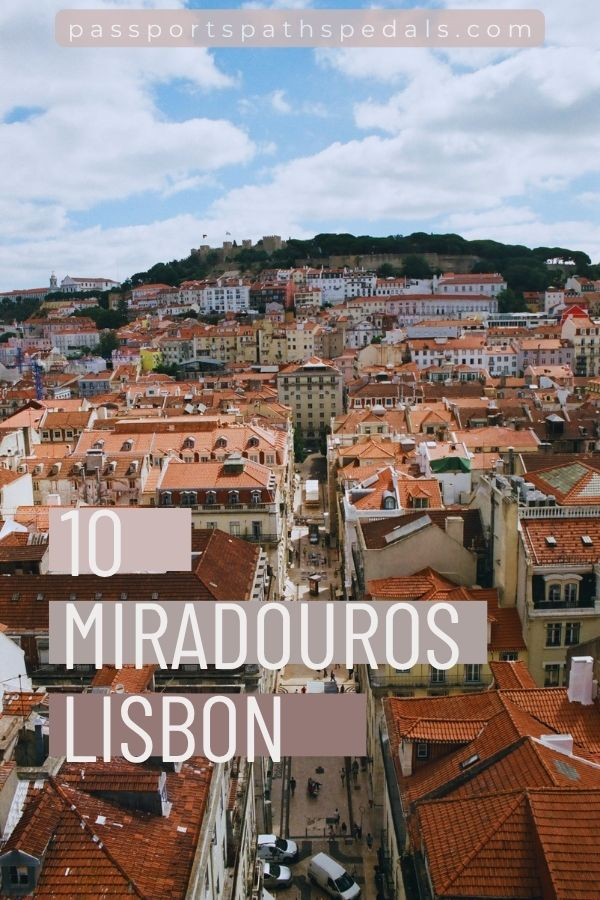
From Portas do Sol, the city arranges itself for you: whitewashed buildings with terracotta rooftops cascading down the hillside toward the river, layers of the city stacking up from the water — lower town, then middle, then the fortified hill with São Jorge Castle above it all. Church domes and bell towers punctuate the roofline. Narrow streets disappear between buildings. The whole composition is there at once, exactly as it appears in every photograph you’ve seen of Lisbon — and somehow still surprising when you’re standing in it.
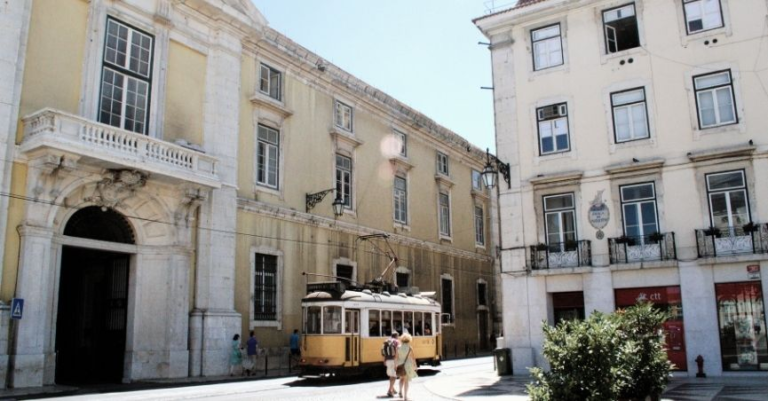
It sits right along the Tram 28 route, which makes it easy to combine with a tram ride through Alfama. Get off, stand at the railing, let the view do its work, then continue on foot or catch the next tram.
Best time: Morning for clear light; late afternoon when the sun catches the terracotta at an angle.
2. Miradouro de Santa Luzia — The Romantic One
A short walk from Portas do Sol and a completely different atmosphere.
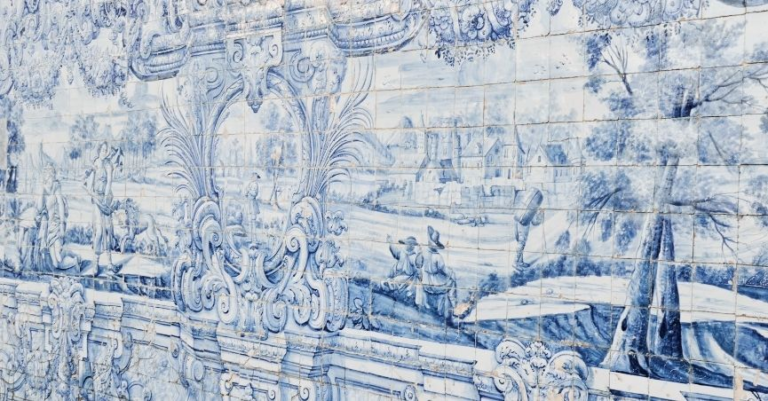
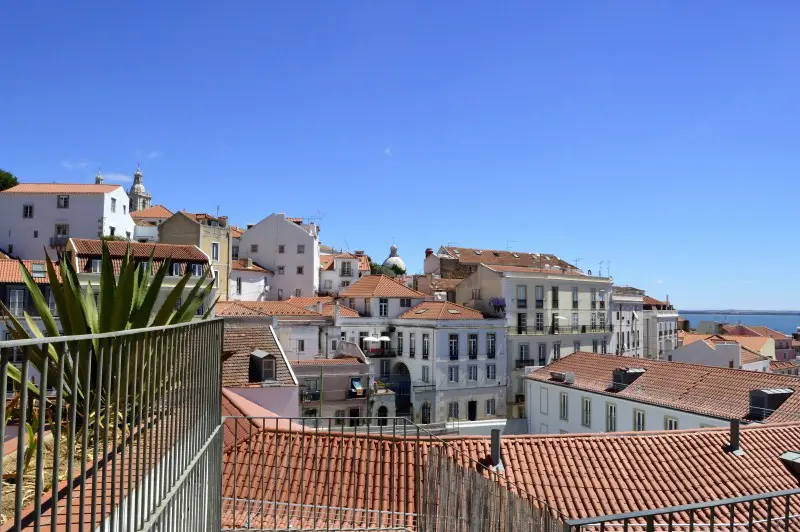
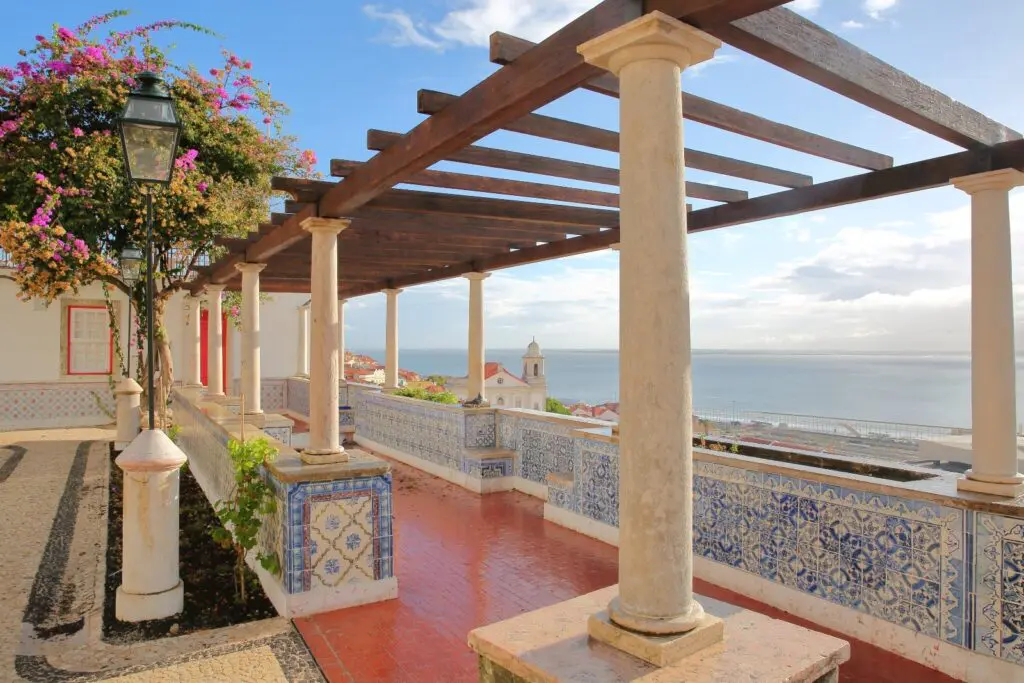
Santa Luzia is smaller, more enclosed, and more decorated — the walls covered in traditional blue-and-white azulejo tile panels depicting Lisbon scenes, the terrace draped in bougainvillea that spills over the railings in vivid magenta. It’s a prettier space than a grander one, intimate rather than sweeping, and it catches you off guard precisely because Portas do Sol is so open and this is so tucked away.
The view from Santa Luzia is lovely — looking south toward the river through a gap in the rooftops — but the viewpoint itself is as much the attraction as what you see from it. One of the most photographed spots in Lisbon, and one of the few where the photographed subject is genuinely as good as it looks.
Don’t miss: The azulejo panels on the wall before you reach the terrace — they depict old Lisbon scenes worth looking at carefully.
3. Miradouro de São Pedro de Alcântara — The Accessible One
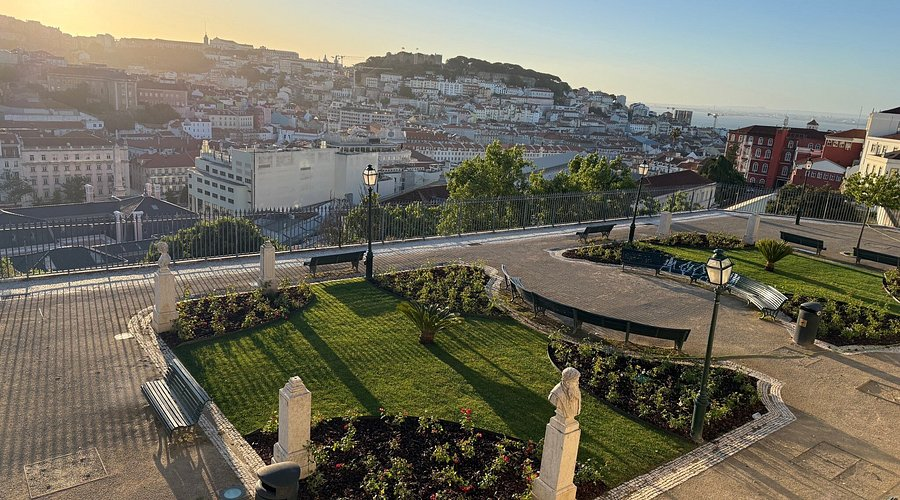
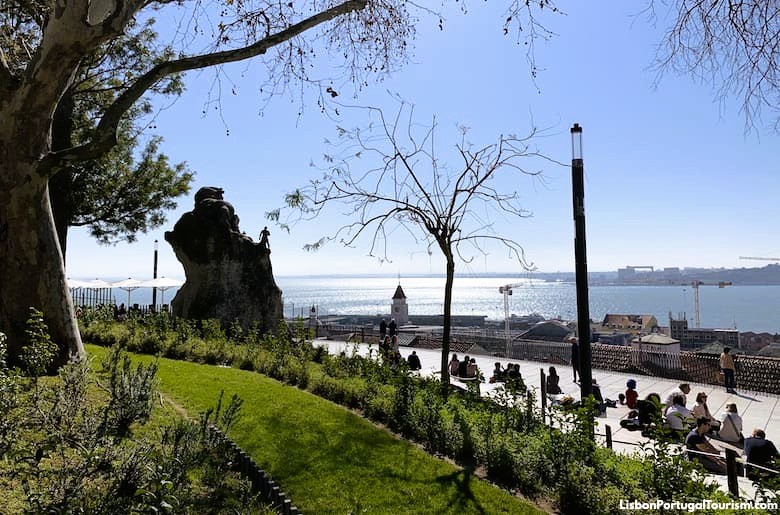
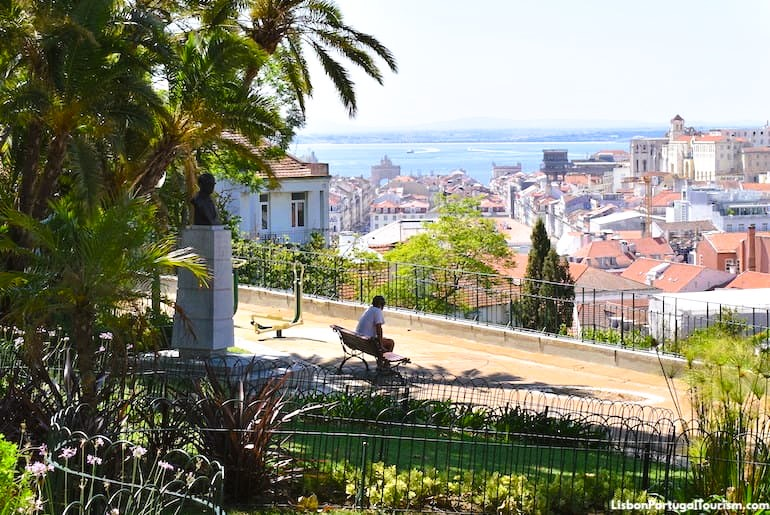
Set in Bairro Alto and connected to the lower city by the Ascensor da Glória funicular (currently closed — see our trams and funiculars post for current status), São Pedro de Alcântara is one of the best-laid-out viewpoints in Lisbon: a terraced garden with benches, manicured hedges, a kiosk, and a long, clear view directly across to São Jorge Castle on its hill opposite.
The framing here is different from Portas do Sol — you’re looking across the city rather than down into it, with the castle as your focal point and the rooftops of the neighbourhoods between you filling the mid-distance. There’s often a street performer or two, and the garden atmosphere makes it a good place to sit and linger rather than just stop and photograph.
It’s accessible on foot from Chiado or Bairro Alto, which makes it a natural pause on a walking day through the upper neighbourhoods.
Best time: Late afternoon when the castle catches the low light directly.
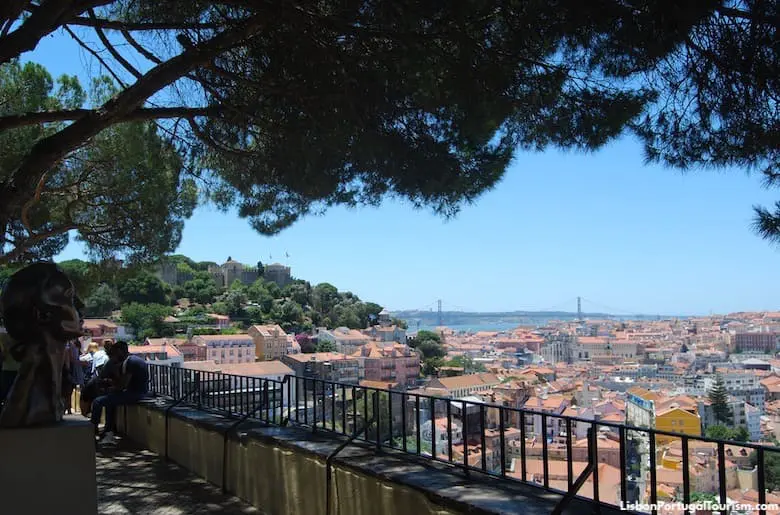
4. Miradouro da Graça — The Balcony
The Graça viewpoint feels less like an observation platform and more like a balcony — the kind you might have outside an apartment on the upper floors of a building, looking out over the city you live in.
It’s shaded by trees, which on a warm Lisbon afternoon is a genuine virtue. There’s a small café terrace where you can sit with a drink and watch the view without having to stand at a railing. The panorama is wide and clear — similar in scope to Senhora do Monte nearby — but the atmosphere is calmer and more residential. Families, locals on lunch breaks, the occasional musician. It feels like somewhere people actually come rather than somewhere they specifically go to see.
The city spreads below you in the same way as from the other hilltop viewpoints, but Graça’s particular combination of shade and terrace makes it the one I’d choose if I wanted to stay a while.
Best paired with: The Convento da Graça and its baroque church, just behind the viewpoint.
5. Miradouro do Parque Eduardo VII — The Different Perspective
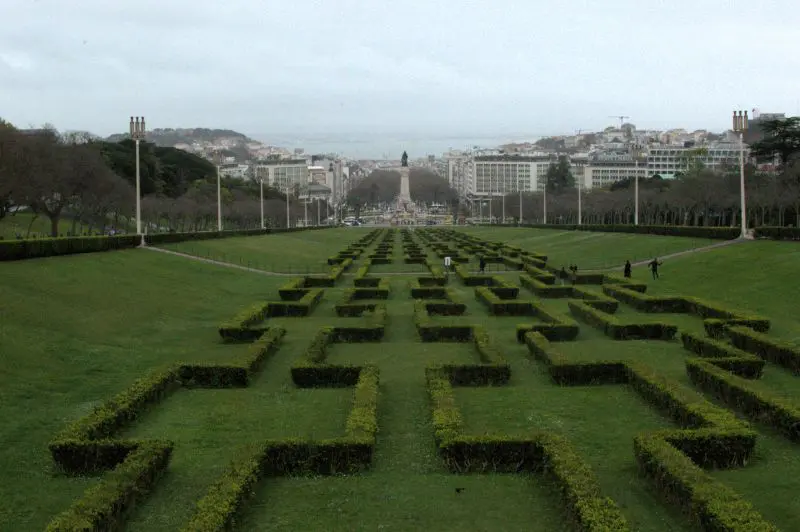
Eduardo VII Park isn’t a traditional miradouro in the hilltop sense — it’s a formal park that climbs a gentle slope north from the Marquês de Pombal roundabout, and its viewpoint is at the top of that slope.
From there, the view is a long, symmetrical corridor straight down the full length of Avenida da Liberdade — one of Lisbon’s grandest boulevards — through the city and all the way to the Tagus in the distance. It’s a different kind of Lisbon view: less about the rooftops and historic layers, more about scale and urban layout. The manicured gardens of the park frame the foreground in geometric precision.
If you’ve spent a day moving through Alfama’s organic tangle of streets and viewpoints, Eduardo VII offers a useful counterpoint — the planned, ordered version of the city looking back toward the organic one.
Practical note: The park itself is worth walking through for the formal gardens and the tropical greenhouse (Estufa Fria) at the lower end.
Worth Seeking Out — Lesser-Known Miradouros
These five come recommended rather than personally tested — added for the days you want to go further, or when the main viewpoints are crowded.
6. Miradouro da Senhora do Monte — The Best of the Lot
By most accounts, if you only go to one miradouro in Lisbon, make it this one.
Set at one of the highest points in the city, it offers a sweeping, unobstructed 180-degree panorama from the castle across to the river — the most complete view of Lisbon available from any publicly accessible point. It’s popular but feels removed from the main tourist circuit, which gives it a calmer atmosphere than some of the more central viewpoints.
Sunset here is reportedly exceptional — the light over the rooftops, the river catching colour, the whole city visible at once. It’s on the list for a return trip.
7. Miradouro de Santa Catarina — The Social One
Facing the Tagus on the western edge of the Bairro Alto hill, Santa Catarina has a reputation as the most bohemian of Lisbon’s viewpoints — musicians, students, travellers, and locals all gathering informally as the sun goes down. Less structured than the garden viewpoints, more of an organic gathering spot.
The view faces west toward the river, which makes it particularly well-positioned for sunset. Worth timing accordingly.
8. Miradouro do Monte Agudo — The Peaceful One
A small, local viewpoint in the Graça neighbourhood — rarely busy, mostly populated by people from the surrounding streets. The kind of place you find by walking rather than searching, and that feels like a reward for the detour.
9. Miradouro da Penha de França — The Under-the-Radar One
Elevated and quiet, with views toward the eastern part of the city and the river. Less visited than the Alfama viewpoints, which makes it a good option for anyone who finds the central miradouros too crowded. The neighbourhood around it is genuinely local and worth wandering through.
10. Jardim do Torel — The Hidden Garden
A small terraced garden in the Intendente neighbourhood with views over the Baixa and beyond. It has a pool (open in summer) and a kiosk, and sits in a part of the city that most tourists don’t reach. If you’re spending enough time in Lisbon to want somewhere that feels genuinely undiscovered, Torel is the one to find.
The Santa Justa Elevator — An Honorary Miradouro
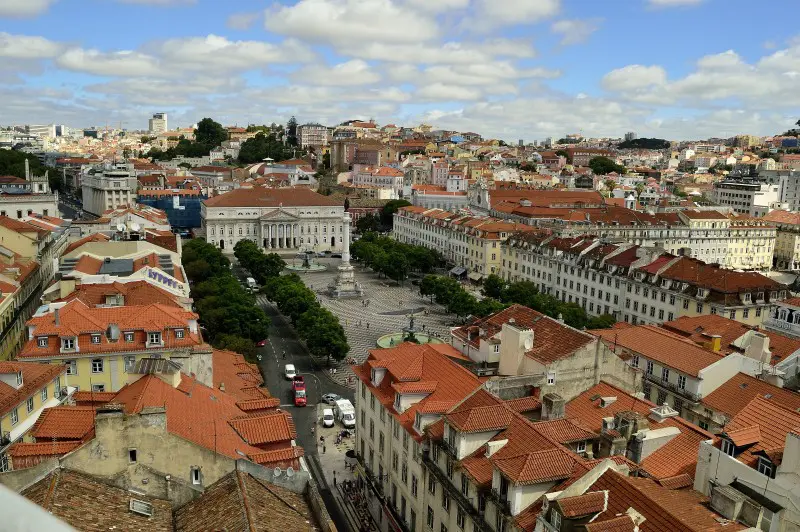
Not a traditional viewpoint, but worth including. The platform at the top of the Santa Justa Elevator looks out over Baixa’s grid-like streets from directly above — a perspective you don’t get from any hilltop viewpoint, which tends to show you the city from the side rather than the top. The ironwork of the elevator itself is also extraordinary up close: ornate and detailed in a way that makes the climb worthwhile before you’ve even looked at the view.
Tips for Visiting Lisbon’s Miradouros
Go early or at sunset. Midday light flattens everything. The morning and late afternoon hours give you richer colour, longer shadows, and better photographs. Sunset specifically draws crowds to the popular viewpoints — arrive 30 minutes early to find a good spot.
Use the trams and funiculars. The Tram 28 passes several Alfama viewpoints and is worth riding for its own sake. The funiculars connect the lower and upper Bairro Alto efficiently. Between them, you can link several viewpoints without climbing everything on foot. (Check current funicular status before going — see our trams post.)
Bring cash. The kiosk cafés at several viewpoints (Graça especially) are cash only. A drink at a miradouro kiosk as the sun goes down is one of the better uses of a few euros in Lisbon.
Don’t try to do all ten in one day. Three or four is the right number for a half day of viewpoint exploration — enough to notice how the city looks different from each one, not so many that they blur together. Spread them across your stay and let each one earn its own moment.
A Final Thought
The viewpoints all show you a similar picture — and they’re all different at the same time. The rooftops, the river, the hills. The same elements are rearranged by angle, height and light. There isn’t one best miradouro. There’s just the one you happen to be standing at when the light hits just right.
In a city that has preserved itself as carefully as Lisbon has, that view will be waiting for you whether you come back next year or in a decade. The skyline won’t have changed much. The terracotta will still be there. The Tagus will still be silver in the afternoon.
That’s worth something.
Pin me for later
You might like these other Iberian Peninsula posts: