Visiting the Valley of the Kings Egypt: Where Pharaohs Rest
Before this trip, I honestly didn’t know much about Luxor. I hadn’t done much research and didn’t know what to expect — I figured it had to be interesting since so many tours offered it. Well, it wasn’t just interesting.
Our time in Luxor ended up being some of the most incredible parts of our entire journey. The pyramids in Giza were awesome, but visiting the Valley of the Kings changed something in my understanding of ancient Egypt entirely. I went in with low expectations and left completely, gloriously wrong about everything I thought I knew.
Valley of the Kings Summary
Location: West Bank of the Nile, Luxor, Egypt
Getting there: ~1 hour from Luxor city — car or guided tour
Entry:~$10 USD for 3 tombs; special tombs cost extra
Camera ticket: Required for photography including phones — buy at the entrance
Tombs visited: Ramses IV, Merenptah, Ramses III, Sety I
Best time: Early morning — go here first, save open-air sites for the afternoon
Note: Often combined with a full West Bank day — Theban Necropolis post here
Sections to jump to:
Why the Valley of the Kings
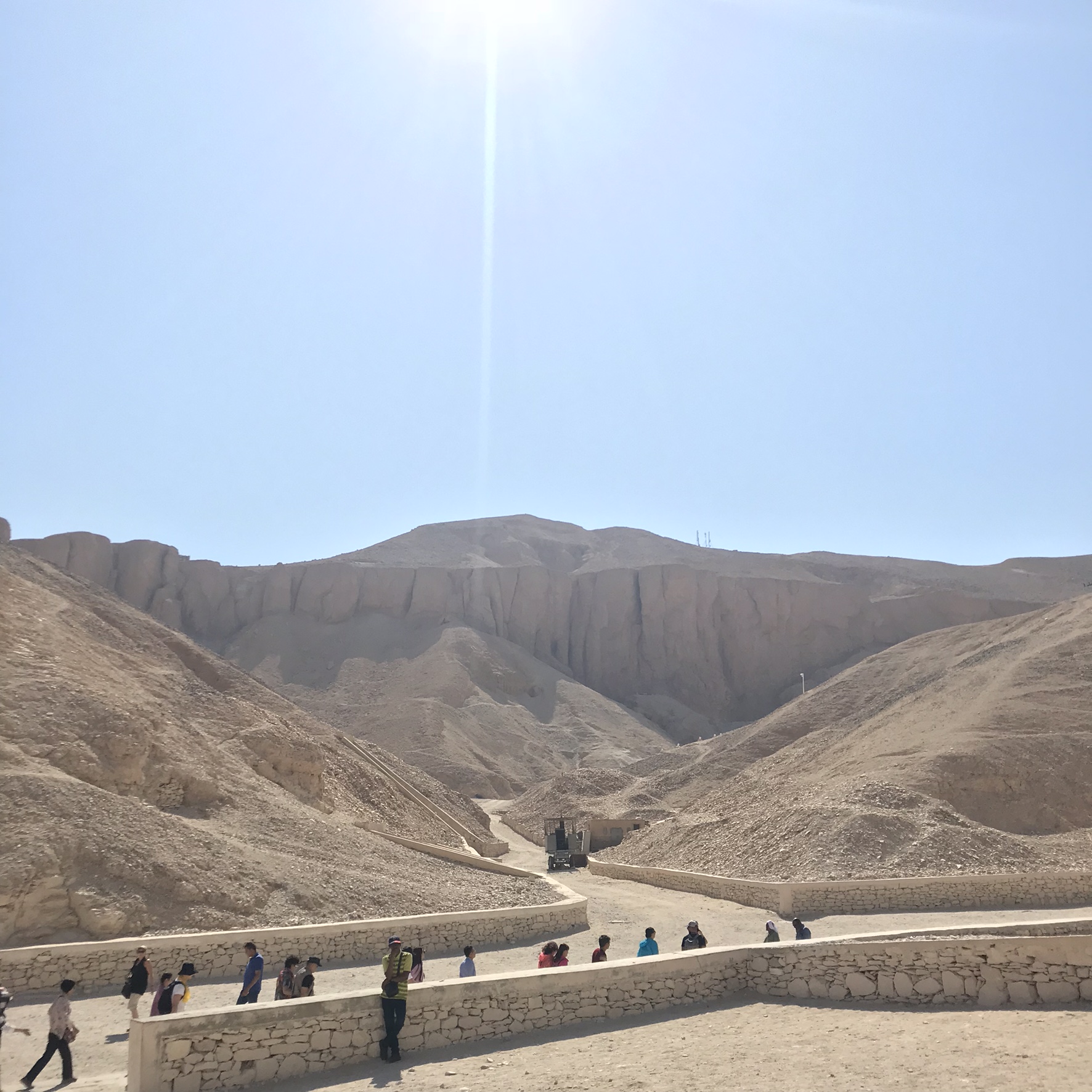
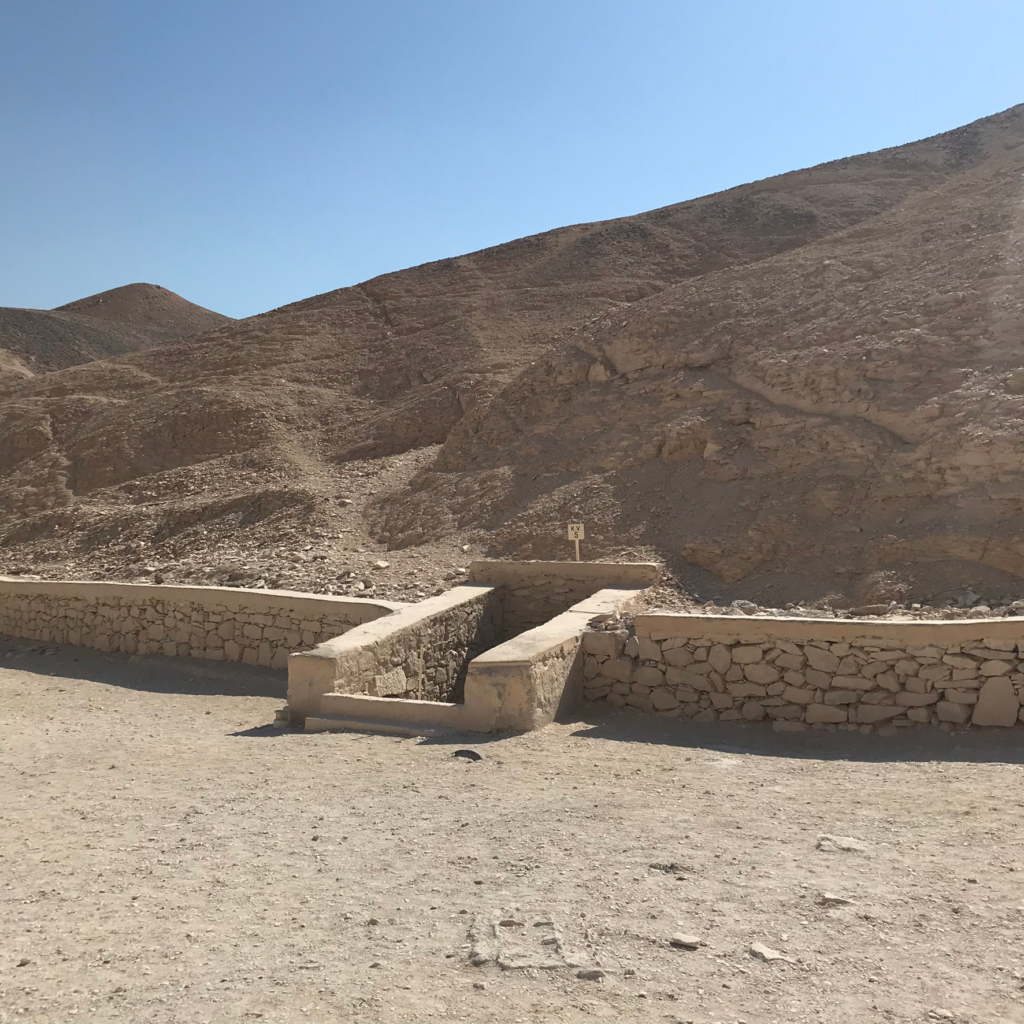
The Valley of the Kings sits on the West Bank of the Nile, just outside Luxor, in a remote desert valley flanked by limestone cliffs. For roughly 500 years — from the 16th to the 11th century BC — pharaohs and powerful nobles of Egypt’s New Kingdom were buried here in tombs cut directly into the rock.
There are 63 known tombs in the valley. Twenty belong to pharaohs; the rest to nobles, queens, and members of the royal court. Excavations are still ongoing — new discoveries were made as recently as 2008, and archaeologists believe there may be more yet to find.
The reason the pharaohs shifted from pyramids to hidden rock-cut tombs was pragmatic: pyramids are obvious advertisements for buried treasure. The New Kingdom pharaohs tried secrecy instead, cutting their tombs deep into an isolated valley and disguising the entrances. It didn’t entirely work — most tombs were robbed in antiquity — but the attempt produced one of the greatest archaeological sites on Earth.
Each tomb was decorated with elaborate wall paintings and carvings detailing the pharaoh’s journey to the afterlife: the gods they would encounter, the rituals required, the spells needed to pass through the underworld. The tombs were also stocked with everything a ruler might need in the next life — furniture, clothing, food, jewellery, even symbolic servants. All of it intended to travel with the pharaoh’s soul into eternity.
Which is why finding Tutankhamun’s tomb in 1922 — untouched, still filled with its extraordinary contents — was such a monumental discovery. It was the only royal tomb found largely intact.

Getting There and Practical Notes
The valley is about an hour’s drive from Luxor — the main delay is the bridge crossing over the Nile to the West Bank. Most visitors go as part of a guided tour, which handles the logistics and provides context that significantly enhances the experience. If you’re going independently, a taxi or hired driver from Luxor is straightforward.
Go early. The valley is one of Egypt’s most heavily touristed sites, and the heat builds fast. Arriving at opening means cooler temperatures, shorter queues at the tombs, and better light for photography.
The entry system: your base ticket (~$10 USD) covers entry to three tombs of your choice. A small number of special tombs — including Tutankhamun’s and Sety I’s — cost extra. Buy your camera ticket at the entrance if you want to photograph inside the tombs; this covers phone photography too. The guards check these diligently — and occasionally look for a small bribe if you’re caught without one.
On Tutankhamun’s tomb: our guide specifically advised skipping it, and I’d echo that advice. The tomb itself is modest — Tutankhamun died young, so relatively little construction had been completed. The extraordinary objects that made his discovery famous are now housed in the Egyptian Museum in Cairo and the Grand Egyptian Museum. Save the entry fee.
Inside the Tombs: What to Actually Expect
I had a specific expectation going in: bare stone rooms, a sarcophagus, perhaps some carvings. What I found was the complete opposite.
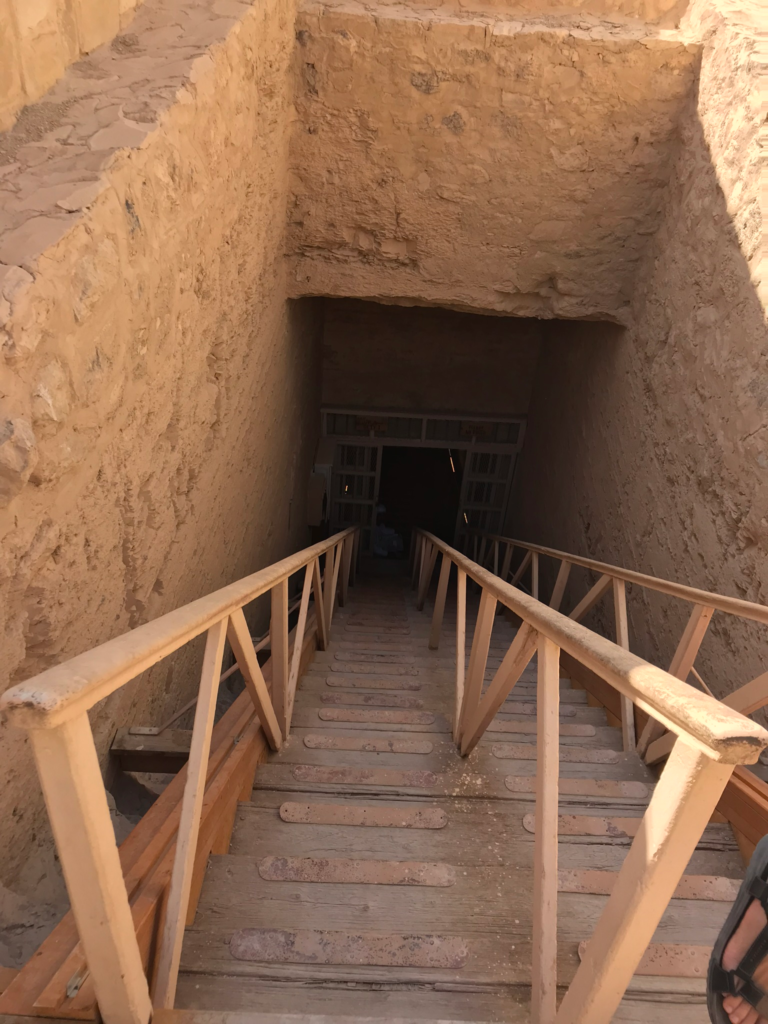
The descent begins outside in blinding desert sun. You step toward the tomb entrance and start down a staircase — then a sloped passage — into the hillside. Your eyes take a few seconds to adjust from the glare to the dimmer interior light. And then the walls appear.
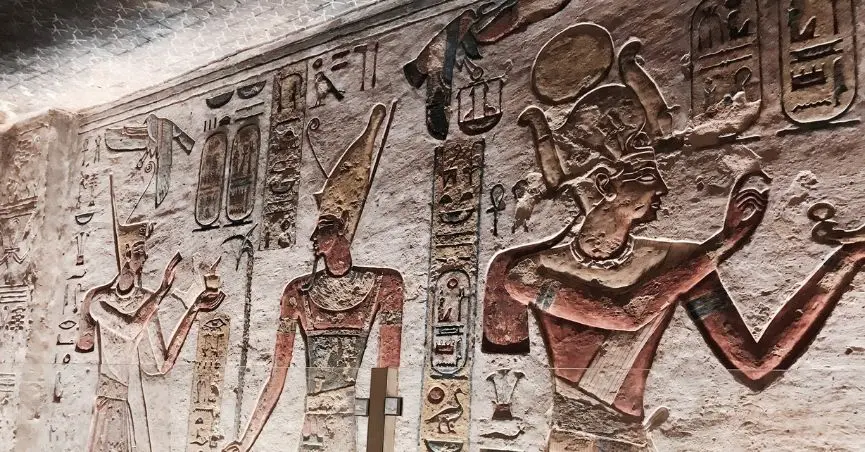
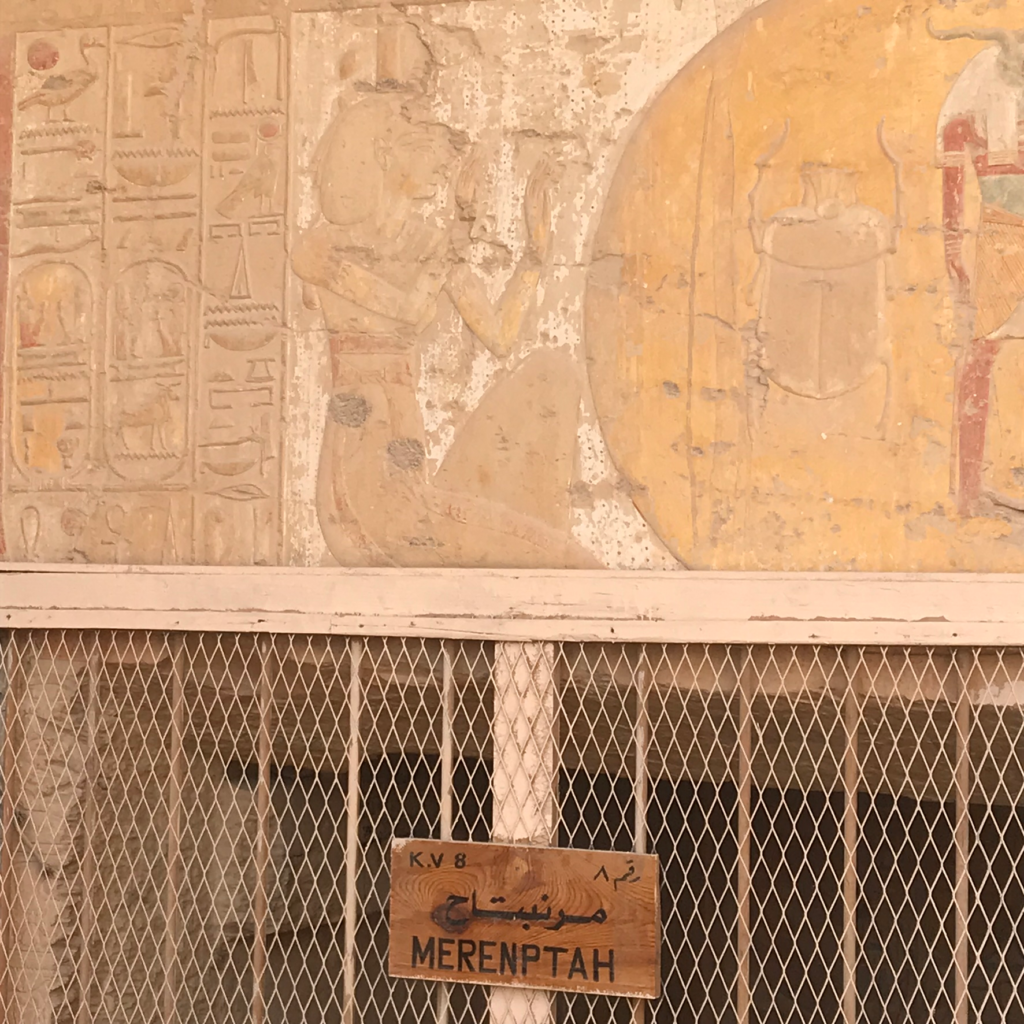
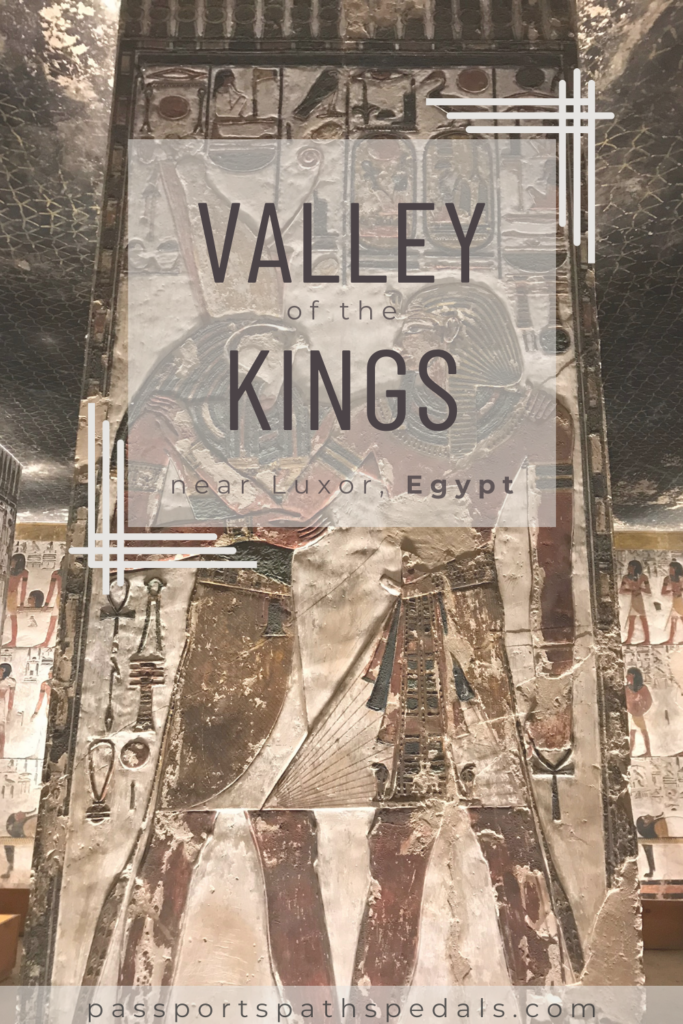
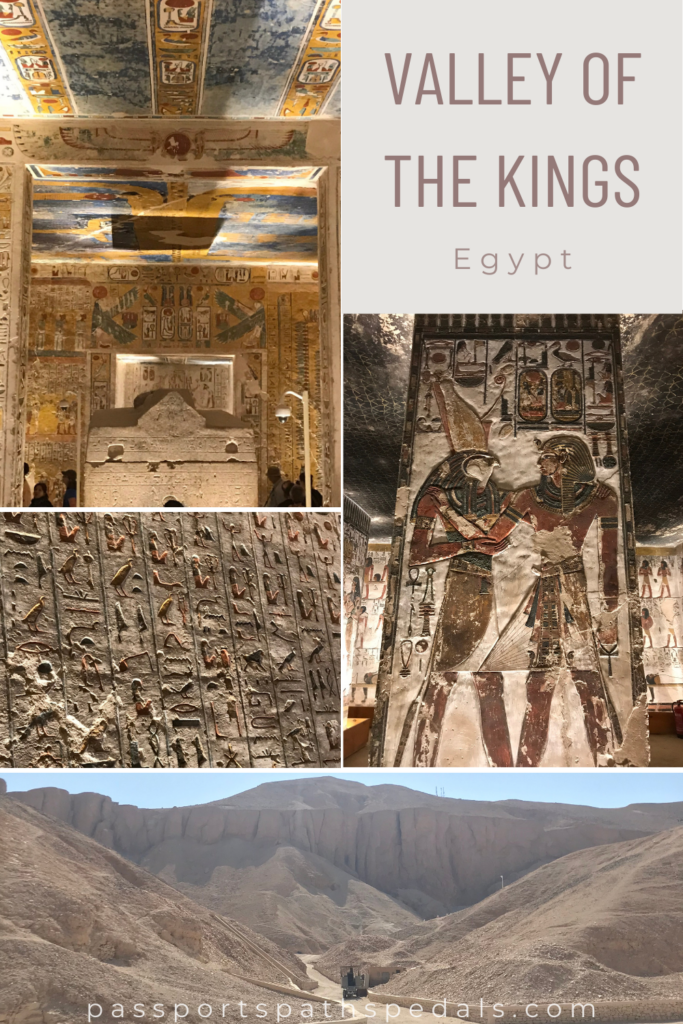
The tombs are not bare. They are painted — covered, floor to ceiling, in vivid yellow, blue, red, green, black, and white. Original pigments, earth-based, applied three thousand years ago. The only restoration has been cleaning. The colours are extraordinary. The detail is extraordinary. Hieroglyphics running in columns across every surface, scenes of gods and rituals and the journey to the afterlife rendered with a precision and confidence that makes you stop walking and just stand there.
I was completely unprepared for this. I kept thinking: this is original. No one has repainted this. This is what they left.
The heat inside the tombs is worth warning about. You might expect underground spaces to be cool — they’re not. The air is still and stagnant, warmed by thousands of visitors and sealed from any breeze. The descent does nothing to lower the temperature. Go in the morning when the exterior heat hasn’t fully built, and move through each tomb at a pace that lets you breathe.




The Tombs We Visited
Tombs in the Valley of the Kings vary considerably in size, detail, and condition. One important thing to understand: a tomb was only constructed during the pharaoh’s lifetime. A pharaoh who reigned for decades could commission an enormous, elaborately decorated tomb. One who died young — like Tutankhamun — left only a modest, partially finished chamber.
Ramses IV, Merenptah, and Ramses III — the three tombs included in the base ticket — are all worthwhile and vary in character. The busier ones have a particular quality to them: the flow of visitors means you move with the crowd rather than at your own pace, which doesn’t always let you absorb everything you’d like to. The paintings are extraordinary regardless. But you feel the pressure to keep moving. The open tombs that are included rotate, so these may not be included in your ticket.
Sety I’s Tomb
This is the tomb we purchased a separate ticket for. Sety I’s tomb. It is worth every penny of the additional entry fee — and I say this as someone who almost didn’t pay it.
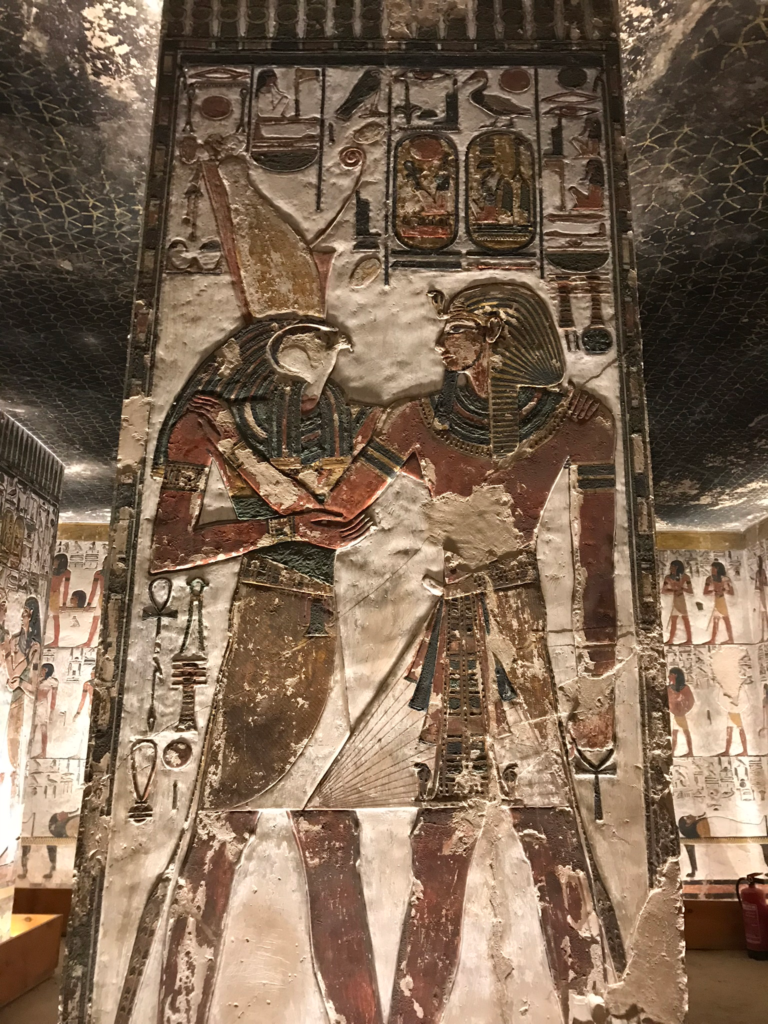
Sety I was known, apparently, for a preference for quality over quantity. His tomb reflects this completely. The technique used throughout is raised relief — rather than carving the images into the stone, the artisans removed the stone from around each figure, leaving the image raised from the surface. The shapes were then painted. It sounds like a small difference. It isn’t. The relief figures have depth and shadow and a three-dimensionality that flat-carved paintings simply don’t. They look like they could step off the wall.
Our guide pointed out the distinction specifically, comparing Sety’s technique to the standard carving in the other tombs. Once you see the difference, you can’t unsee it. The figures in Sety’s tomb feel alive in a way the others don’t quite manage.
And because the extra entry fee keeps most visitors out, we had the tomb largely to ourselves. No one is moving us along. No crowd to navigate. Just the painted walls, the raised relief figures, and time to actually look.
That experience — unhurried, uncramped, unpushed — is worth the cost of the ticket.




Final Thoughts
Standing in the tombs of pharaohs is a rare privilege — a moment where you feel the weight of human time carved into stone. The ancient Egyptians built these places to be eternal. Three thousand years later, the colours are still bright, the figures are still watching, and somehow, impossibly, they still are.
If you make it here, don’t rush it. Pay the extra fee for Sety I. Buy the camera ticket. Go early. And let yourself be wrong about everything you thought you knew.
Plan This Trip
This visit fits naturally into a full West Bank day from Luxor — Valley of the Kings in the morning, Theban Necropolis sites in the afternoon. No rushing required if you start early.
| Getting to Luxor | Fly from Cairo (~1 hour) or overnight train |
| Getting to the valley | Car or guided tour from Luxor — ~1 hour |
| Where to stay in Luxor | Search for accommodation in Luxor |
| Our Luxor operator | Mara House Luxor — guided the full Egypt trip |
| Time needed | 3–4 hours for the valley; full day combining with Theban Necropolis |
If you only have a morning: Valley of the Kings is the priority — arrive at opening, visit 3–4 tombs including Sety I, leave by midday before the heat peaks.
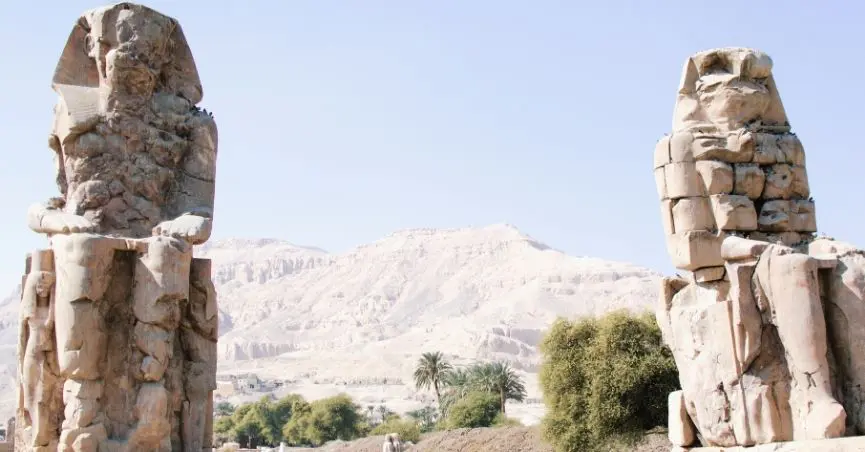
If you have a full day: Combine with the Theban Necropolis sites — Hatshepsut’s Temple, Colossus of Memnon, Medinet Habu. Full guide here.
Check out these tour options:
Pin me for later
You might also like…