Exploring the sites of the Theban Necropolis Luxor
On the west bank of the Nile, across from modern-day Luxor, lies one of the most extraordinary archaeological regions on Earth. I hadn’t heard the term “Theban Necropolis” before this trip. By the end of our day here, I understood why serious Egyptologists dedicate entire careers to it.
The Necropolis is a sprawling landscape of mortuary temples, tombs, and ancient ruins built over centuries to honour pharaohs, queens, nobles, and even the workers who built the tombs themselves. It covers a stretch of desert backed by dramatic limestone cliffs. The same cliffs that hide the Valley of the Kings on the other side, and every structure in it tells a different chapter of the same enormous story.
We visited as part of a full West Bank day: Valley of the Kings in the morning, Theban Necropolis in the afternoon. That sequencing matters.
Theban Necropolis Summary
Location: West Bank of the Nile, Luxor, Egypt
Getting there: Car or guided tour from Luxor — everything is close together
Key sites: Hatshepsut’s Temple, Colossus of Memnon, Valley of the Nobles, Deir el-Medina, Medinet Habu
Time needed: Half day (afternoon), combined with a morning at the Valley of the Kings
Note: Go to the Valley of the Kings first — save open-air sites for the afternoon
Sections to jump to:
How to Approach the Day
The tombs of the Valley of the Kings are hot. You might assume that going underground in the desert heat would be a relief. It isn’t. The air inside is still and warm, saturated with the warmth of thousands of visitors and sealed from any breeze. Go there first, in the morning, before the exterior heat peaks.
Save the open-air Theban Necropolis sites for the afternoon. You’ll be outside, yes, but moving between different sites means you’re rarely standing still in the heat, and the afternoon light — particularly approaching golden hour — is extraordinary on the pale limestone and sandstone.
You’ll want a car or a driver for this. Everything on the West Bank is relatively close together, but the distances between sites, combined with the heat, make walking impractical. Our guide drove us between stops, which also meant we had context for what we were seeing at each one — essential for a landscape this dense with history. Also – air conditioning.

Sights of the Theban Necropolis
Valley of the Nobles
Unlike the royal tombs of the Valley of the Kings — hidden away, sealed, filled with treasure — the Tombs of the Nobles were cut into the mountainside overlooking the Nile, visible from the valley below. There are nearly 500 of them.
What makes the nobles’ tombs distinct from the royal tombs is their subject matter. Where pharaohs’ tombs focus on the journey to the afterlife and the gods who populate it, the nobles’ tombs depict everyday life: farming, fishing, hunting, feasting, and music. The people who commissioned these tombs wanted to take their daily world into the next one.
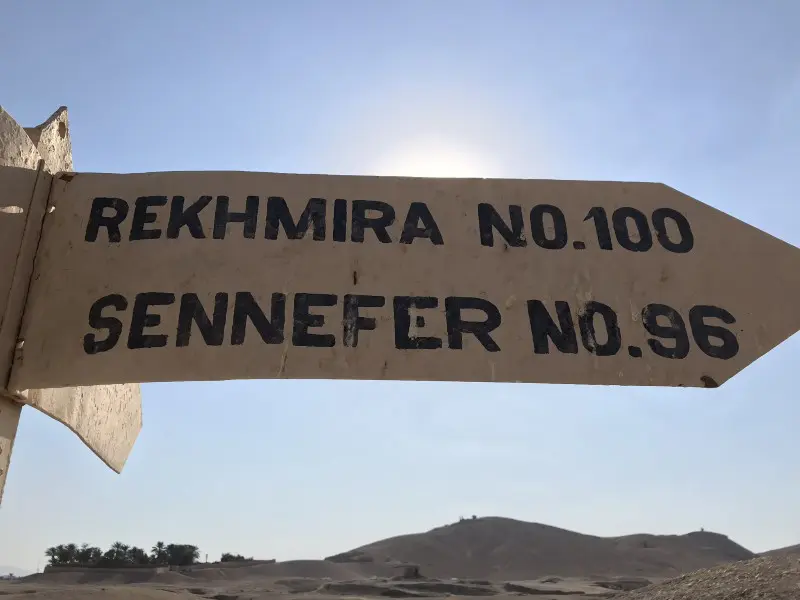
Sennefer’s tomb — the Mayor of Thebes under Amenhotep II — is one of the finest. The ceiling is painted to look like a grape vine canopy, the bunches of grapes hanging down in deep purple against a pale ground. The walls show scenes of family life, ritual, and Sennefer’s work as mayor. It’s intimate in a way the royal tombs aren’t.
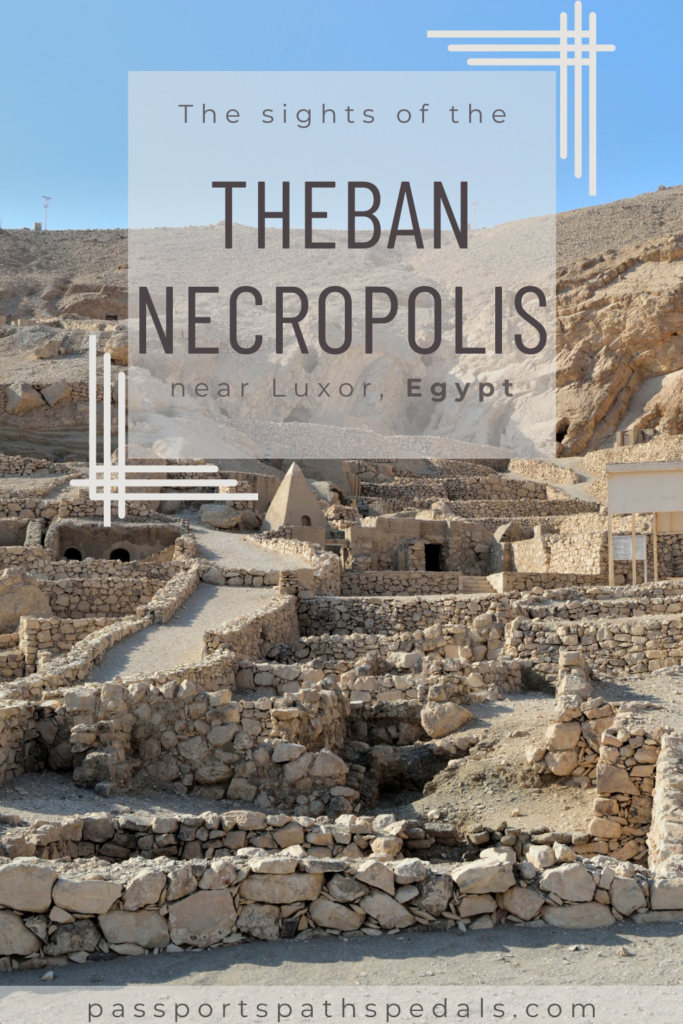
Deir El Medina – The Worker’s Village
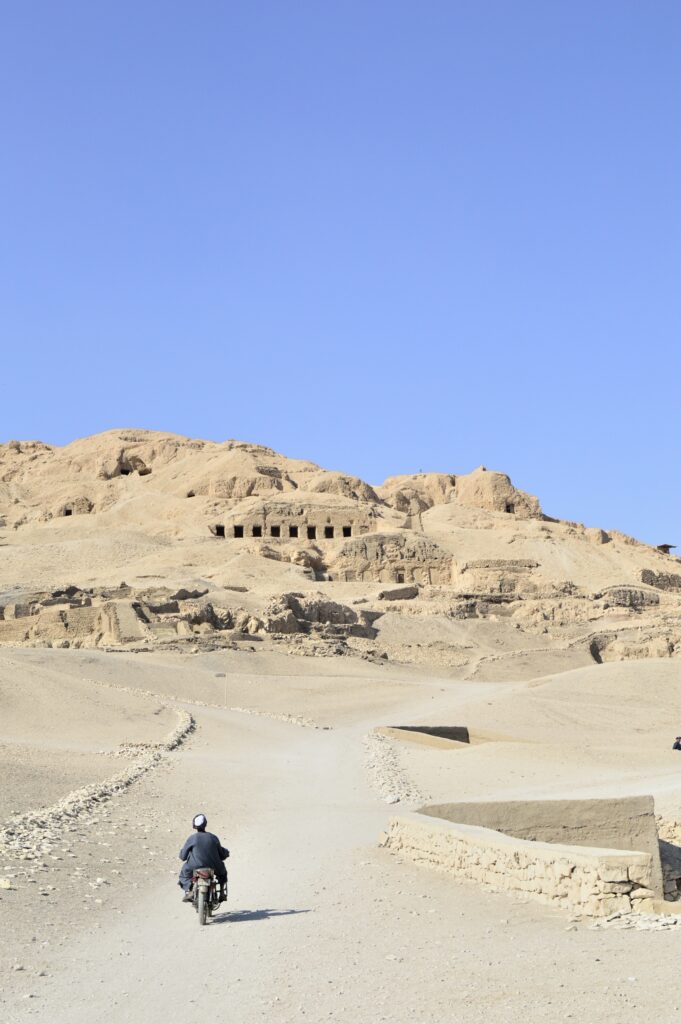
Just south of the Valley of the Kings, hidden in its own small valley, is the village where the tomb-builders lived.
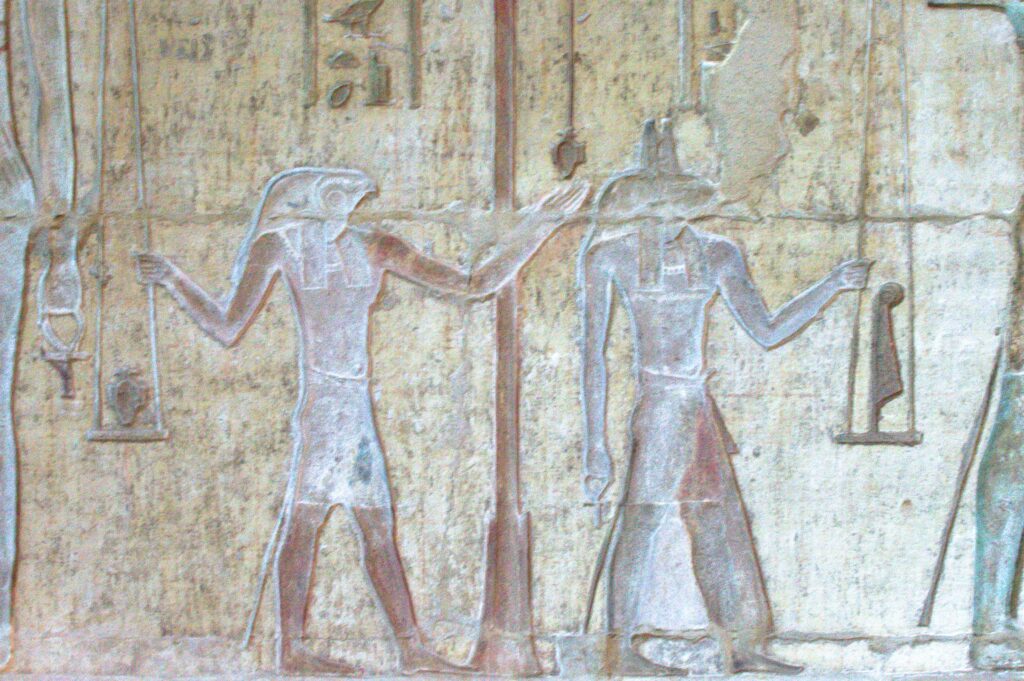
Deir el-Medina was home for generations to the artisans, painters, scribes, and labourers who constructed and decorated the royal tombs. They lived here with their families, raised their children here, and were themselves buried here in small but beautifully decorated tombs.
The discovery of Deir el-Medina transformed Egyptology. The village produced an extraordinary archive of written records. Work rosters, legal disputes, love poetry, letters, and shopping lists — that gave historians the first real picture of daily life in ancient Egypt. These weren’t royals. These were working people, and their voices survived.
The workers’ own tombs, built by people who knew exactly how to build tombs, are small but exquisite. Some of the finest painted decoration in the Necropolis was created by artists who had spent their careers decorating pharaohs’ chambers.



Colossus of Memnon
Our guide announced this as a “quick stop,” which did not prepare us for what we found when we got out of the car.
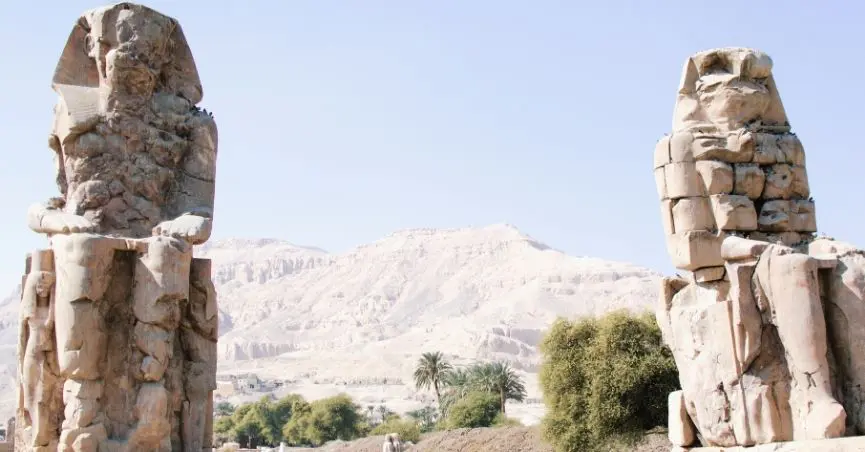
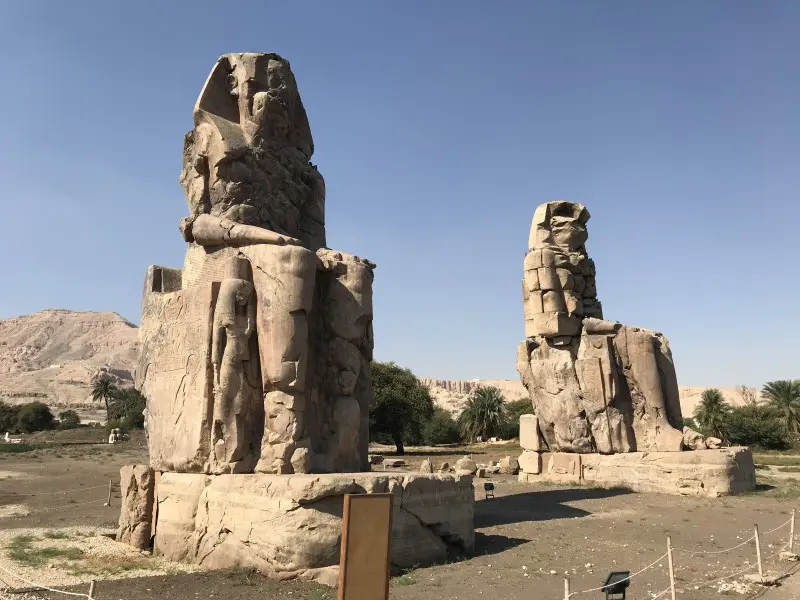
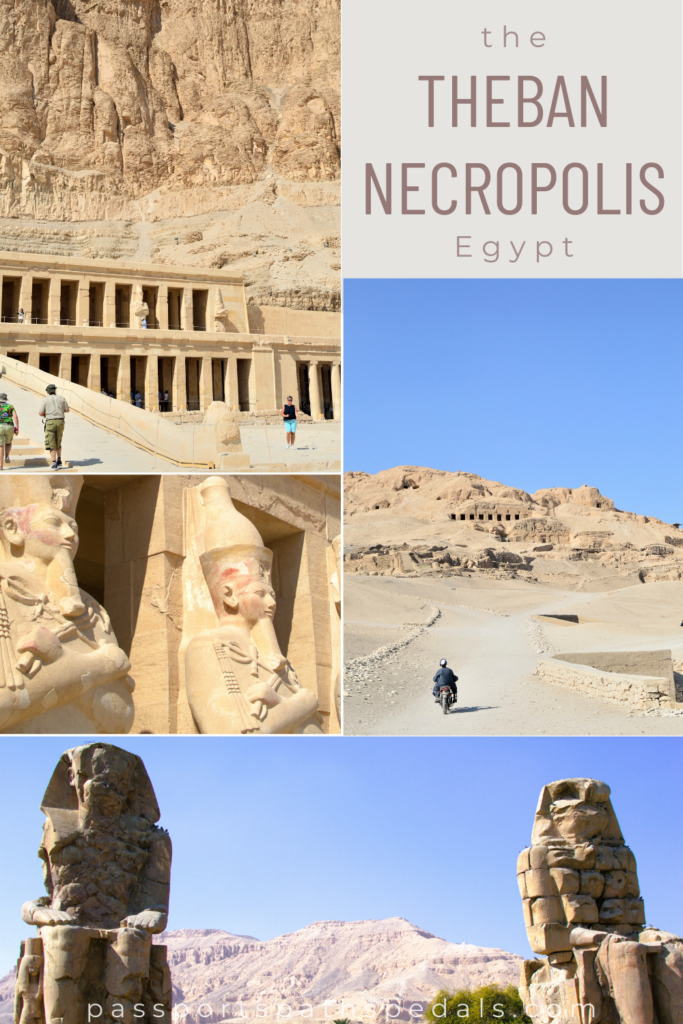
Two enormous seated figures rise from the flat desert plain beside the road. The remains of what was once the entrance to Amenhotep III’s vast mortuary temple complex. The statues stand 23 metres tall. In photographs, they look impressive. Standing beside them, with other people nearby for scale, you understand what the word colossal actually means. The people around us were completely dwarfed.
Historians believe that if Amenhotep’s temple complex were still standing, it would be larger and more impressive than Karnak. The largest religious complex ever built. Almost nothing of it remains except these two guardians, which makes them both extraordinary and poignant.
How were these carved? How did they survive while the temple they guarded did not? The questions don’t resolve, but they stay with you.
Free to visit. A quick stop for photos — 15–20 minutes is enough.

Queen Hatshepsut’s Temple
Stepping out in front of Hatshepsut’s mortuary temple is one of those moments where what you see doesn’t quite match what you expected to see, even when you thought you’d prepared yourself.
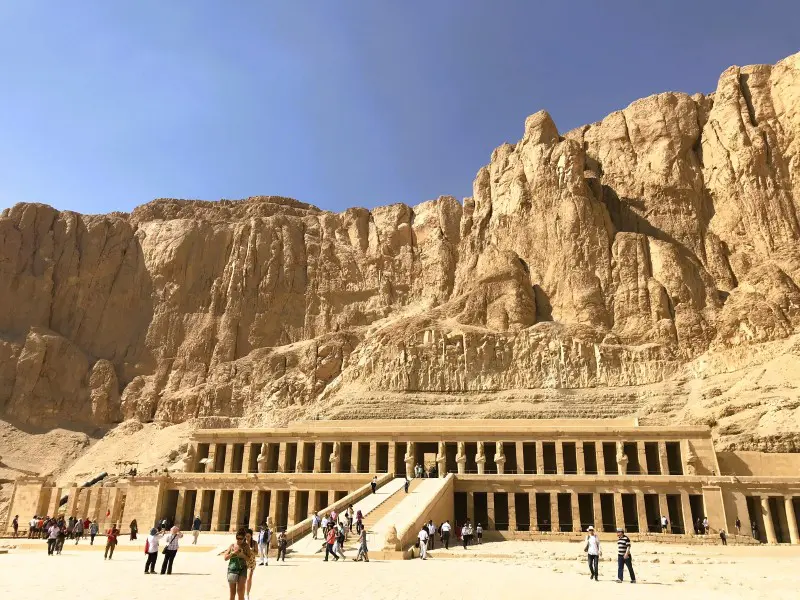
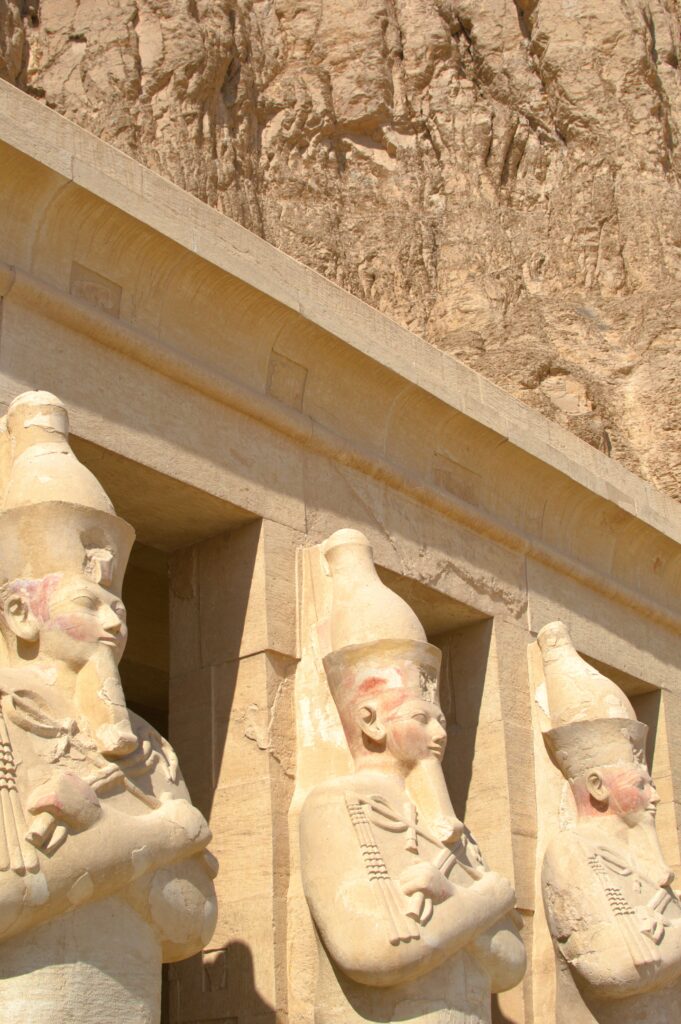
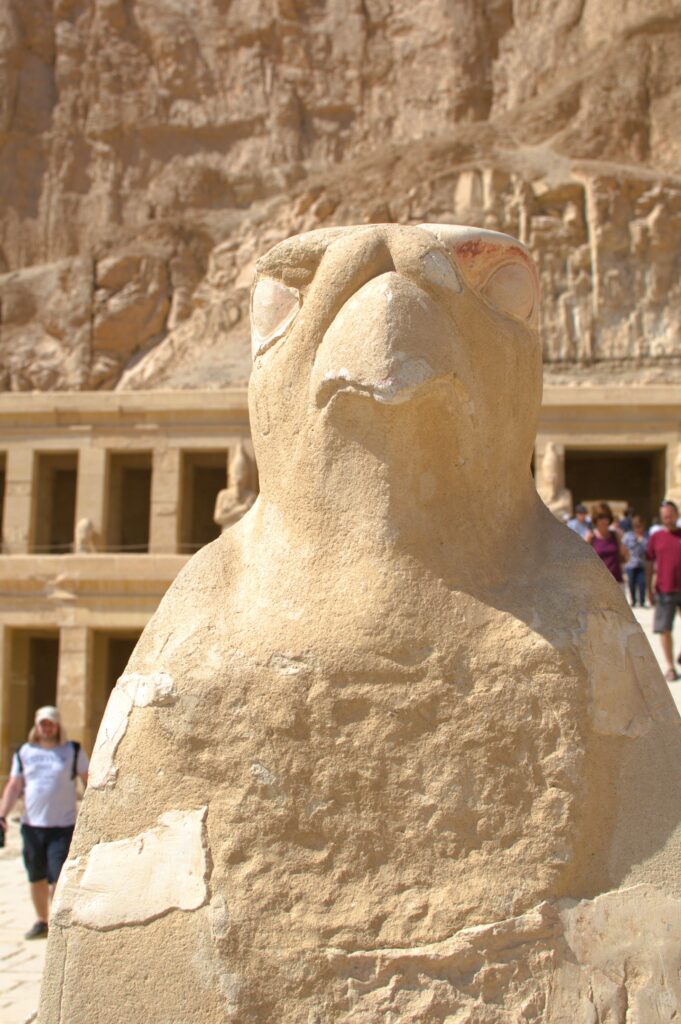
The temple rises in three colonnaded terraces against the face of the limestone cliff behind it — enormous, symmetrical, precise. Built in the 15th century BC, it melds into the rock behind it while simultaneously projecting forward with a scale that only emphasizes itself as you approach. Walking up the entry ramp toward the first colonnade, the columns and the carved eagle statues flanking the entrance grow larger with each step. By the time you’re among them, you’re very aware of how small you are.
The temple was built for Hatshepsut — one of the few female pharaohs in Egyptian history, and one of the most accomplished builders of any gender in the ancient world. She ruled for roughly two decades, presiding over a period of stability, prosperity, and extraordinary architectural achievement.
Our guide told us her story while we walked the colonnades, and it landed differently in the temple than it would have in a book. Hatshepsut was largely erased from history after her death — her stepson Thutmose III had her name chiselled from monuments, her statues destroyed, her image removed from records. For centuries, she was written out entirely. The reasons aren’t fully understood — personal vendetta, political legitimacy, or simply the erasure of a female reign that didn’t fit the expected narrative.
Fortunately, the stories she inscribed on these colonnades survived. They shed light on her reign: trade expeditions to Punt, building campaigns across Egypt, and the deliberate assertion of her legitimacy as pharaoh. Standing in a temple she built, reading the story she told about herself, knowing that someone tried to erase it and failed — that’s a particular kind of feeling.
Inspiring and disheartening in the same breath.
Medinet Habu
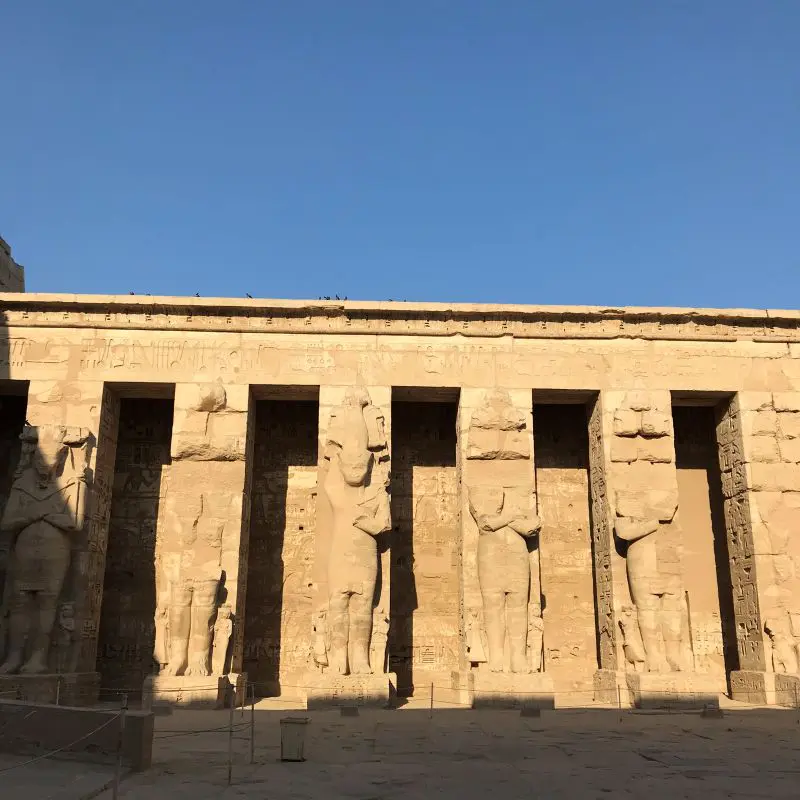
We saved Medinet Habu for last, arriving in the late afternoon when the sun was low, and the stone was beginning to glow.
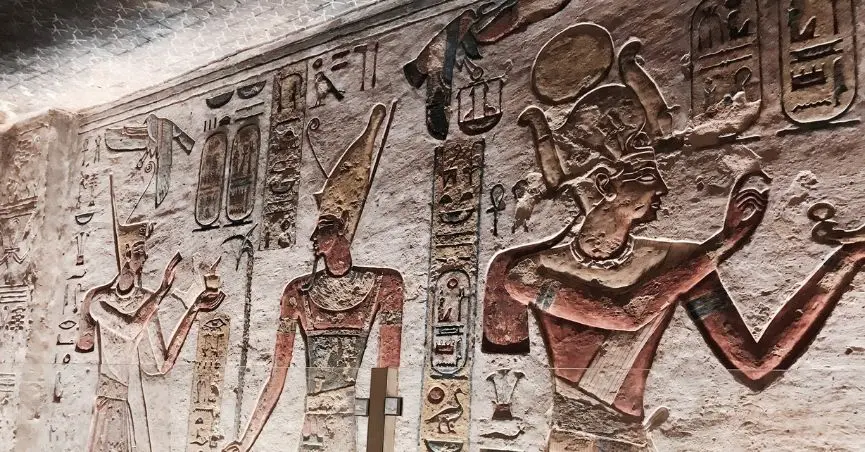
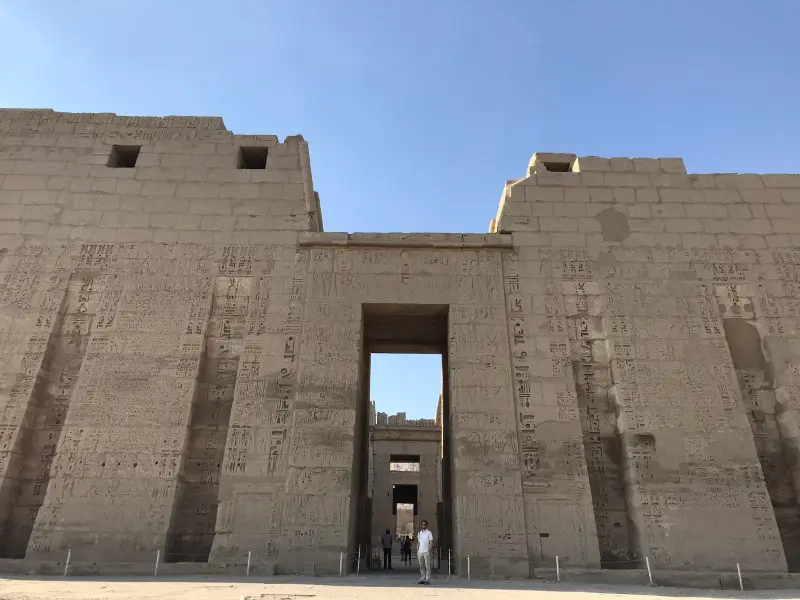
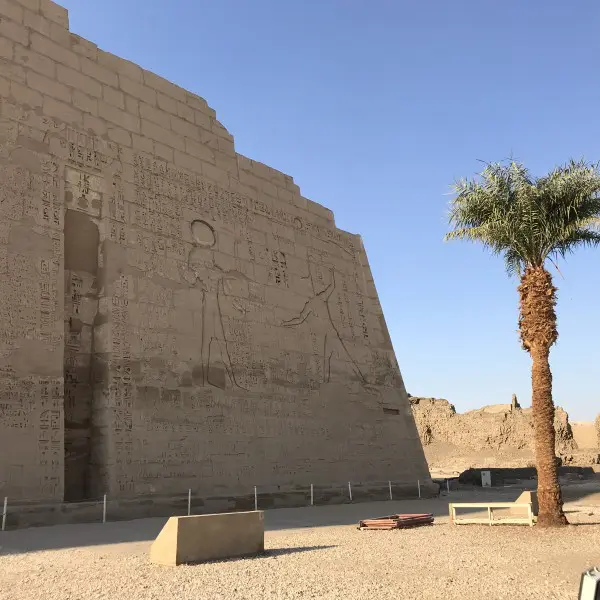
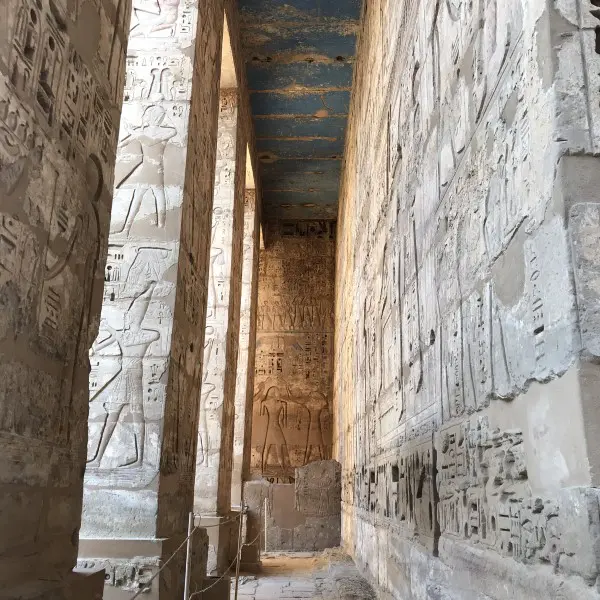
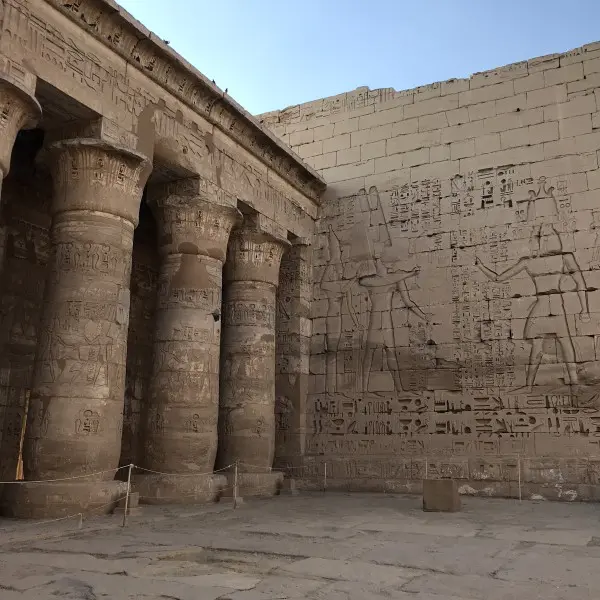
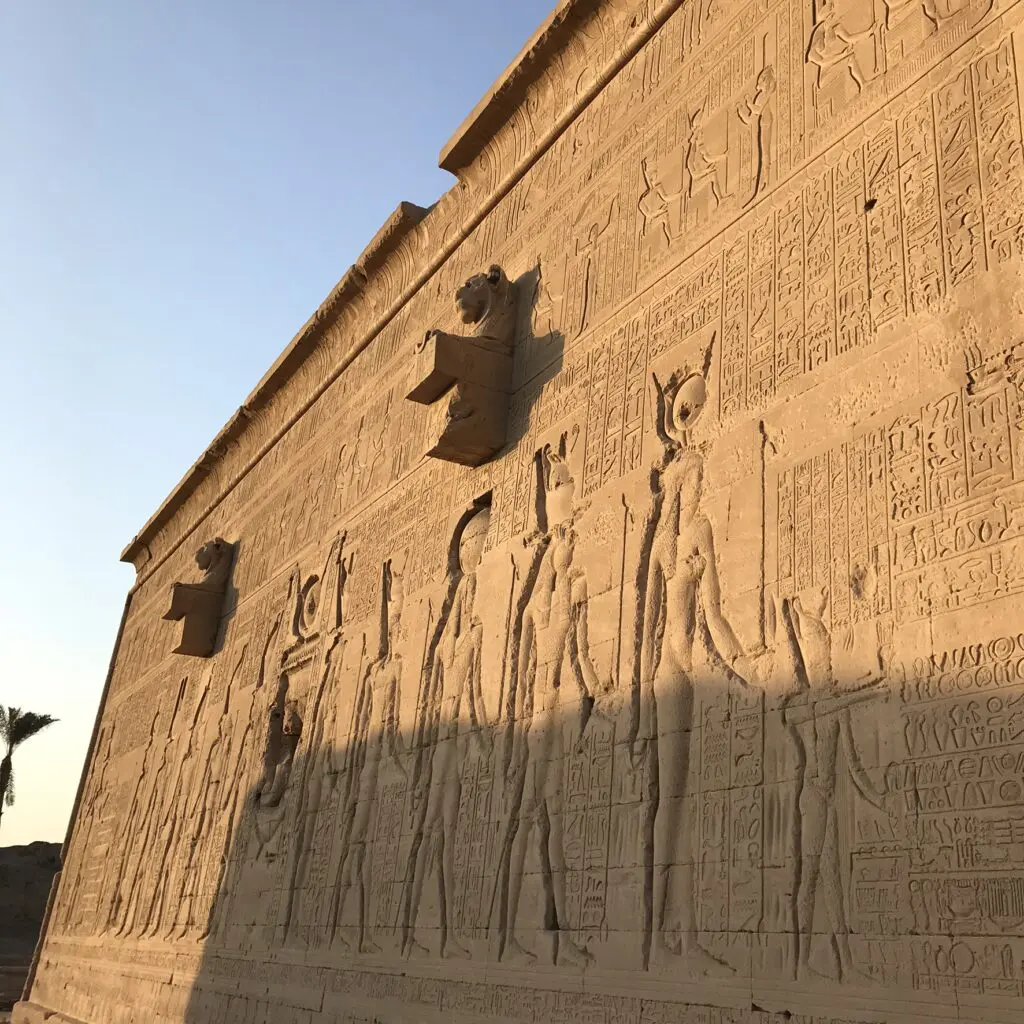
The mortuary temple of Ramesses III is the centrepiece of a complex that spans centuries of use — temples, shrines, and administrative buildings accumulated over generations. The temple itself is one of the best-preserved in Egypt: its walls covered in vivid, detailed relief carvings showing religious rituals, royal ceremonies, and dramatic battle scenes. Military campaigns rendered in stone at an enormous scale, the figures of soldiers, prisoners and gods carved with the same quality we had learned to associate with this period.
We were tired by this point. The day had accumulated — sites, heat, history, information, more sites. The details of what our guide explained at Medinet Habu are less clear in my memory than what came earlier in the day. That’s honest. There’s a limit to how much the brain can hold after a full West Bank day in the Egyptian summer.
What I remember clearly is the first courtyard, lined on both sides with statues standing like sentinels at the entrance. And the quality of the light — the stone catching gold and amber, the shadows deepening in the carved reliefs. As a last stop of the day, it was the right place to be.
Final Thoughts
By the time we drove back across the Nile toward Luxor, I was running on a combination of exhilaration and exhaustion that I don’t think I’d felt before.
Exhilarated — at having spent a day inside a world I hadn’t known existed until we arrived at the depth of what survives from three thousand years ago. At the particular, specific feeling of standing in Hatshepsut’s temple and reading the story she wrote about herself, knowing someone tried to erase it.
Exhausted — in the way that comes from absorbing more than your brain can fully process in a single day. The heat, the walking, the constant reorientation to new scales of human achievement.
Both are the right response to the Theban Necropolis. It earns them.
Plan This Trip
This visit fits naturally into a full West Bank day from Luxor — Valley of the Kings in the morning, Theban Necropolis sites in the afternoon. No rushing required if you start early.
| Getting to Luxor | Fly from Cairo (~1 hour) or overnight train |
| Getting to the valley | Car or guided tour from Luxor — ~1 hour |
| Where to stay in Luxor | Search for accommodation in Luxor |
| Our Luxor operator | Mara House Luxor — guided the full Egypt trip |
| Time needed | 3–4 hours for the valley; full day combining with Theban Necropolis |
If you only have a half day, prioritize Hatshepsut’s Temple and the Colossus of Memnon — both are quick to absorb and the most visually dramatic.
If you have a full day, start with the Valley of the Kings, then Hatshepsut’s Temple and the Colossus of Memnon, then add Medinet Habu, the Valley of the Nobles, and Deir el-Medina. Start early, pace yourself, and finish at Medinet Habu in the golden light.
Check out these tour options:
Pin this for later…
You might want to read…