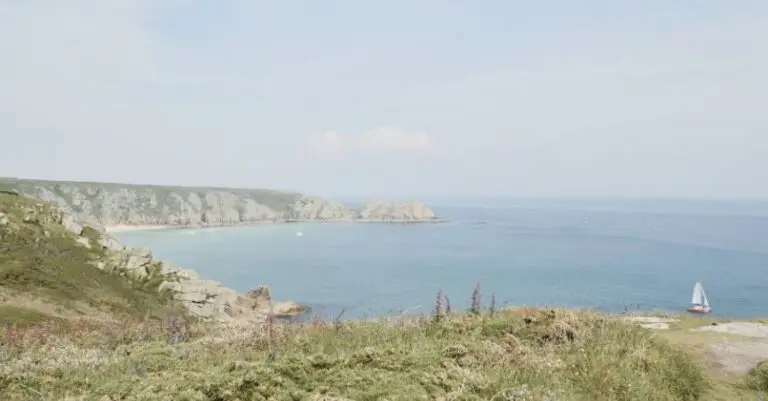
2 Days in Tintagel: Where Folklore Meets the Sea
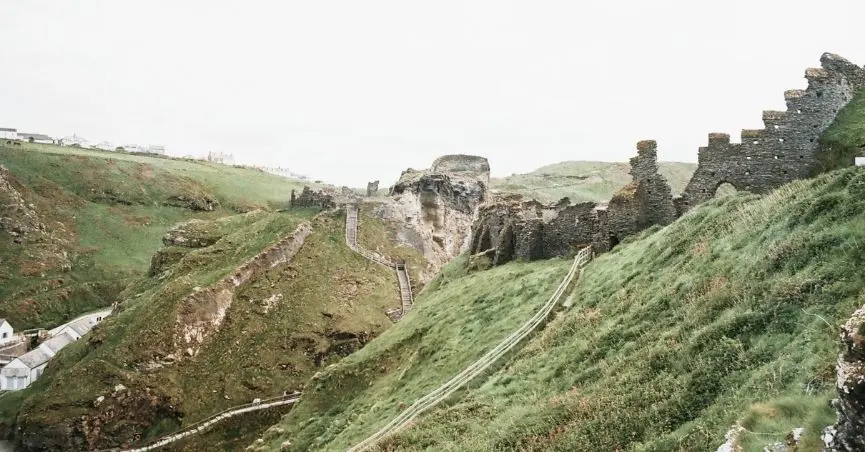
There are places you visit because they’re on the list, and places you visit because something in you recognizes them before you’ve even arrived. Tintagel was the second kind.
Ruined castle on a remote clifftop. Arthurian legend woven into the rock. A waterfall in a mossy glen that looks like it belongs in a fairytale. Each of those things on their own would have been enough to get me there. Together, they made for two days that still sit near the top of my solo travel highlights — not because everything went perfectly, but because the place itself is just that good.
Getting there was part of the adventure. I took the long route from Okehampton in Devon, though on a rural bus in Cornwall, everything is the long route. A stop in Bude for a cream tea (scone, jam, clotted cream, the full production) eased the journey considerably. I noted the famous Devon versus Cornwall cream tea rivalry and concluded, with great diplomatic authority, that I couldn’t care less which county does it better. It’s all delicious.
The final stretch from Bude to Tintagel was its own particular thrill. The bus drivers who navigate those impossibly narrow country lanes deserve more recognition than they get — hedgerows close enough to touch on both sides, blind bends, passing places that require genuine faith in the oncoming driver. Between anxious glances out the window, the coastal scenery appeared in flashes — dramatic enough that you forget the tension entirely and just stare.

Tintagel Summary
Location: Tintagel, Cornwall, England
Time needed: 2 days
Getting there: Bus from Bude or Bodmin; no direct train to Tintagel
Don’t miss: Tintagel Castle, St Nectan’s Glen, Rocky Valley petroglyphs, St Materiana’s Church
Eat: St Nectan’s Glen café for scones; pub food in the evenings
Weather note: Pack layers — it can be warm in town and genuinely cold and windy at the castle simultaneously
A Bit of Background
Cornwall has always operated on its own terms. Geographically isolated at the southwestern tip of England, it maintained its own Celtic language — Cornish — long after the rest of England had moved on, and its coastline is still wild enough that nature feels in charge rather than managed. Tintagel sits on the north Cornish coast where that wildness is at its most concentrated — windswept cliffs, crashing Atlantic waves, and a remoteness that makes it easy to understand why legends took root here.
The Arthurian connection is the town’s most famous claim, though historians are careful about it. What’s certain is that the site has been significant for a very long time — Roman artifacts have been found in excavations, along with Mediterranean pottery, suggesting Tintagel was once a trade centre of some importance. The legends came later, and they stuck. Hard to argue with the location.
Tintagel Town
The village itself is small and unhurried — a high street of pubs, tea shops, and Arthurian-themed everything running down to the coast. It won’t take long to cover, but it earns its charm through detail rather than scale.
Accommodation in Tintagel
There are several accommodation options along the high street. I stayed at King Arthur’s Arms Inn, a pub with rooms right across from the Old Post Office — practical, characterful, and exactly what you want at the end of a long day of walking. Evenings at a local Cornish pub have their own particular rhythm: it’s not a night out in the way we’d mean at home, it’s just locals doing their regular thing, which after a day alone in nature is exactly the right atmosphere.
Eating in Tintagel
Pubs, fish and chips, and tea shops cover most needs in Tintagel. The St Nectan’s Glen café deserves a specific mention — scones with clotted cream and a pot of tea, either before or after the waterfall, visit feels complete. More on that below.
Old Post Office
Originally a 14th-century yeoman farmer’s house, the Old Post Office was modified during the Victorian era to serve as the local postal office and is now owned by the National Trust. It’s a compact visit — a well-done mock-up of how the house would have looked in use, some antique postal equipment, and a lovely cottage garden out back. Worth an hour of your time, especially on the walk between accommodation and the castle.
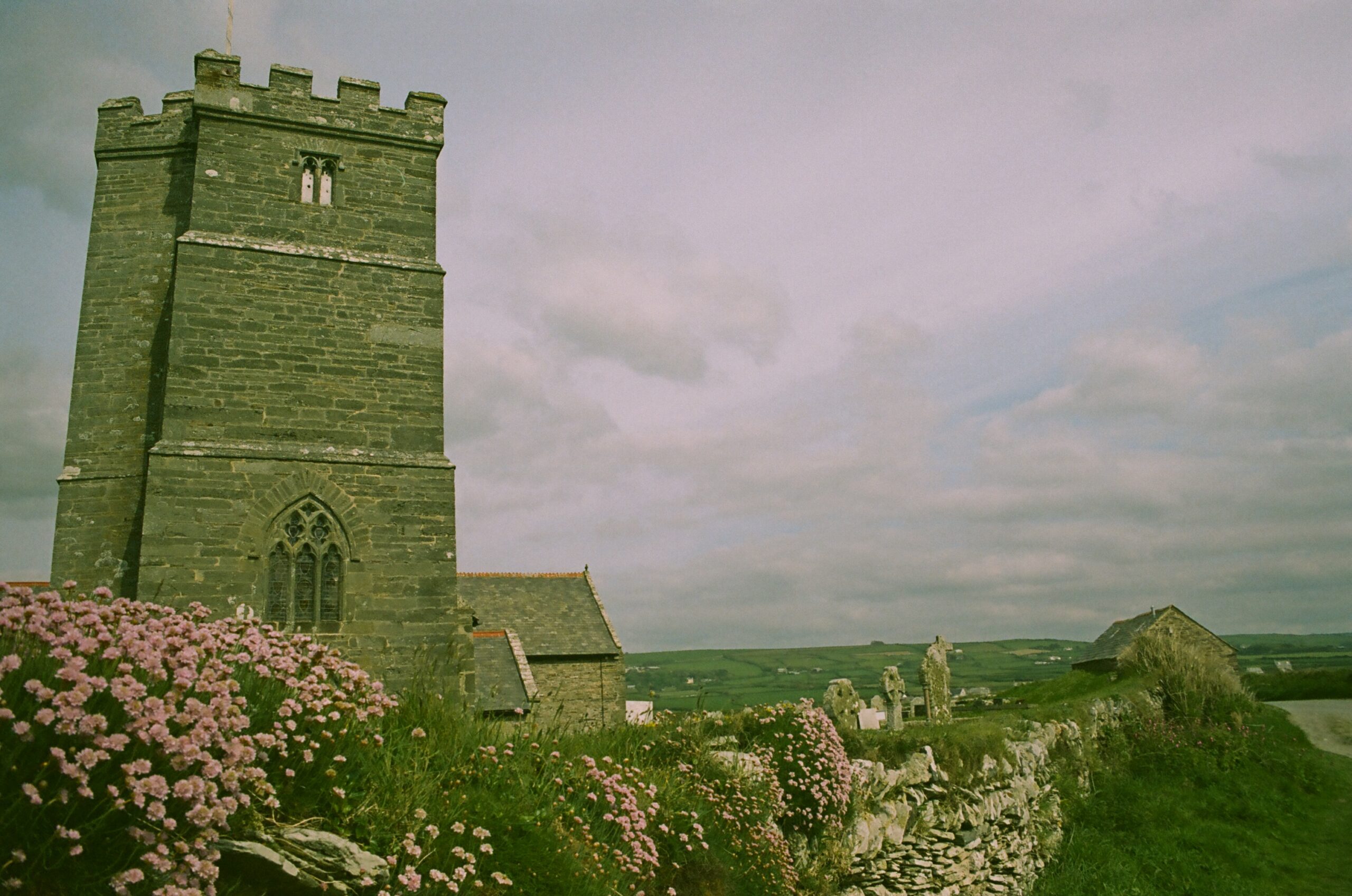
Church of St Materiana’s
Up on the cliffs, away from the main village, St Materiana’s is one of those finds that rewards the walk. The original church is thought to date to the 6th century, rebuilt and modified through the 12th and 13th centuries, and dedicated to a 5th-century Welsh princess said to have ruled the ancient kingdom of Gwent. The churchyard is large and genuinely ancient, and the views from the clifftop castle in one direction, open coastline in the other, are some of the best in the area. It has the particular atmosphere of a place that has been quietly significant for a very long time.
Tintagel Castle
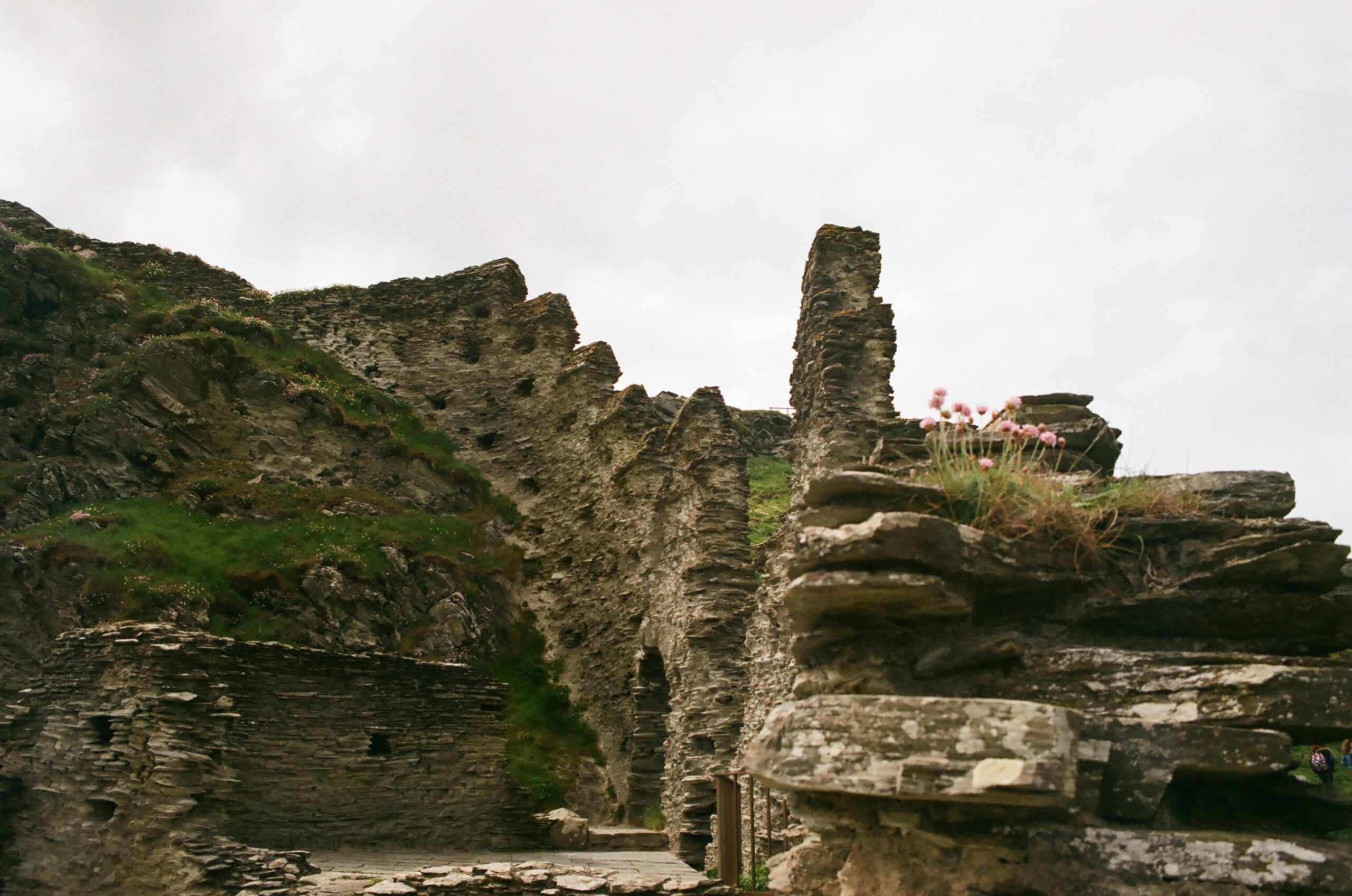
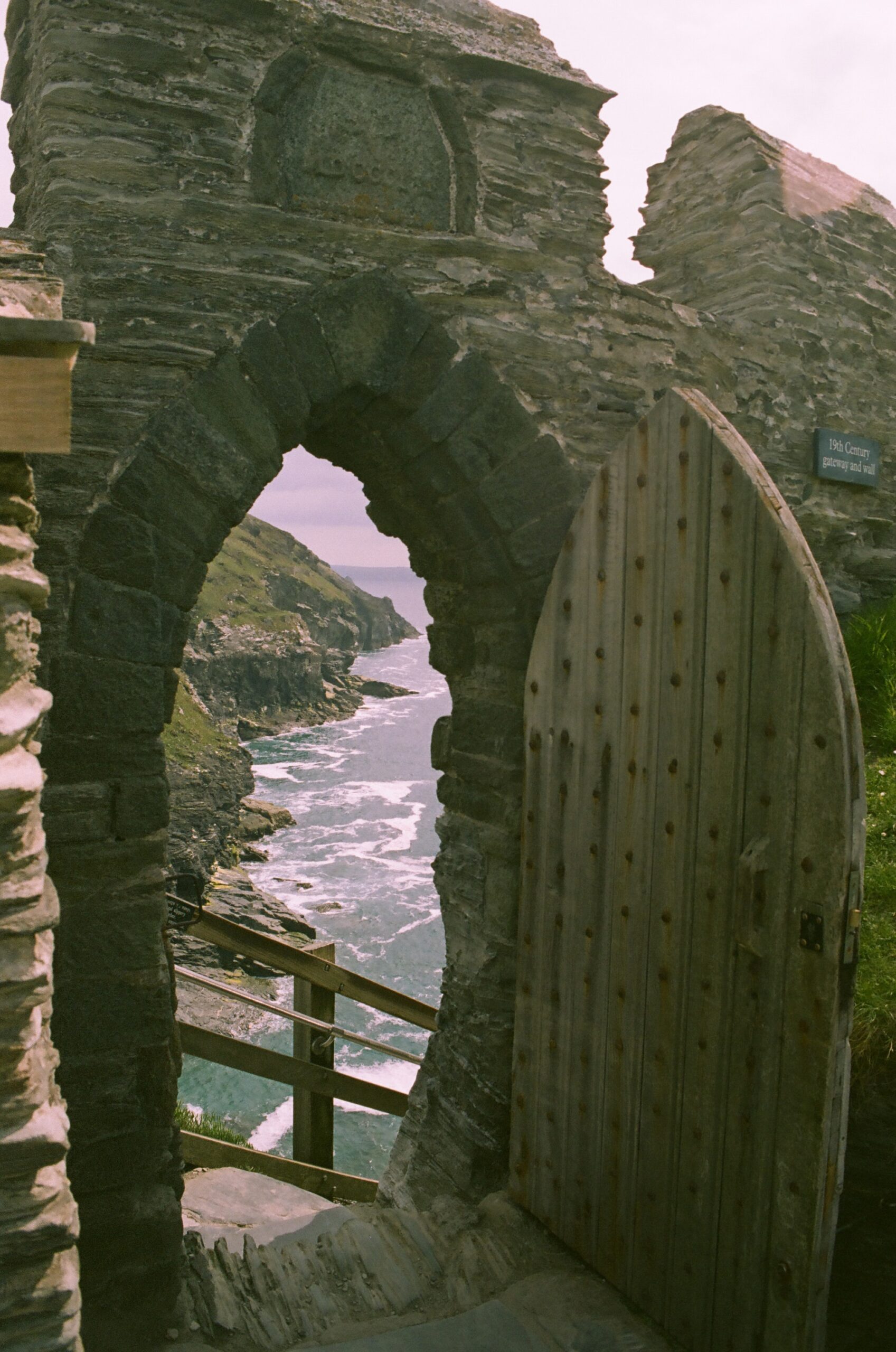
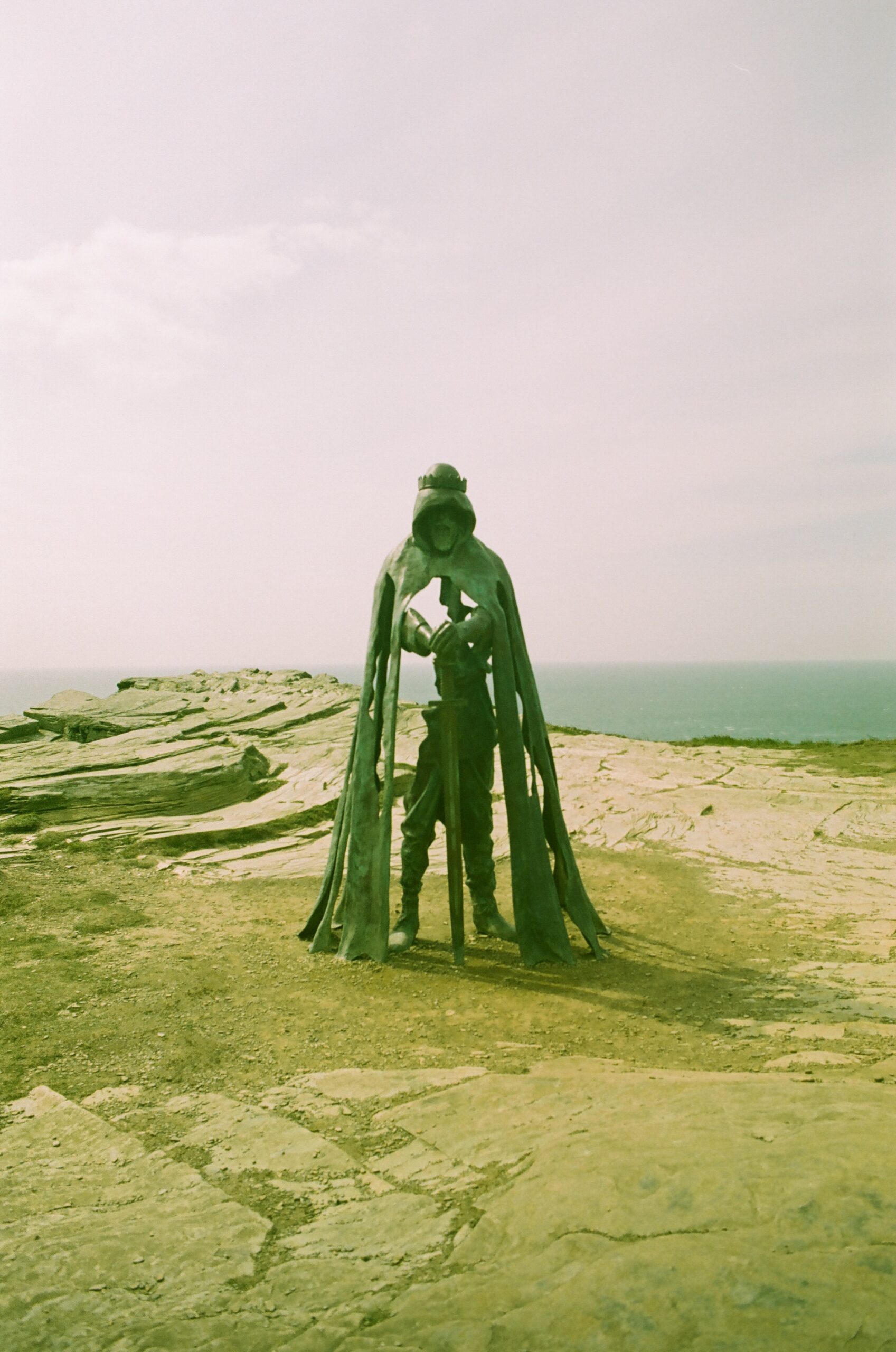
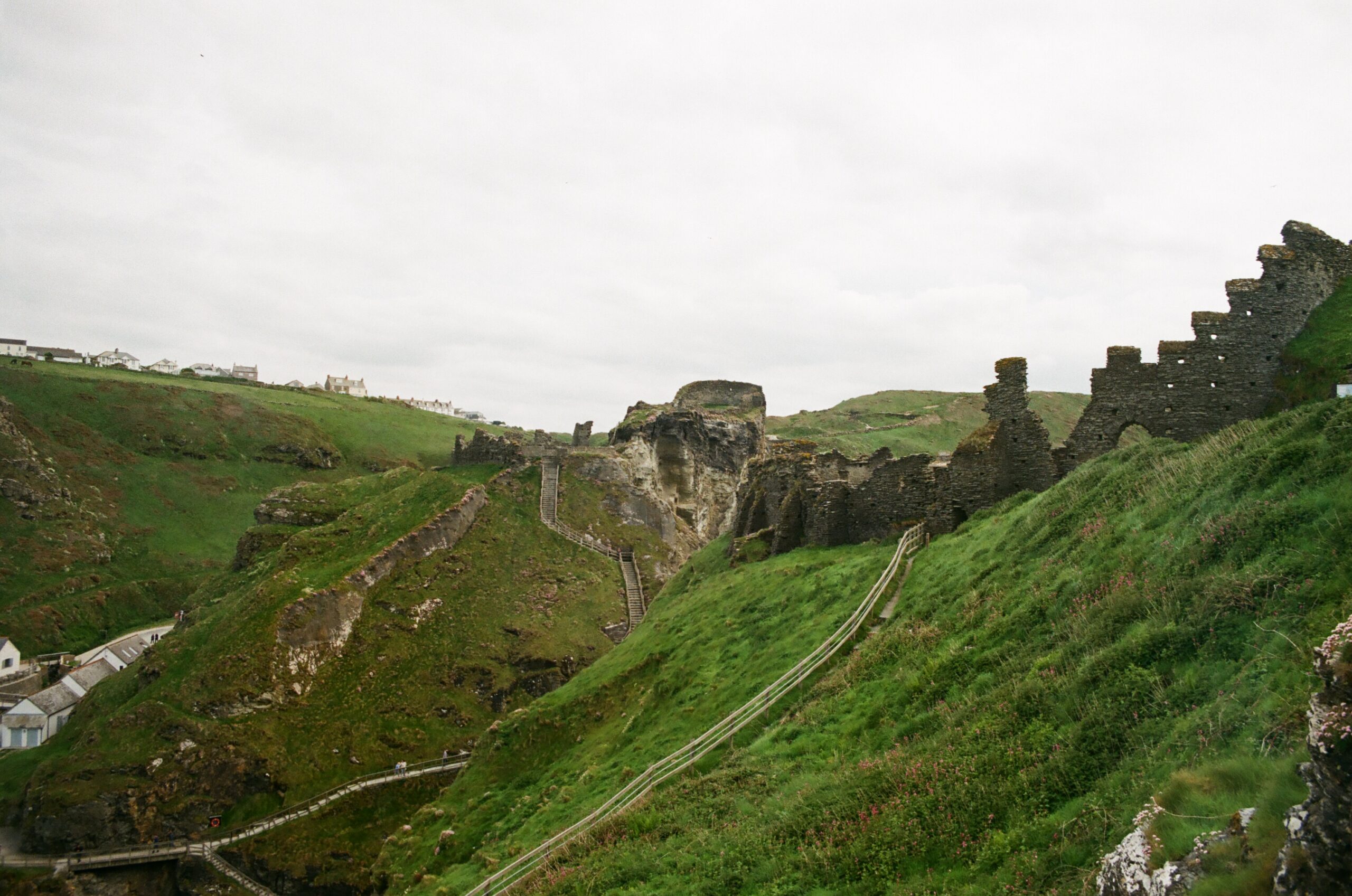
The castle sits on a massive rock outcrop connected to the mainland by a narrow neck of land, and the walk out to it tells you immediately that this was never a practical choice of location. It was built by Richard, Earl of Cornwall — brother of King Henry III — and historians have long puzzled over why. It wasn’t militarily strategic, it wasn’t particularly grand, and the Atlantic Ocean made short work of it not long after construction. The leading theory is that Richard built here simply because of the Arthurian association, which says something about how powerful those legends already were in the 13th century.
Standing on the outcrop, it’s easy to understand the appeal of that decision, even if the logic doesn’t hold up. The place feels like the end of the earth. The wind comes in hard off the Atlantic with nothing to break it, the waves crash far below, and the gulls are audible over everything. When I visited, it was warm and sunny in the village; by the time I reached the castle, it was cold enough to wish for another layer. That shift happens fast out there on the cliff edge, and it only adds to the feeling of remoteness.
The ruins themselves are fragmentary enough that it takes some imagination to reconstruct the full layout. But the location does the work that the architecture can’t — rugged, exposed, aspirational in its drama. The Arthurian legends feel entirely at home here. If someone described this place in a novel as the birthplace of a king, you’d accept it without question.
Merlin’s Cave is visible from the castle on the west side of Haven Beach — part of the same legendary landscape that ties this place to the conception of Arthur, the magic of Merlin, and the tragedy of Tristan and Isolde. The legends layer on top of each other, each one adding to the sense that this particular stretch of coast has always meant something to people who needed a place for their biggest stories. Details on their story can be found here.
Tip: Book tickets in advance through English Heritage, especially in summer. And bring a windproof layer regardless of how warm it looks from the village.
Near Tintagel
Rocky Valley & St Nectan’s Glen
These two are covered in full in their own dedicated post — Rocky Valley & St Nectan’s Glen: A Hike Through Ancient Cornwall — but the short version is this: the Rocky Valley coastal walk connects Tintagel to Boscastle along some of the most dramatic cliff scenery in Cornwall, with a detour through a wooded river gorge and past ancient petroglyphs carved into shale that nobody can quite explain. St Nectan’s Glen sits tucked in a mossy valley nearby, with a 60-foot waterfall that has carved its own hole through the rock and has been drawing spiritual seekers for centuries.
Both are essential additions to a Tintagel visit. St Nectan’s Glen in particular is, to this day, one of my favourite places I have ever been.
PLAN THIS TRIP
Tintagel works best as a dedicated two-day stop rather than a rushed day trip — the walking distances between sites are real, and the atmosphere rewards slowing down. It fits naturally into a wider Cornwall itinerary alongside Boscastle, Padstow, and the Penwith Peninsula.
- Book Tintagel Castle tickets in advance through English Heritage
- St Nectan’s Glen entry fee applies and includes wellies for the wet path down to the falls — worth every penny
- For getting around Cornwall without a car
PP&P working traveller note: Tintagel is genuinely suited to solo travel — the walking is independent, the evenings are low-key, and the history gives you plenty to read about after dark. I spent my evenings going deeper into the Arthurian and Cornish history I’d seen during the day, which is exactly the kind of travel I love most. Two full days felt right — enough to cover everything without rushing, and enough time to let the atmosphere actually land.
TIPS FOR THE VISIT
- Pack layers for the castle — the temperature drop between the village and the clifftop is real and arrives fast
- Start the castle visit early to beat both the crowds and the midday heat in summer
- Don’t skip St Materiana’s Church — it’s a walk from town, but the clifftop views and the age of the place make it worth it
- The petroglyphs in Rocky Valley are easy to miss — look for the information signs near the mill ruins and work backwards
- Evenings in a local Cornish pub are their own form of travel experience — lean into it
Pin me for later


You might want to read these British Isles posts:
Rocky Valley & St Nectan’s Glen Hike near Tintagel, Cornwall