Greece Itinerary: 17 Days from Athens to Crete — Mainland, Mountains & Islands
Greece defies easy summarisation. It’s ancient ruins and electric blue water, mainland mountains and island sunsets, Byzantine monasteries perched on impossible rock formations and whitewashed Cycladic villages tumbling toward the sea. A single trip can’t do all of it justice — but a well-structured itinerary can give you a genuine taste of how varied and extraordinary this country is.

DESTINATION
Greece

BEST TIME
April – June or September – October
BEST FOR
Culture, Scenery, Food, Island Hopping, Beaches & Water
OVERVIEW
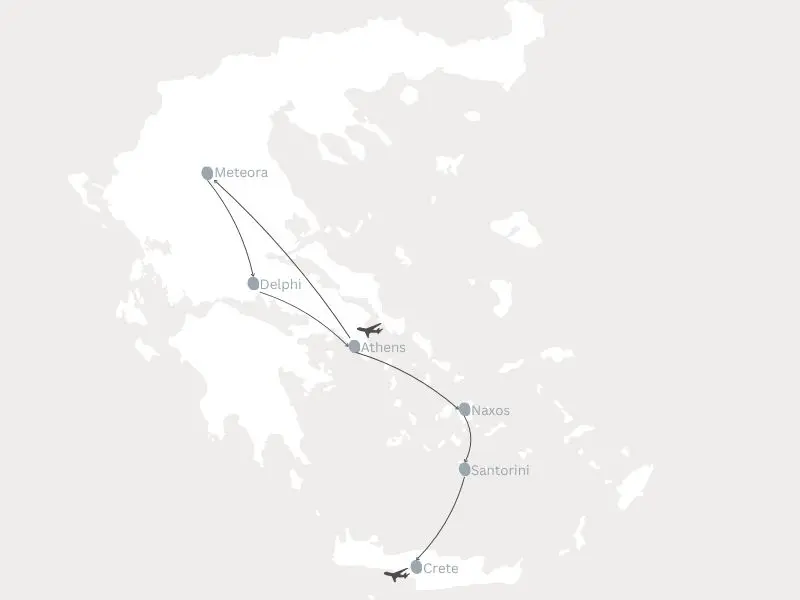
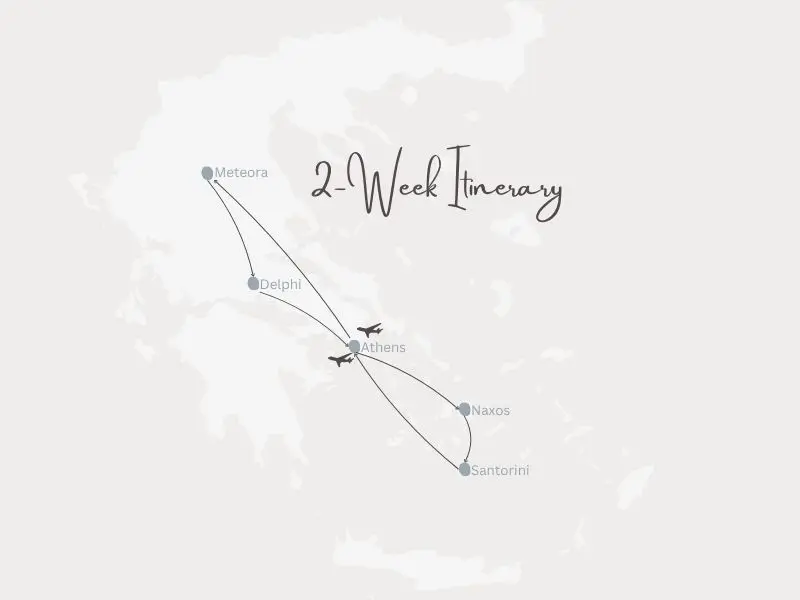
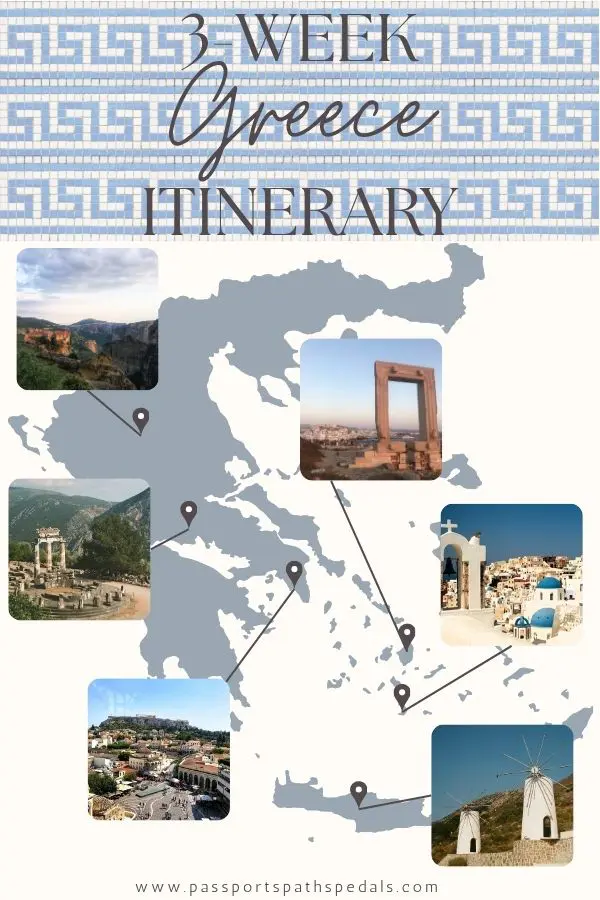
This is the route we took: 17 nights moving from Athens through the mountains of central Greece, down to the ferry terminals, and across the Aegean to three very different islands. It’s a highlights tour — fast by slow-travel standards, but deliberately so. Think of it as a sampler that tells you where you need to come back and spend more time.
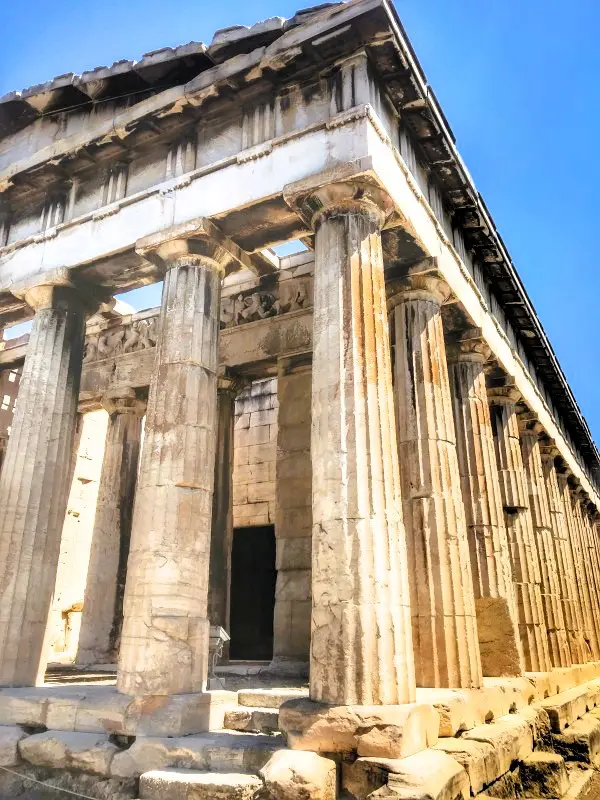
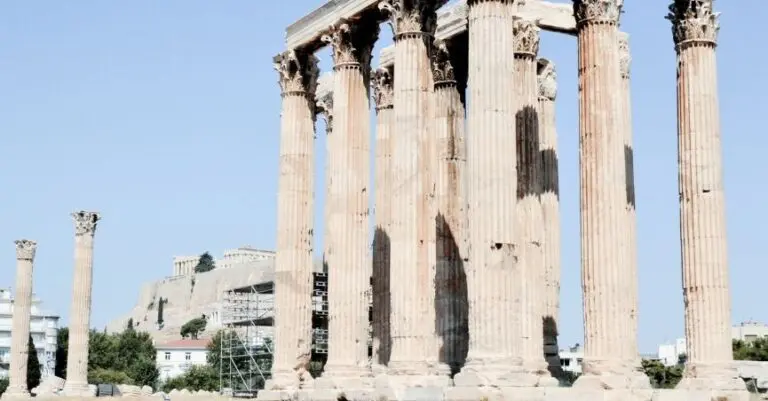
Athens doesn’t ease you in — it drops you straight into 2,500 years of history and expects you to keep up. The Acropolis watches over a city that is chaotic, beautiful, and endlessly layered: ancient agora beside Byzantine churches beside rooftop bars serving cold wine at sunset. It’s a city that rewards curiosity over itineraries, and where the best moments tend to happen between the major sights rather than at them.
There is no adequate way to prepare someone for Meteora. Enormous sandstone pillars rise from the valley floor in shapes that seem structurally implausible, and perched on top of them — somehow, impossibly — are monasteries that have been occupied for centuries. It is one of those places where the photographs don’t actually oversell it.
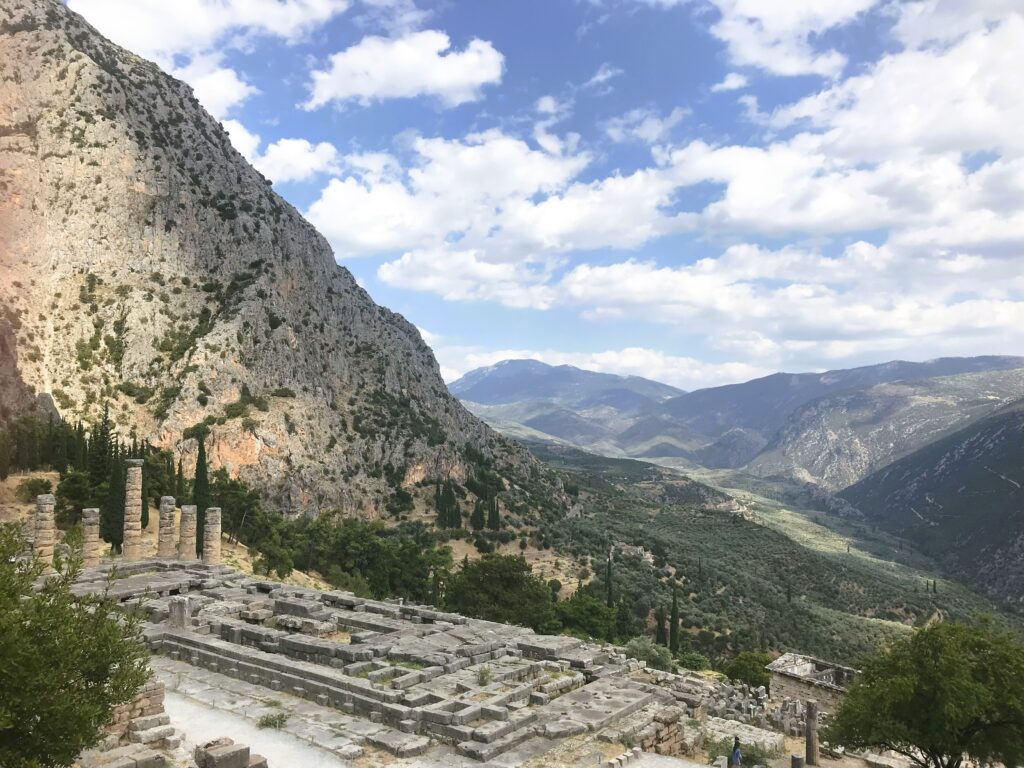
Standing on the hillside above the Delphi sanctuary, looking down through olive groves to the sea, it’s not difficult to understand why this specific place was special. The ruins are extraordinary, the museum is among the best in Greece, and the mountain town at the end of the day — quiet, cool, views stretching to the horizon — is one of the more underrated evening stops on any Greek itinerary.
Currency: Euro (€); cards are widely accepted, but carry cash for small shops and remote islands.
Language: Greek
Climate: Mediterranean – warm to hot, dry summers and mild, wet winters
Drinkable water: Tap water is safe in Athens and major cities, but bottled water is preferred on many smaller islands.
NIGHTS
3
2
1
3
4
4
DESTINATION
Athens
Meteora
Delphi
Naxos (via Athens)
Santorini
Crete
The largest of the Cycladic islands and somehow one of the least fussed-over, Naxos is what the Greek islands looked like before tourism rewrote the script. Greener than Santorini, quieter than Mykonos, and genuinely agricultural in a way that feels increasingly rare — vineyards, olive groves, mountain villages, and beaches that don’t require a reservation. The massive marble Portara standing at the harbour entrance catches the sunset every evening whether anyone is watching or not.
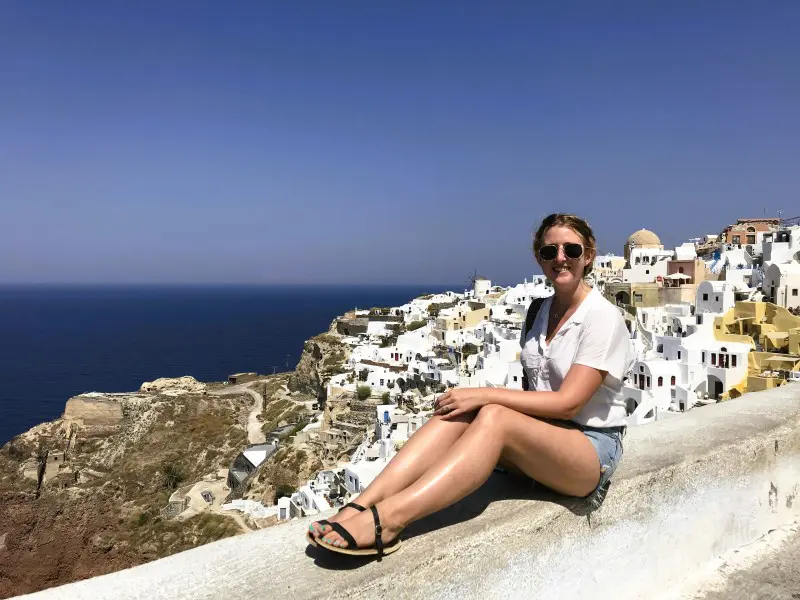
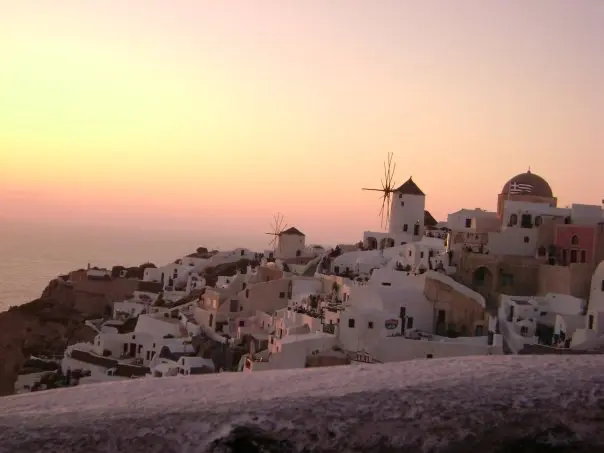
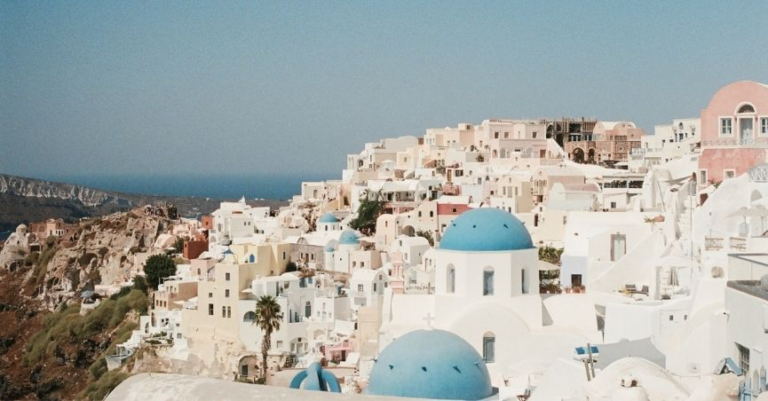
Yes, it’s exactly as beautiful as the photographs suggest. The caldera views, the volcanic wines, the particular quality of light on white-washed walls at golden hour — none of it is manufactured. Santorini knows exactly what it is and delivers it without apology. Come for the iconic, stay for the surprisingly good food, the hiking trail from Fira to Oia, and the feeling of watching the sun disappear into the Aegean from somewhere you genuinely can’t believe exists.
Greece’s largest island, Crete, operates on a scale that takes some getting used to after the compactness of the Cyclades. Minoan ruins, Venetian harbour towns, gorges that take a full day to walk, pink sand beaches in the far southwest, and food that is quietly, definitively its own thing — Cretan cuisine doesn’t need to borrow from anywhere. This is an island that could absorb weeks without repeating itself.
Is This Trip For You?
Yes, if you want ancient history, dramatic landscapes, island life, and extraordinary food — all in one trip. Greece is one of the most varied countries in Europe, and this itinerary shows you why.
Think carefully if you: only have 10 days or fewer — a shorter, tighter version (Athens, Meteora, Delphi, and one island) will serve you better than rushing through Crete.
DAY-BY-DAY ITINERARY
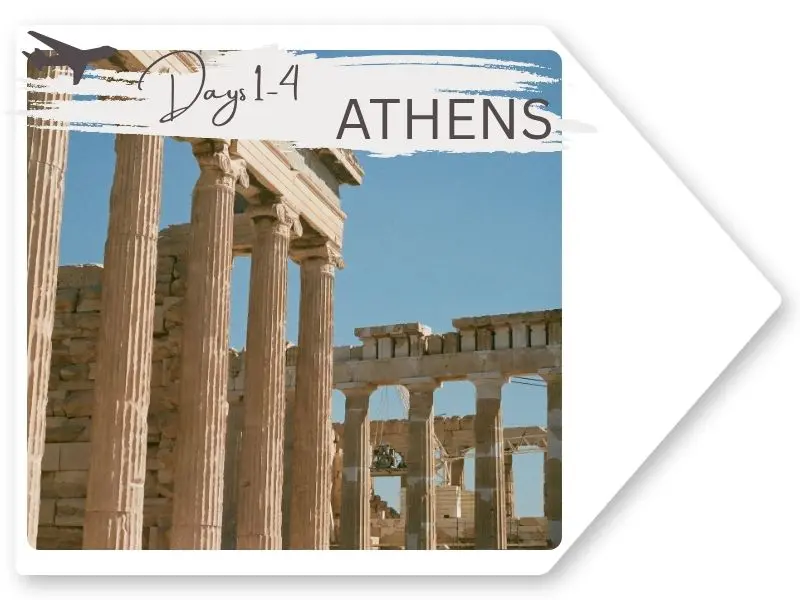
Athens is where the trip begins and where the scale of Greek history first registers. The Acropolis alone would justify the flight, but the city has layers beyond it — ancient agora, Byzantine churches, the National Archaeological Museum, the neighbourhood of Monastiraki, rooftop bars with Parthenon views.
Don’t miss…
- The Acropolis and Parthenon — go early, before the heat and crowds build
- The Acropolis Museum — essential context for what you’ll see on the hill
- The Ancient Agora — the civic heart of ancient Athens, less crowded than the Acropolis
- Monastiraki and Plaka neighbourhoods for evening wandering and food
- A rooftop bar at sunset with the Parthenon lit behind you
Full Athens post
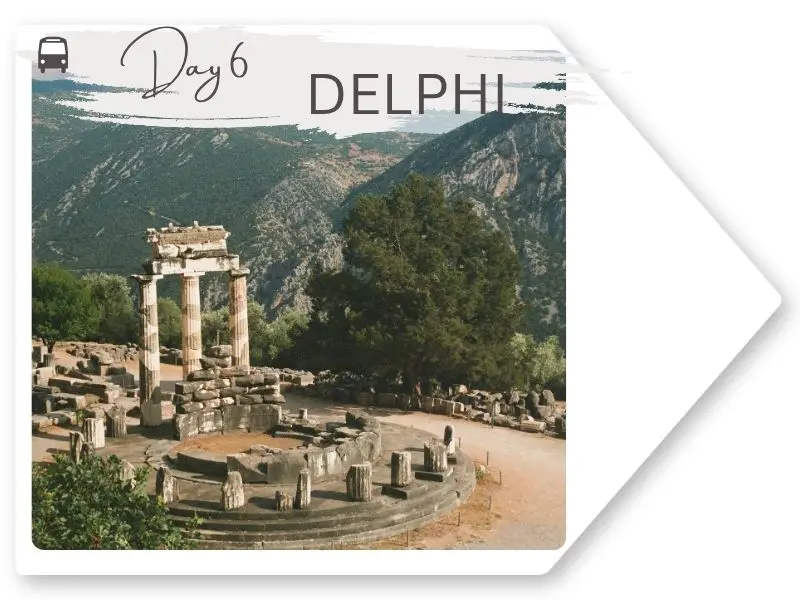
Delphi was considered the centre of the world in ancient Greek cosmology — the place where Zeus released two eagles from opposite ends of the earth, and they met, marking the navel. The Oracle of Apollo held court here for centuries, consulted by kings and generals before every major decision. Standing on the hillside above the valley, looking down toward the olive groves stretching to the sea, you understand immediately why this specific place was chosen.
Don’t miss…
- The Temple of Apollo and the Sacred Way leading up to it
- The Theatre and Stadium — remarkable views down the valley from the upper site
- The Delphi Archaeological Museum — home to the Charioteer of Delphi, one of the finest Greek bronzes in existence
- The Tholos at the Sanctuary of Athena Pronaia — the circular temple that appears in every Delphi photograph
- Delphi town at dusk — two main roads, tavernas, mountain air, and views
Full Delphi post
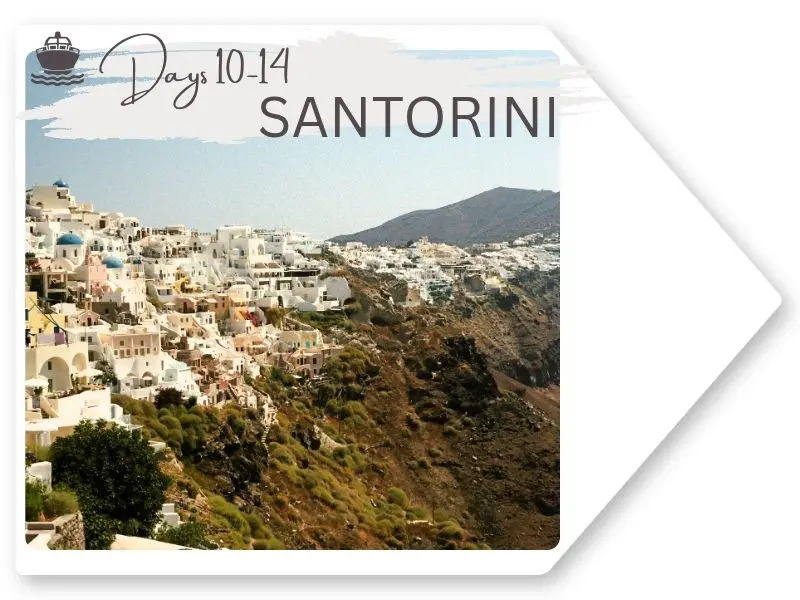
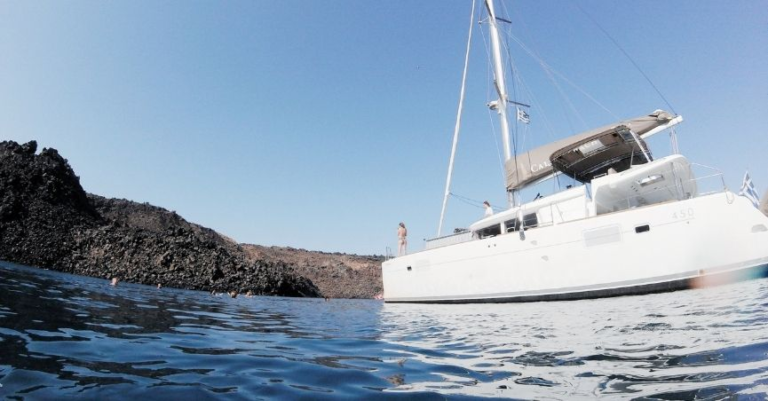
Santorini earns every superlative thrown at it, and it knows it. The caldera views, the sunset from Oia, the volcanic wines — none of it is hype. It’s also crowded in high summer, expensive by Greek standards, and worth staying for rather than day-tripping from anywhere else. Four nights gave us time to breathe: one day of exploring Oia’s lanes and the castle viewpoint, one caldera catamaran tour, one wine tasting afternoon, one slower day at the pool.
Don’t miss…
- Sunset from Oia — from Ammoudi Bay at water level or the castle ruins above
- Caldera catamaran tour — half-day on the water, swimming at hot springs and May Rut-equivalent beaches
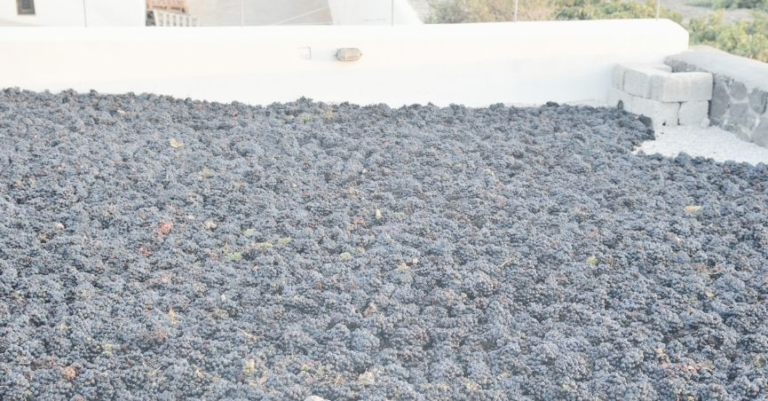
- Santorini wine tasting — the indigenous Assyrtiko grape grown in the famous basket-weave method produces wines unlike anything else. Venetsanos Winery at sunset is the one.
- Akrotiri — the Minoan archaeological site, sometimes called the Pompeii of the Aegean
- The caldera rim walk from Fira to Oia — 10km with continuous views (best in cooler months)
Full Santorini post here
Getting Around
- Meteora to Delphi: train to Livadia + bus, ~3 hours total
- Delphi to Athens to Naxos: bus to Athens + flight to Naxos, ~30 minute flight
- Naxos to Santorini: ferry, ~3 hours, book ahead in peak season
- Santorini to Crete (Heraklion): ferry, ~2 hours

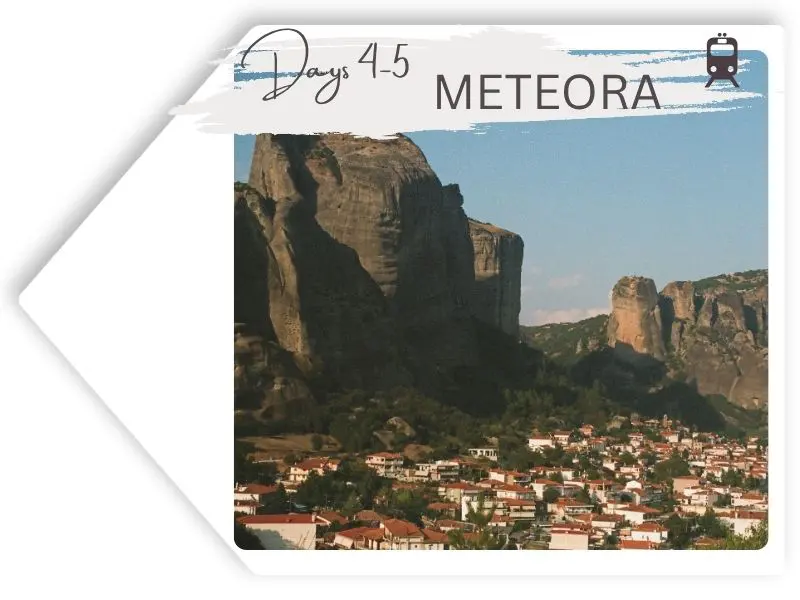
The train from Athens to Kalambaka moves from urban sprawl to agricultural plains to the increasingly dramatic terrain of central Greece. Nothing fully prepares you for the first view of Meteora: enormous sandstone pillars rising from the valley floor, each one topped with a monastery that seems to defy both physics and logic.
The name means “suspended in the air,” and when morning mist fills the valley below the rock formations, that description feels exactly right. Six monasteries are still active — two of them nunneries — and visiting them across two days allows time to absorb each one rather than rushing between them.
Don’t miss…
- Great Meteoron — the largest and oldest, with excellent museum collections
- Rousanou (St. Barbara) — the most photogenic from the main road viewpoints
- Holy Trinity — remote, dramatic, and featured in the Bond film For Your Eyes Only
- The valley viewpoints at sunset — looking up at the lit monasteries from below
- Kastraki village — quieter and more atmospheric than Kalambaka as a base
Full Meteora post
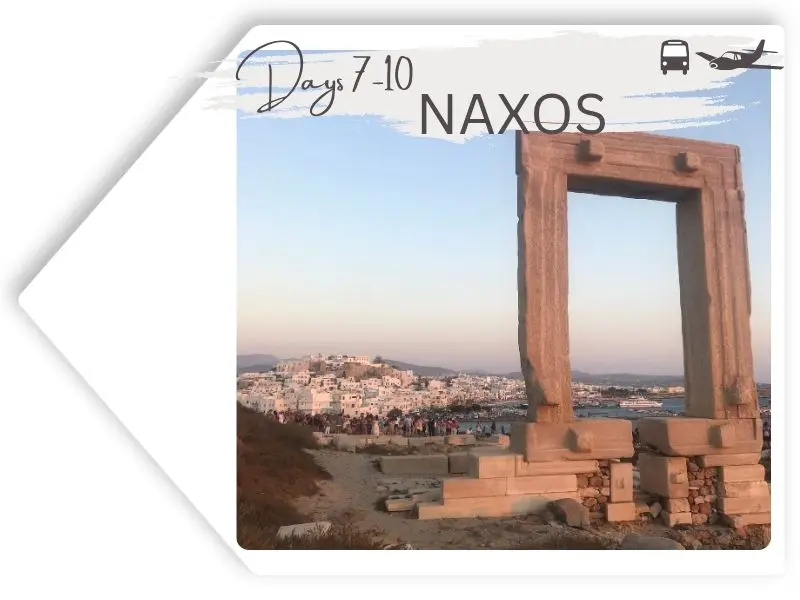
Naxos was a last-minute addition to our itinerary and became one of the best decisions of the trip. The largest of the Cycladic islands, it’s greener, more agricultural, and far less touristed than Santorini — a genuine working island that happens to be extraordinarily beautiful. The Portara (the colossal marble gateway of an unfinished temple of Apollo) stands at the entrance to Hora harbour and catches the sunset in a way that’s become iconic. The interior of the island — mountain villages, olive groves, ancient marble quarries — rewards exploring by rental car or scooter.
Don’t miss…
- The Portara at sunset — the marble gateway silhouetted against the Aegean
- Hora (Chora) old town — the castro neighbourhood and its Venetian architecture
- Mount Zas hike — the highest point in the Cyclades, with extraordinary views
- The beaches — Agios Prokopios and Plaka are among the best in the Cyclades
- Local food — Naxian potatoes, fresh cheese, and Kitron liqueur made from citron leaves
Full Naxos post here
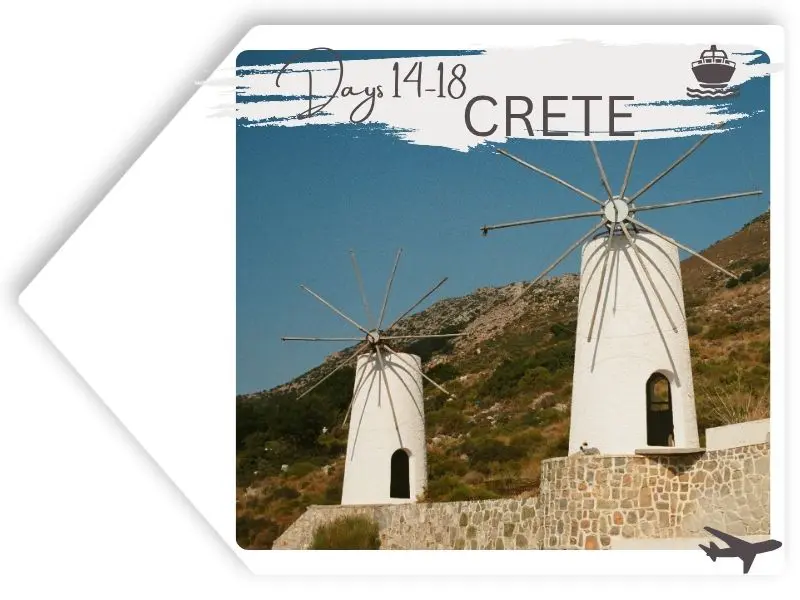
Crete is the trip’s biggest surprise. After the compactness of the Cyclades, the scale of Greece’s largest island is genuinely disorienting — mountainous, green, historically layered in a way that feels different to anything else in Greece. Minoan ruins at Knossos. Venetian harbour towns at Rethymno and Chania. The Samaria Gorge (a full-day hike). Pink sand beaches at Elafonissi. Tavernas serving food that is quietly, definitively Cretan.
Don’t Miss:
- The Palace of Knossos — the centre of Minoan civilization, 3,500 years old
- Old Town Rethymno — Venetian streets, a lighthouse harbour, and a massive fortress
- Old Town Chania — perhaps the most beautiful harbour town in Greece
- Elafonissi Beach — pink sand in the far southwest, extraordinary colour
- The Samaria Gorge — 16km gorge hike, one of the longest in Europe (full day, book ahead)
Full Crete post here
With more time, consider these adjustments/add-ons…
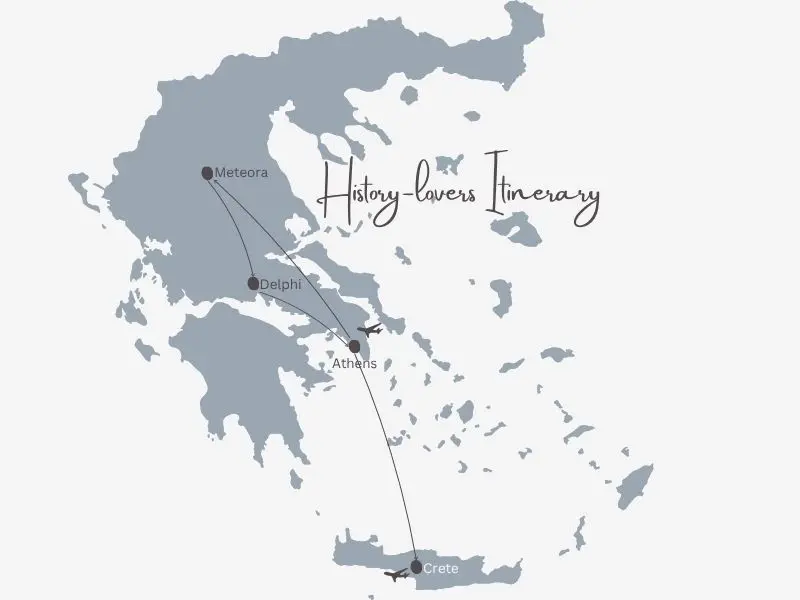
For history lovers: Prioritize Athens, Delphi, and Crete (specifically Knossos and the Archaeological Museum in Heraklion). Meteora is also unmissable. The islands are secondary.
The fast version (10–14 days): Cut Crete entirely and save it for its own trip. If you want activities, add a night to Delphi for hiking. For 10 days, choose between Naxos or Santorini, not both. A tighter, more relaxed version of the mainland-plus-Cyclades experience.
The slow version (3+ weeks): Add Crete properly — five to seven days with a car, based in two locations. Add more time in Meteora or Delphi for hiking. Spend an extra night on the islands. Don’t try to add another island.
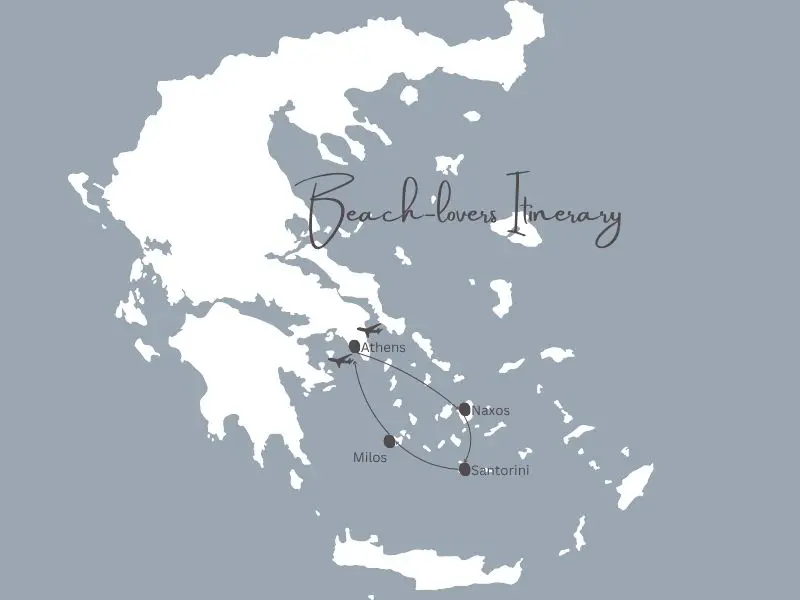
For beach and island lovers: Skip Meteora and Delphi; you’ll get enough history in Athens. Fly directly to Naxos, spend five nights, ferry to Santorini for five, and use remaining time on Crete or add a smaller island such as Milos.

Transportation Tips
Booking ferries: Ferryhopper is the best tool for checking routes and availability. Book as early as possible for summer travel — peak season ferries sell out. Book ferry tickets here.
Getting around Crete: A rental car is essential. Roads are good; distances are long. Book your car before arrival in high season. Search rental cars for Crete here
Where to fly: Athens International Airport (ATH) is the main hub. Flying into Athens and out of Heraklion (Crete) avoids backtracking. Search flights here.
Help plan your trip with these posts
Book your trip with these
Accommodation
Transportation
Tours
Found this itinerary helpful?
Save it for later or share with a friend
You might like these other related posts:
Korčula Old Town Guide: A Medieval Gem by the Sea
Ston Croatia Guide: Stone Walls, Oysters & Adriatic Charm
Exploring Croatia by Bike in 10 Days
Soaking in the Scenery: A Day at Krka National Park