
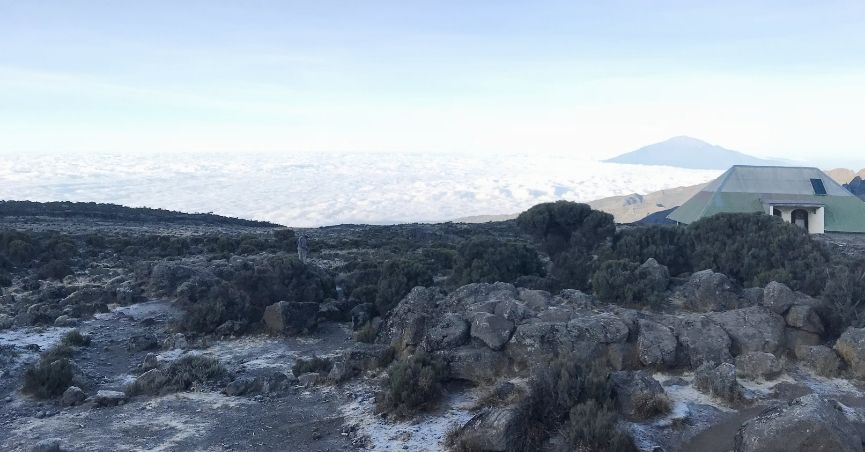
Climbing a mountain the size of Kilimanjaro was not something I’d done before. In fact, I had done very few overnight hiking trips, where we were hiking more than just in and out. I had an idea of what to expect after reading blogs and such, but not everything can prepare you for the experience. Things will never go exactly to plan – so the best you can do is be prepared. These are some of the things I wish I’d known before the climb and tips for Kilimanjaro.
Summary of Tips for Kilimanjaro
Choosing the route
This section starts well in advance of actually being on the mountain; it’s part of your trip planning phase. Picking the route is really important, as it increases your likelihood of success. Here is a breakdown of the common routes, why you might choose them, and things to know for each.

Marangu Route (5–6 days)
The only route with hut accommodations instead of tents. It’s popular with travellers wanting more shelter from the weather. Shorter itineraries mean less acclimatization, and summit success rates are generally lower unless you add an extra day. Best for: Trekkers who want huts.
Machame Route (6–7 days)
Machame is one of the most scenic routes and offers good acclimatization through its “climb high, sleep low” profile. It’s popular — expect company on the trail — and steeper in sections than Marangu. Best for: Fit hikers who want scenery and solid acclimatization.
Lemosho Route (7–8 days)
Often considered the gold standard for acclimatization and summit success. It starts on the quieter western side of the mountain and gradually joins Machame. Longer and more expensive, but the slow ascent significantly reduces altitude risk. Best for: Those prioritizing safety, success rates, and a quieter start.
Shira Route (6–7 days)
Similar to Lemosho, but it starts at a higher elevation due to vehicle access. The higher starting altitude means less initial acclimatization — not ideal for everyone. Best for: Experienced trekkers with prior altitude exposure.
Rongai Route (6–7 days)
Approaches Kilimanjaro from the north near the Kenyan border. It’s drier and less crowded. Less dramatic scenery early on, but quieter trails and a more gradual ascent. Best for: Those trekking during the rainy season or seeking solitude.
Northern Circuit (8–9 days)
The longest route with the highest summit success rate due to exceptional acclimatization. It circles the mountain before the summit at night. More time and higher cost, but the most comprehensive experience. Best for: Those with time, budget, and a strong focus on success and safety.
Umbwe Route (5–6 days)
Steep, direct, and dramatic — often marketed as the most “challenging” route. Poor acclimatization profile and lower success rates. Best for: Highly experienced trekkers who understand the risks.
Pick the route that gives your body the most time to adapt — not the one that gets you up fastest.
About the Hike & Daily Routines
- Aside from Day 1 (registration day), all the days have a wake-up call at around 06:00 am. Being so near the equator, the sun rises and sets pretty consistently around 06:30 & 18:30 – so you want to make the most of the daylight.
- The route is designed to best acclimatize you; the guides have carefully planned and organized your overnight stays – it may be slightly different than the itinerary listed on the website (or office) to meet the group’s needs.
- There are A LOT of other people, I was surprised at how many, on our route alone. Step aside to let faster hikers pass, and even more importantly, the porters. It’s not a competition.
- I’m sure if you are climbing Kili, you’ve done a little hiking in your life. So you probably know generally how quickly you hike a kilometre (or mile) normally. Forget this. Your pace is slow on Kili, especially at higher elevations. The perception of distance and time is totally warped. When your guides say “short hike today,” it doesn’t mean time; they mean distance. Just because it is “short” doesn’t mean it’s easier either.
- To avoid having to pee in the middle of the night, drink lots of water all day, then only a little at night. Try to wait as long as possible before bedtime to use the bathroom.
- Stop to take in the scenery! It’s beautiful!
On Kilimanjaro, forget everything you know about pace — “short” means distance, not time, and at altitude, time stretches, distance lies, and nothing feels easy.


Your Team
- The Guides are highly trained for the job. The program they attend is 3 years in school, with written and practical exams. The guides are able to take any route, make it to the summit and back in 4 days. They also must be able to make it to the summit in 2 hours (for reference, it took us 7). When your guide tells you something about the Mountain, or makes a suggestion – listen to them. They know the mountain, they’ve seen hundreds of people climb it, and maybe have climbed it hundreds of times themselves.
- Porters are also a super important part of your team. They carry all your belongings, sleep and cooking needs. These people work very hard for their wages!
- Don’t forget about cook! Fuel for the hike is super important. Cook is usually racing ahead of the group to make sure food is ready (or nearly) for you when you arrive at the rest stop or at camp.


Things to Bring
- All of the warm stuff! You may encounter a snowstorm at the summit, as we did. I basically wore all my clothes. Also, be prepared for cold nights; have a warm sleeping bag.
- Layers. We had some beautiful sunny days that had many of us in shorts and tees for the hikes, but the day started and ended needing pants and sweaters.
- Moist wipes. Though you are given a bowl of hot water and soap before each meal to wash with, it’s hard to wash anything but your hands and face. I used makeup remover wipes (use biodegradable ones) to give my face a better clean, along with the places that I got a little sweaty that day. I definitely felt refreshed.
- Moisturizer for your face, hands and lips. It got a little windy and dry towards the summit, not to mention that you are a little closer to the sun.
- Don’t forget to pack things up as if it might rain every time. There is nothing worse than damp and cold gear. Bring a waterproof bag(s) to put your clothes and belongings in, which goes inside the duffel your company provides. They do their best to keep the bags dry, but if its down-pouring for hours, the duffels are likely to get wet.
- Other things can be found on my Kilimanjaro packing post, here.


Staying Healthy
It’s hard to bring everything you need to stay healthy when you are backpacking, let alone on a mountain. But here are some suggestions.
- Lots and lots of hand sanitizer and wet wipes.
- Multi-vitamins. I find the gummy versions less irritating to my stomach. Though they fed us very well on the mountain, the altitude (or maybe the altitude meds) made me feel a little nauseous on and off, and just not hungry at all. Multivitamins help give you all the extra minerals that you need.
- Electrolyte restoring tabs. These are basically Gatorade without having to carry the liquid. Both Diamox (an anti-altitude sickness medication) and altitude sickness will make you pee a lot, potentially losing important things like sodium and potassium. Plus, you are burning lots of calories all day and still get a little sweaty even in the cooler temperatures. So make sure to drink plenty of water. I regularly buy Hydralyte dissolving tabs; they come in tubes of 20.
- If you have room, it may be wise to bring some high-energy & protein snacks. We had the Energy Gels, but they were so sweet it made me even more nauseous on an empty stomach. As I said, I didn’t want to eat a lot, but you really need the nutrients, as you are working your body every day. The other substitute here is to add the milk powder to all hot beverages – tea, coffee, chocolate, water – it also has a lot of nutrients and proteins.
- Stretch after your day of hiking – your body is going to get sore.
- Sleep as much as you can. Remember my tip about avoiding nighttime bathroom trips in the first section.
Making it to Summit
- Wear all your layers. It’s going to be cold, regardless of what the weather is like.
- Plan to carry as little as possible in your backpack. It’s surprising how little effort makes you breathless, and the weight of a backpack, on top of all your layers, seems unbearable.
- Eat some of the snacks provided before starting the climb, even if you aren’t hungry or feel a little sick – you will need the energy
- Fill your water bottles or hydration pack with hot water to prevent it freezing.
- Get yourself into an “I can do this” mindset.
- Go slow. Depending on which base camp you start at, you could be increasing your altitude by 1200m in a few hours.
- Communicate with your guides! If you are feeling sick, dizzy or need a break. They need to know sooner rather than later.
- Find a tactic to keep yourself pressing on (I literally said “Left foot, Right foot….” over and over for maybe an hour or two)
- Know that once you’ve reached Stella Point, the hardest part is over, only a 45min to 1hr walk to Uhuru.

These are my tips for Kilimanjaro! What other suggestions or advice do you have for future Kilimanjaro climbers?
Pin me for later…

Read more Kilimanjaro posts:

Mount Kilimanjaro Lemosho Route Part I: Getting to the Mountain

Climbing Kilimanjaro Lemosho Part II: Finding a Rhythm at Altitude

Mount Kilimanjaro Lemosho Part III: Summit Night
Read more Tanzania posts:



Leave a Reply