
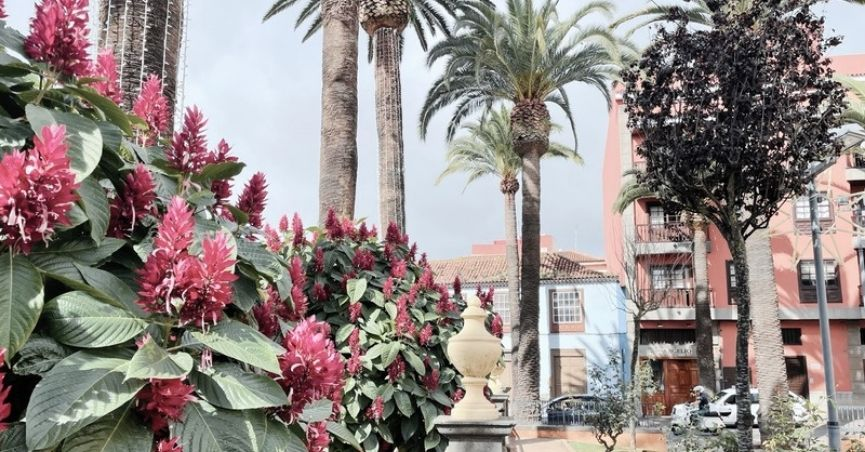
Tenerife, the largest of Spain’s Canary Islands, sits in the Atlantic off the northwest coast of Africa. It’s a place where rugged volcanic peaks meet lush valleys and golden beaches. Sometimes also given the nickname “Island of Eternal Spring,” due to its mild climate (similar to Madeira), which makes it a year-round favourite for hikers, beach lovers, and stargazers alike.
I visited in November 2022, spending half of my nine-day trip exploring Tenerife before hopping over to Gran Canaria. Coming from Vancouver, my route required a stop in London, allowing for a short family stop in England.
Like many travellers, I couldn’t choose between Tenerife and Gran Canaria — so I visited both. True to form, I had a long itinerary. But I quickly realized I’d underestimated travel times, especially when relying on buses instead of renting a car. Still, Tenerife’s dramatic landscapes and cultural charm made every moment worth it.

Tenerife at a glance…
Best for: Volcano landscapes, hiking, beaches, varied scenery
Ideal stay: 4–6 days
Vibe: Dramatic and diverse — lush north, sunny south, otherworldly volcanic interior
Don’t miss: Teide National Park, Masca Valley, Los Gigantes cliffs, Playa de las Teresitas
Skip if: You want compact cities or a purely cultural itinerary
Good to know: A rental car gives you the most flexibility; temperatures vary widely by region and elevation
A Brief History of Tenerife
Tenerife’s history mirrors that of the Canary Islands as a whole — a tapestry woven from indigenous heritage, conquest, and exploration. Long before the Spanish conquest, the island was home to the Guanches, an indigenous people of North African origin. They lived in isolation on the islands for centuries. They developed their own language, spiritual practices, and traditions, many of which echo through Tenerife’s festivals and folklore today.
The Spanish conquest began in the early 15th century but met fierce resistance here. Tenerife was the last island to fall in 1496 after a series of brutal campaigns. Once under Spanish rule, its location in the Atlantic transformed it into a vital port during the Age of Discovery, serving ships en route to the Americas. In later centuries, Tenerife’s fertile volcanic soil made it a hub for sugarcane and wine production. Today, its mix of Spanish and indigenous influences can still be seen in its architecture, cuisine, and traditions.
Getting There & Around
Tenerife is easily accessible from mainland Europe, with frequent direct flights from major cities into Tenerife North (TFN) and Tenerife South (TFS) airports. If you’re island-hopping, ferries from Gran Canaria and La Gomera operate several times daily.
While Tenerife has a reliable bus network (TITSA) connecting most towns, exploring remote trails and volcanic landscapes is easier by rental car. Roads are generally in good condition, but expect narrow, winding drives in mountain areas.
For those who prefer not to drive, guided tours are a great option for visiting Mount Teide National Park or the Anaga Rural Park without the stress.
Where to Stay
Tenerife offers something for every traveller — it just depends on what you are looking for (and maybe where you are flying into).
South Tenerife:
- Costa Adeje (South Tenerife): The island’s most popular resort area, known for luxury hotels, golden beaches, and great dining. Perfect for travellers who want comfort and easy access to attractions.
- Los Cristianos & Playa de las Américas: Bustling seaside towns filled with nightlife, bars, and water sports. Ideal if you want a lively holiday atmosphere.
Central Tenerife:
- Teide National Park Area: For hikers and stargazers, mountain lodges and rural stays near Mount Teide offer an unforgettable off-the-grid experience.
North Tenerife:
- Puerto de la Cruz: A laid-back alternative with traditional Canarian charm, lush scenery, and nearby attractions like the Botanical Gardens and Loro Parque.
- La Orotava & Garachico: Great for a more authentic stay — beautiful historic towns surrounded by volcanic landscapes and local culture.
- San Cristóbal de La Laguna (known as La Laguna): A university city with a lot of history. This is where I stayed as it was pretty central, with lots to do and had easy access to Anaga Park for hiking. Hotel recommendation: La Laguna Gran Hotel


My 5 Day Itinerary on Tenerife
I spent a lot of time researching things to do around the island, which ultimately left me with a limited sense of what to see in the city I was staying in. Little planning misstep on my part, but that’s okay, I figured it out.
Day 1 – San Cristóbal de La Laguna
A UNESCO World Heritage Site, La Laguna was Tenerife’s original capital and is still its cultural heart. The city is known for its well-preserved colonial architecture, cobblestone streets, and laid-back atmosphere. It is also home to the University of La Laguna, giving the town a youthful energy with cozy cafes, bookshops, and art spaces. The historic center is pedestrian-only, so it is the perfect place to slow down and soak up the historical charm.
I started my day with breakfast at the hotel’s buffet, which was included in my stay. The buffet was really nice – fresh local breads, honey, jam, cheeses, deli meats, plus the typical continental items like yogurt and cereal.
Historic Centre
I then headed out to get my bearings with a wander through La Laguna’s historic centre, which is a UNESCO World Heritage Site. The streets are all lined with colourful colonial houses, especially along Calle Herradores. There are a number of impressive churches, such as Iglesia de la Concepción. This historic church is one of the oldest in Tenerife. Its striking bell tower and blend of Gothic, Mudéjar, and Baroque styles reflect the island’s colonial past and religious heritage. I also really loved the green spaces and plazas – for people watching and seeing different flowers and plants. Some great ones were Plaza del Adelantado, Plazoleta de Zerolo and Plaza Doctor Olivera.
There was some sort of celebration occurring when I was there, so there was music and decorations around, lots of people, including children. The atmosphere was fun and lively.
Mesa Mota Hike
In the afternoon, jet lag was getting me down, so I had lunch and a coffee, then opted for the Mesa Mota hike. I walked from town to the hiking area; you could alternatively take a taxi (the bus wouldn’t have gained much distance).
Mesa Mota is a natural area around La Laguna, common for hiking, running, and biking. It has a circular trail and features a memorial to the 1977 Tenerife airport disaster. There are many little trails and routes. I got some amazing vistas of towns in valleys below.
If you are not up for a hike, then opt for a museum, some listed in day 5 of this itinerary.


Day 2 – Santa Cruz de Tenerife
I had a slower start to the day with a little sleep-in and caught the tail end of the hotel breakfast. My plan for the day was to venture out to nearby Santa Cruz de Tenerife. This is the vibrant capital of the island—a place where modern architecture, artistic expression, and relaxed seafront living all come together. I also wanted to familiarize myself with the bus system, as I had a bigger day trip planned for the following day. From the La Laguna bus terminal and hopped on bus #15 (108 works too).
I got off at the Santa Cruz bus terminal, as it is close to the iconic Auditorio de Tenerife. It is a stunning architectural landmark, often compared to the Sydney Opera House with its dramatic, sweeping curves and oceanfront setting.
If you love plants, you might want to also explore the nearby Sala de Exposiciones de Palmetum, a huge botanical garden specializing in palm trees. I missed out on this as I simply didn’t have the time.
Art lovers should head to TEA Tenerife Espacio de las Artes, a sleek, contemporary art space that showcases both international exhibitions and Canarian artists. For something rooted in local heritage, the Museum of Nature and Archaeology (MUNA) houses fascinating exhibits on the Guanche people—the island’s original inhabitants.
Afternoon
Wander over to Plaza de España, the city’s largest square, for a mix of history, public art, and sea views. Beneath the plaza, you can visit the remains of the Castillo de San Cristóbal, a 16th-century fortress that once defended the coast. Now cleverly displayed in a small underground museum.
I had lunch at Restaurant Manglar, whose patio looks out on the fountain/pool in the Plaza.
For some relaxation and a stroll after lunch, walk through Parque García Sanabria, a peaceful oasis filled with tropical plants, fountains, and sculptures.
Visit the Casa del Carnaval House to admire the extravagant costumes and learn about the history of the Carnaval celebration. Admission is free! Note – If you’re visiting around February or March, Santa Cruz really comes alive during Carnaval, one of the biggest and most flamboyant in the world.
If you are looking for some beach time, from the Santa Cruz bus terminal, take bus 970 or 910 towards San Andres, then walk to Playa de las Teresitas for golden sand and calm water.
Have dinner in La Laguna after heading back on the bus.


Day 3 – Wine & Puerto de la Cruz
This day was a bit of a mission on the bus. I had made up my mind that I was doing a wine tasting and that I wanted to visit Puerto de la Cruz; it was all in the same direction, so why not together? Again, I started a little later in the day, because its holiday and sleeping in is nice, but also because I was wine tasting first, I had to wait until the tasting room was open.
From La Laguna to Bodegas Monje, I used bus #104 (or #101), which took about an hour.
Wine Tasting
I love wine and love how it is integral to but unique in so many places. I chose to visit Bodegas Monje, mostly because of its glowing reviews, but also because the tasting room was open. This is more than just a winery—it’s a full-sensory experience. Bodegas Monje is a family-run bodega that has been producing wine for generations. They have a strong focus on the character of volcanic soil, using native grape varieties like Listán Negro and Negramoll.
The winery setting is breathtaking: rows of vines cascade down the hillside with ocean views stretching out behind them. You can join a guided tasting on their sun-drenched terrace, sampling bold reds and bright rosés while learning about the influence of the island’s climate and geology on the wine.
More about Canary Island wine in another post.


Having very much enjoyed my wine tasting experience. I headed out on the bus again, the #104 (#102 works too) to Puerto de la Cruz. Once Tenerife’s main port, Puerto de la Cruz is now a relaxed resort town with a more traditional Canarian vibe compared to the southern resort towns. I spent a few hours in the beautiful Jardín Botánico before wandering the historical town center. I really enjoyed the hilltop walking paths and views of the cliffs, ocean and city below. In the La Ranilla neighbourhood, spending some time trying to find all 15 street art murals.
Another option is to enjoy a swim in the Lago Martiánez saltwater pools designed by renowned artist César Manrique.


Day 4 – Anaga Rural Park
A UNESCO Biosphere Reserve, Anaga Rural Park, is one of Tenerife’s most magical landscapes. It is located on the northern tip of the island and is most easily accessible from La Laguna. The park has many hiking trails, and you could spend your entire trip hiking here. I have shared my hike and the logistics in another post – A Hike Through Tenerife’s Anaga Rural Park.
Day 5 – More La Laguna & Departure
As I said in the introduction, I underestimated the time needed to see everything, and likely should have spent my entire 9 days on Tenerife. But on the afternoon of day 5, I was heading over to Gran Canaria by ferry. I spent the morning in La Laguna’s old town, visiting some of the museums.
Casa Salazar – A beautifully restored 17th-century mansion showcasing traditional Canarian architecture. Casa Salazar now serves as a cultural center and exhibition space. Its elegant stone façade and central courtyard offer a glimpse into the grandeur of La Laguna’s noble history.
House-Museum Cayetano Gomez Felipe– A traditional Canarian house dating from the 18th century. It exhibits a large collection of antiques on art and customs in the Canary Islands.
Alvarado-Bracamonte – The building is also known as the House of the Captains General because six Captains General of the Canary Islands lived there between 1705 and 1723. It is the clearest example of the domestic architecture of the first half of the 17th century.


Other Popular Sights on Tenerife:
This is the list of things I didn’t do and places I didn’t go because of timing and accessibility. But I wished I had. These will be on my list should I return.
- Teide – Spain’s highest peak, Mount Teide (3,718 m), is a UNESCO World Heritage Site.
- Ride the Teide cable car for panoramic views or hike to the summit with a permit. Explore the park’s lava fields and unique rock formations.
- This was high on my list, and I looked into making it work; however, it was at least 3+ hours of busing each way. The cost of a round-trip cable car was 42 euros for a 1-hour time slot (unless I had a permit for trail 10 to the crater, then I had 2 hours). It just didn’t seem like the best use of time. Likely, I should have looked for hikes nearby to enjoy the unique landscape.
- Garachico – A charming old town with natural lava pools perfect for swimming, and fewer crowds.
- Masca Village – Nestled in the mountains, Masca is a picturesque village with a dramatic canyon hike down to the coast.
- Whale & Dolphin Watching – Boat tours from Los Gigantes or Costa Adeje offer the chance to see pilot whales and dolphins in the wild, year-round.
What are your favourite places and experiences on Tenerife? I would love to hear from you – just in case I get a chance to go back!
Pin me for later…

Read more Spain & Canary Island Posts here:




Leave a Reply