
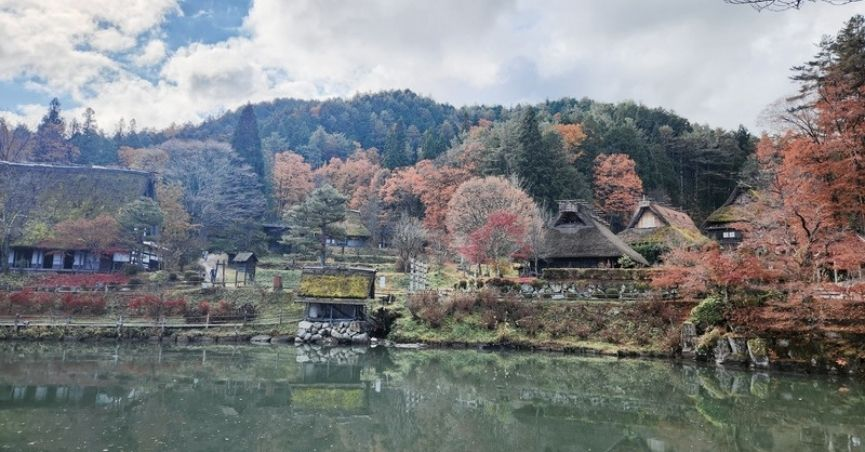
Tucked into the Japanese Alps, Takayama is one of those places that quietly wins you over. At first glance, coming out of the train station, it feels like a small regional city. But walk toward the old town and the atmosphere shifts quickly—preserved wooden streets, temple rooftops, and mountains rising in the distance. Known for its beautifully preserved Edo-era streets, Hida beef, traditional sake brewing, and bi-annual festivals, Takayama offers a wonderful contrast to Japan’s larger cities. Add in one of the country’s most scenic train rides, and it’s an easy place to fall for.
Note: we were there in the third week of November. It was near 0 degrees (Celsius) in the morning. Pack appropriately for cold weather! Also, snow might impact train and bus schedules.


How to get there
Part of the magic of Takayama begins before you even arrive. The train (and likely the bus) journey through the mountains from Nagoya or Toyama is scenic, winding through forested valleys and rivers. For us, it was particularly beautiful with the leaves changing to their fall colours.
Coming from Tokyo:
- Option 1: take the Tokaido Shinkansen (towards Osaka) to Nagoya (1.5 hrs), then the JR Hida Limited Express (2.5 hrs) or a Nohi Bus (2.5 hrs) = 4 hours
- Option 2: Take the Hokuriku Shinkansen to Toyama (1.5 hrs), the JR Hida Limited Express (2.5 hrs), or the Nohi Bus (2.5 hrs) = 4 hours
- Bus option: from Shinjuku, take the bus (6 hrs) = 6 hours
From Osaka/Kyoto:
- Option 1: take the Tokaido Shinkansen (towards Tokyo) to Nagoya (~50 min), then the JR Hida Limited Express (2.5 hrs) or aNohi Bus (2.5 hrs) = 3.5 hours
- Option 2: take the Tokaido-Sanyo Line to Maibara (55 min), then take the Tokaido Line to Gifu (45 min), then take a Nohi Bus (2 hrs) = 5 hours
- Bus option 1: from Kyoto station, take the bus to Nagoya (2.5 hrs), then Nohi bus (2.5 hrs) = 5 hours
- Bus option 2: from Osaka station (5 hrs) or Kyoto station (4 hrs), take the Nohi bus to Takayama
From Kanazawa:
- Option 1: Take the Hokuriku Shinkansen to Toyama (23 min), the JR Hida Limited Express (2.5 hrs) or Nohi Bus (2.5 hrs) = 3 hours
- Option 2: take the IR Ishikawa Railway to Toyama (1 hr), then the JR Hida Limited Express (2.5 hrs) or a Nohi Bus (2.5 hrs) = 3.5 hours
- Bus option: from Kanazawa station, take Nohi bus (2.5 hrs), and can stop at Shirakawa-go
📍 Travel tip: Sit on the left side going Toyama → Takayama and the right side going Nagoya -> Takayama
Takayama Sights & Activities
We only had one full day and one partial day in Takayama. There is a lot to do and see, but we never felt rushed. Here is what our 2-days looked like:
Day 1 – Arrival
Explore the Old Town (Sanmachi Suji)
Start by wandering through Takayama’s historic heart. The Sanmachi Suji district is lined with dark wooden merchant houses, small shops, cafes, and breweries. This area has been beautifully preserved and feels especially atmospheric in the early morning or just before sunset – don’t worry, you’ll be here again during these times.
Float Museum
Head north from Old Town for a stop at the Float Museum (Takayama Yatai Kaikan). It showcases some of the incredibly ornate festival floats used in Takayama’s famous spring and autumn festivals. These aren’t just parade props — they’re works of art: towering structures adorned with intricate wood carvings, vivid lacquer work, gilded details, and richly embroidered textiles. Each float represents a different neighbourhood guild, and the craftsmanship reflects centuries of local tradition. Some floats even include hidden mechanisms and puppets that animate during festival performances — a bit like mechanical theatre. The scale and detail are striking up close, and audio guides (available in many languages) help bring the history and symbolism to life.
Walking Course
From the Float Museum, you are at the perfect place to start one of Takayama’s walking routes. It leads you past temples, shrines, and residential streets slightly above town. These paths offer quiet moments, views over rooftops, and a slower pace away from the main streets. A great way to spend the afternoon, getting your steps in after the train journey. There is an All Trails route map here.
Dinner
As the day winds down and you are finishing the walking course, stop in the old town as the crowds thin. Lanterns glow, shops close their shutters, and Takayama feels especially peaceful. For dinner, this is the perfect time to try Hida beef, whether as:
- Grilled skewers
- Beef sushi
- Stew or soup
Pair it with local mountain vegetables and a glass of sake for a very Takayama meal. We had Hida beef in a stew at Mensho Junsai, which was delicious.


Day 2 – Museums, Markets & Views
There were 3 cafes we walked past in case you are looking for coffee and/or breakfast: Train Bleu, Falo Coffee Brewers and Pickin’, though they were all very busy! Though a better bet is to try some things at the Morning Markets.
Morning Market
Start your day at one of (or both of) Takayama’s morning markets, either Miyagawa or Jin’ya-mae, held daily along the river and near Takayama Jinya. Vendors sell local produce, pickles, local crafts, and snacks. It’s a relaxed way to see local life and sample regional flavours.
You could potentially save the morning market for your last morning in Takayama and opt to go straight to Hida Village.
Hida Folk Village (Hida no Sato)
A little outside of town lies Hida no Sato, an open-air museum showcasing traditional farmhouses from the Hida region. It’s a highlight for understanding how people lived in Japan’s alpine regions.
This is an alternative option if you can’t quite make it to Shirakawa-go. We looked into going, but the bus between Kanazawa, Shirakawa-go, and Takayama was sold out. Slightly disappointed, but honestly looking back, Hida Village was pretty peaceful, whereas Shirakawa might not have been with busloads of people.
- From the morning market, you can walk for about 45 minutes or 3 km, or take bus K2 (though this only cuts your walking distance/time in half). If you walk, there are a few lovely stops along the “Walking Path of Literature,” including a free Museum of Mountain Life
- Entry Hida no Sato: ¥700 per person
- Preserved thatched-roof homes
- Interior displays and information showing rural mountain life
- Especially atmospheric in cooler months
- Allow 2-3 hours
Lunch
You’ll want some food in your bellies before heading to sake tastings. Some recommendations are:
- Hida Takayama Gyoza Sohonzan – variety of gyoza options, sets and unique flavours
- Marusin Shokudo – curry and tempura. Beef cutlet is highly recommended
- Iwaki – dessert shop
- Tohouen – Japanese sweets shop
Sake Tasting & Breweries
Takayama is famous for its sake, thanks to pure mountain water and cold winters. You’ll know a brewery by the cedar ball (sugidama) hanging outside – you likely saw them when wandering old town. Traditionally, a fresh green ball was hung when brewing began; once it turned brown, the sake was ready.
Two excellent tasting options:
- Harada Sake Brewery
- ¥500 tasting fee (includes a souvenir cup)
- Up to 10 sake + 2 shochu
- Self-serve from fridges (one pour per bottle, fill cup halfway)
- Located right on the main old town street
- Tight, busy space—but very traditional and fun
- Hirase Sake Brewery
- ¥1000 tasting fee
- Up to 24 sake + 3 liqueurs, including hot sake
- Self-serve from fridges (one pour per bottle, fill cup halfway)
- More relaxed, informative experience
- Bonus: sake-soaked plums & brewing water
If you’re choosing just one, we found that Hirase offers the more immersive experience.
(Sake brewing practices deserve a post of their own, here —a lot is happening behind those cedar balls.)
Museums & Quirky Stops
Takayama has a surprising number of small museums worth dipping into:
- Takayama Town Museum – history and culture
- Hida Takayama Retro Museum – playful, nostalgic look at postwar Japan, more kid and family friendly (games, arcades, etc)
- Takayama Showakan – retro museum focusing on the Showa period post WWII
- Cat Sanctuary Neko no Tsuki – perfect for a cozy break, playing with rescue cats and sipping matcha lattes between sightseeing.
Dinner
- Mugi, a 7-seat Izakaya. It’s a cool experience being right at the bar with so few people. And most importantly, it has delicious food.
- Pizzeria Hiranograno – we deviated from Japanese food for one night. This place was close to our Airbnb. Feeling truly Italian with wood fire oven and classic thin crust. Very delicious and a cute space.


Final Thoughts
Takayama is a gentle introduction to Japan’s mountain regions: traditional without feeling staged, compact but rich in culture. With its old town streets, sake traditions, hearty food, and alpine scenery, it’s a rewarding stop that feels worlds away from the big cities—yet still easy to reach.
What would you want most in Takayama — a sake tasting flight or wandering those wooden merchant streets at golden hour?
Pin this for later…


You might also want to read…





Leave a Reply