
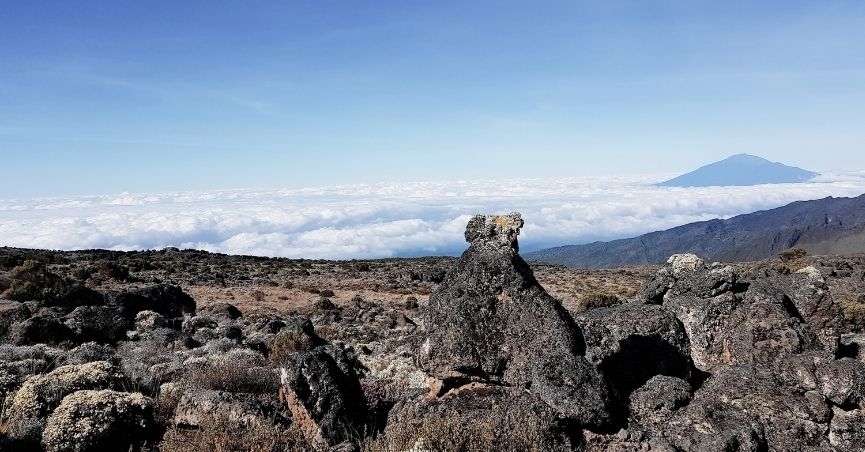
Kilimanjaro didn’t start for me on the trail. It started with research and probably less exercise than I should have done. Climbing a mountain the size of Kilimanjaro was not something I’d done before. In fact, I had done very few overnight hiking trips where we were hiking more than just in and out. I had an idea of what to expect after reading blogs and trip reports, but nothing fully prepares you for the experience. Things will never go exactly to plan — so the best you can do is be prepared.
My Kilimanjaro trek took place in 2018. I was sharing the adventure with a past partner — a reminder that life sometimes leads us to incredible experiences with people, even if our paths have since diverged.
For this climb, we chose Trekking Hero, a locally based Tanzanian outfitter headquartered in Moshi. They operate with local staff and guides. Which means a greater part of the value you pay goes into the local economy and the crew supporting you on the mountain.
This first part covers getting to Tanzania, meeting our team, and the early days on the Lemosho Route. Nerves were high, altitude made itself known immediately, and we began settling into life on the mountain.
Promoting Ethical Kilimanjaro Climbs
Before getting into the details of the climb itself, it’s important to talk about the people who make a Kilimanjaro summit possible. Porters, cooks, and guides carry the weight—literally—of every expedition. Yet historically, they haven’t always been treated fairly. Overloaded packs, inadequate gear, inconsistent pay, and lack of food or shelter have long been issues on the mountain.
When we were researching companies back in 2018, this mattered to us. We chose Trekking Hero in part because they were listed at the time as a responsible operator recognized by the Kilimanjaro Porters Assistance Project (KPAP). KPAP is a nonprofit organization that works to improve working conditions for mountain crews by setting and monitoring standards for fair wages, load limits, meals, equipment, and transparent tipping practices.
KPAP’s Partner for Responsible Travel program exists to bring accountability to an industry where trekkers often don’t see what happens behind the scenes. Partner companies agree to independent monitoring on the mountain and commit to treating their crews with dignity and respect.
Spending time on the trail makes it very clear how essential these teams are. Watching porters move efficiently up steep terrain, often in worse weather than the rest of us, carrying heavy loads with remarkable strength and good humour, leaves a lasting impression. Choosing an outfitter that supports ethical practices doesn’t make the climb easier—but it does make it feel more aligned with the kind of traveller I want to be.
Mount Kilimanjaro Lemosho Route
Our trip on the ground started at the airport, with missed connections, mounting stress, and the realization that our bags weren’t coming with us. Before a single step uphill, the mountain was already teaching lessons about control, flexibility, and trust. Fortunately, Trekking Hero had a whole room of gear for rent. We were able to find items in the right sizes for us.
Day 1 – Pre-climb
The afternoon before starting the trek, we had a pre-brief. We met our guides and fellow climbers, reviewed the route and plan, and ensured we were all feeling ready. We had a small-ish group – 5 of us, which was really nice. Throughout the course of our trek, we became close, had awesome chats over dinner, and were each other’s motivation.

Day 2 – Moshi to Lemosho Gate to Mti Mkubwa Camp
Elevation: 2900 m/9,500 feet | Distance: 6 km/4 miles | Time: 3 to 4 hours
You have to drive a few hours from Moshi (and maybe make some stops along the way to pick up last-minute supplies for yourselves (i.e. a pharmacy) and for the porters) to Londrosi Gate. This is where everyone is registered, and the bags are weighed (15 kilograms maximum – things might have to be shuffled around). After this, it is another hour drive to Lemosho Gate – where the climbing begins. It was during this drive that nerves really hit me. “Could I do this?” “Was I fit and prepared enough?”
On the Mountain
Lemosho is at 2600 metres (8530 feet) above sea level. So if you are like me and come from somewhere where your highest mountain is less than that, you are starting with some altitude pressures. At the start, the route is pretty bottlenecked with a steady line of people. One important rule – make way for the porters where you can. This first bit is through lush jungle. The weather had been raining on and off, so it was humid and took a bit to adjust to the right number of layers. We were one of the last groups to start, so we did end up trekking the last bit to camp in the dark using our headlights. Fortunately, our crew had tents set up for us already, and the chef had dinner waiting. It was dinner and bed!
Of course, we didn’t see camp coming in the previous night, but the morning light showed us just how many tents were set up in a relatively small space – it was like its own city with little team neighbourhoods. Even more baffling was how quickly it all comes down. The teams are well-oiled machines.


Day 3 – Mti Mkubwa Camp to Shira 2 Camp
Elevation: 3875 m/12,715 feet | Distance: 16 km/9 miles | Time: 7 to 8 hours
In our pre-brief, we were told that aside from summit night, this was the hardest and longest day. And it was. The first bit was steep for a few hours. The scenery is beautiful, though it was easy to get lost in the amazement of “look where I am,” “this is so cool,” “I’ve never been anywhere like this before.” Definitely a good exercise for building mental toughness.
After the uphill hours, you have a short downhill, which then flattens out, leading to Shira 1 camp (where some people stop night 2). From Shira 1 to our camping destination, Shira 2, it was rolling hills, some steep sections, really big rocks, and less vegetation. I will say, it felt like it went on forever, and I definitely started to notice the effects of altitude gain (did I also mention I had caught a cold!?). Efforts that would have been no big deal at home had me breathing a little harder here. I was very glad to get to camp. It was pretty socked in and a little rainy, so not much view that evening.
Eating on the climb is an interesting thing. Obviously, you need calories to fuel your energy expenditure, but I wasn’t very hungry. This is a common symptom of altitude changes. The chefs combat this by making calorically dense meals – even if you don’t eat a lot, you get a lot out of what you do eat. We even put butter in our coffee in the morning!


Mount Kilimanjaro Lemosho Route Tips
About the Hike & Daily Routines
- Aside from Day 1 (registration day), all days start early — wake-up around 6:00 am. Being close to the equator, daylight is fairly consistent, and you need to use it.
- The route is designed for acclimatization. Overnight stops may differ slightly from the advertised itinerary — trust the guides, they build it based on the group’s needs. The number one factor to help avoid altitude sickness is the rate of ascent.
- There are a lot of people on the mountain. Step aside for faster hikers and, most importantly, for porters. It’s not a competition.
- Forget how fast you normally hike. Distances feel warped, effort is amplified, and a “short day” refers to distance — not difficulty.
- Stop and take in the scenery. It’s incredible.
Next: Finding a rhythm at altitude and moving higher on the mountain
Pin me for later…

Other posts in this Mount Kilimanjaro Series:

Climbing Kilimanjaro Lemosho Part II: Finding a Rhythm at Altitude

Mount Kilimanjaro Lemosho Part III: Summit Night

Tips for Kilimanjaro & Things I Wish I’d Known
More Tanzania posts:



Leave a Reply