
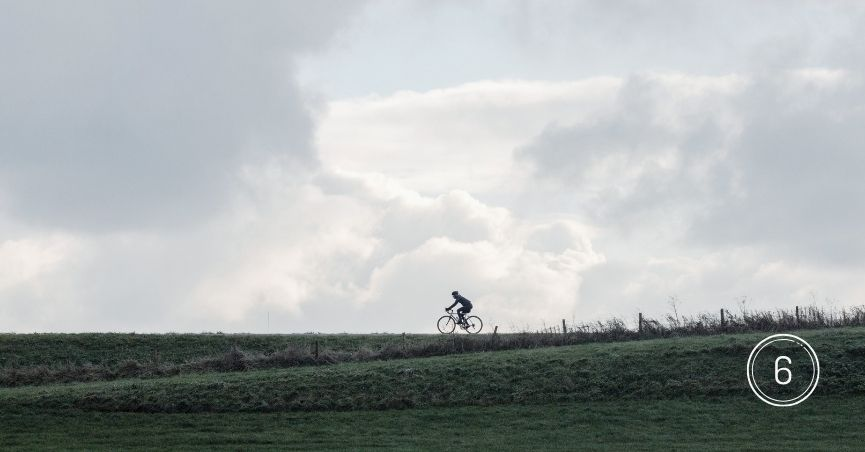
If you’d asked me early on what made cycling hard, I would have said hills. Or distance. Or speed. When it comes to cycling, people usually focus on fitness — stronger legs, better lungs, higher watts. But after a certain point, it’s not your body that wants to stop first. It’s your brain.
Some rides are hard because they’re physically demanding. Others are hard because they’re boring, uncomfortable, or never seem to end. Long climbs, headwinds, trainer rides, and solo miles can wear you down in ways that have nothing to do with strength or speed, your legs are willing… and your brain starts negotiating. This applies to many activities and sports. Think of those things people deem as ‘type 2 fun.’ I’ve experienced this on the bike and on treks – climbing Kilimanjaro comes to mind immediately.
Mental toughness in cycling isn’t about being “tougher” than everyone else. It’s about learning how to stay present, manage discomfort, and keep moving forward when quitting would be easier. And like fitness, it’s something you can build. Here are my tips for building mental toughness – some are personal and developed over time, some are steeped in psychology.
Tips for Building Mental Toughness
1. Break the Ride Into Small Wins
Early on, I made the mistake of thinking too big.
“How am I going to ride 80 km?”
“How am I going to survive this entire climb?”
That mindset is overwhelming — and it’s rarely helpful.
Now, I break rides down:
- Ride to the next corner
- Make it to the top of this section
- Focus on the next 15 minutes, not the next hour
Each small checkpoint gives you a sense of progress. Those small wins add up faster than you think.
2. Normalize Discomfort
One of the biggest mental shifts for me was learning that not all discomfort is bad. In fact, I’ve learned that my body seems to resist for the first 20-30 minutes, which would often lead me to thinking – “This isn’t going to be a good ride”, or “There’s no way I can do the 50 km I planned”. But after I’m warmed up, sometimes those are the days I hit PRs. So don’t let early soreness or discomfort let you quit early.
Learn to distinguish between:
- Discomfort: burning legs, heavy breathing – it means you are working
- Pain: sharp, worsening, or injury-related signals
And not every situation is going to be ideal for riding – especially if you are purposefully training for an event or are on a trip and the bike is your mode of transportation.
- Ride in less than favourable conditions – rain, cold, fog
Mental toughness grows when you accept that some discomfort is part of the process — and to trust your body’s signals without overreacting to them.

3. Have a Go-To Mantra
When my mind starts spiralling — this is too hard, why did I do this, how much longer — I bring it back to something simple. Short phrases can anchor your focus when things feel hard:
- “Just keep pedalling.”
- “Smooth and steady.”
- “I’ve done harder than this.”
- I used “right foot, left foot” for my Kilimanjaro summit night trek
The goal behind these mantras isn’t motivation or hype — they’re about redirection, interrupting unhelpful thoughts and giving your brain something neutral to hold onto.
4. Control What You Can Control
There are rides where conditions just aren’t on your side. Wind. Heat. Unexpected hills. Traffic. Fighting them mentally only makes things harder.
Instead, I focus on what is in my control:
- Cadence
- Breathing
- Fueling consistently
- Staying relaxed on the bike – particularly shoulders and hands
Giving your mind a task makes effort feel more manageable — and keeps frustration from taking over.
5. Practice Being Bored
As much as we’d like them to be, not every ride is scenic. Not every ride is exciting.
Long, steady efforts, indoor trainer rides, and quiet solo miles are where mental strength is quietly built. These rides teach you how to stay present when nothing is distracting you — and that skill transfers directly to long events and tough days on the bike
6. Save a “Match” for Your Mind
Mental energy is real — and it’s finite. Try:
- Saving music or a podcast for the hardest section
- Using caffeine strategically
- Planning a reward (coffee stop, favourite snack, great view)
Sometimes knowing there’s something to look forward to is enough to pull you through a tough stretch.

7. Reflect After Hard Rides
Confidence doesn’t always come during the ride — it often comes after. Remember, sometimes it is type 2 fun!
After hard days, I ask myself:
- What part was hardest?
- What helped me get through it?
- What would I do differently next time?
- How do I feel now that I accomplished that ride!?
Those reflections become evidence that you’re capable — even when future rides feel intimidating. A big one for us is seeing those Strava best efforts, PRs, local legend, KOM/QOM achievements.
8. Remember Why You Ride
When things feel hard for no obvious reason, I try to reconnect with my bigger “why”:
- Freedom
- Adventure
- Mental health
- Strength
- Joy
Cycling isn’t about suffering — it’s about choosing something meaningful, even when it’s uncomfortable. Without some lows, you do not get to enjoy the highs.
Closing Thought
Mental toughness isn’t built by avoiding hard rides or pushing harder — it’s about staying kind, curious, and committed when things get tough. Each hard ride teaches you that you can do difficult things… one pedal stroke at a time.
Have you had a ride where your mind wanted to quit before your legs?
Share in the comments what helps you push through — or what you struggle with most — in the comments. Your experience might be exactly what another rider needs to hear.
Pin me for later…

Read other posts in this series:

From Running Shoes to Pedals: How I Fell in Love with Cycling

Cycling Gear 101: What You Actually Need (and What You Don’t)

Understanding your Road Bike Gears & Cadence

10 Tips for Beginner Cycling Route Planning

Fueling on the Bike & Avoiding Bonking

Beginner Bike Maintenance: Pre-Ride Checks

Clipping In: A Beginner’s Guide to Clipless Pedals & Shoes
Read cycling & travel posts:







Leave a Reply