
Kanazawa feels like Kyoto’s quieter cousin. With immaculately preserved samurai and geisha districts, Edo-era lanes, one of Japan’s top three landscape gardens, and a centuries-long love affair with gold leaf, the city offers a deep sense of history without the crowds. Once a wealthy castle town during the Edo period, Kanazawa escaped WWII damage, allowing much of its architectural and cultural heritage to remain intact.
Often called the “Kyoto of the North,” this city surprised us—in some ways, we enjoyed wandering its preserved districts even more than Kyoto’s!
Just outside the train station, make sure to awe at the intricate wooden Tsuzumi-mon Gate and to watch the water fountain clock change times and messages!
Kanazawa at a glance…
Best for: Japanese gardens, museums, samurai districts, traditional arts
Ideal stay: 2+ nights
Vibe: Elegant, cultural, compact city for relaxed strolling
Don’t miss: Kenrokuen Garden, Kanazawa Castle, Higashi Chaya District
Skip if: You’re only interested in modern cityscapes
Good to know: Public transport is good; walking shoes recommended; quiet mornings are best for gardens.
How to get there
Kanazawa is easy to reach by train. The Hokuriku Shinkansen connects directly to Tokyo in about 2.5 hours, making it an excellent stop on a wider Japan itinerary. From Kyoto or Osaka, limited express trains (Thunderbird) reach Kanazawa in roughly 2–2.5 hours.
More info on using trains in Japan here: Trains & Metro in Japan: How to Get Around
Once in the city, buses and walking are the most convenient ways to get around, especially in the historic districts.
Itinerary for Kanazawa
We had 1.5 days in Kanazawa, which probably wasn’t enough time; there was lots to see and do. I would budget at least 3 days. Here is how we packed as much as we could into our short time.
Arrival Day
Omicho Market
Leave the train station and head over to Omicho Market, the city’s culinary heart. Famous for incredibly fresh seafood thanks to its proximity to the Sea of Japan. This is the place to try sushi, sashimi bowls, and seasonal specialties. It’s lively, casual, and a perfect snapshot of local daily life. With food in your bellies, you are now ready to wander the preserved districts.
Higashi Chaya District
Kanazawa’s most famous geisha district, Higashi Chaya, is filled with beautifully preserved wooden teahouses (chaya). These historic “entertainment” districts were traditionally located just outside the main city and were centers of refined arts, music, and performance. Today, many teahouses are home to cafés, craft shops, and small museums, making it an ideal area to explore at a relaxed pace. Visit the Kanazawa Asanogawa Enyukai Hall (Geisha and Teahouse District Museum).
Stop at Oriental Brewing for a local flight of beer. They also have delicious fried chicken!
Gold Leaf Museum & Workshop
Kanazawa produces the majority of Japan’s gold leaf, and learning about this craft adds important context to the city’s artistic legacy. We joined a hands-on workshop at Kinpakuya Sakuda Gold Leaf Shop & Workshop. We made our own gold-leaf chopsticks—a fun and memorable souvenir. Museums and shops throughout the city showcase everything from traditional techniques to gold-leaf-covered sweets.
Around the corner from the workshop is the Kanazawa Yasue Gold Leaf Museum. We were short on time, prioritizing the workshop over the museum, but I think pairing them together would be beneficial to provide even more context to the gold leaf craft.
Kazue-machi Districts
Less busy but just as charming, Kazue-machi runs along the river and feels especially lovely in the early morning or evening. Visiting more than one chaya district really highlights how well Kanazawa has preserved its cultural identity.
Dinner
- Curry Laboratory –
- Yakiniku Kiryoku Kanazawa – grill your own meats. Great selection of wagyu, seafood and other meats. We had a lot of fun cooking!


Day 2
Make sure you wear comfortable walking shoes! You’ll be covering a lot of ground today.
Kanazawa Castle Park
Start your time in Kanazawa at the heart of the former castle town. While the main castle keep is currently under restoration, the surrounding park, gates, guardhouses, and storehouses are open and well worth exploring. Admission to the park and gate interiors is free. Informational displays are available in English. The expansive grounds give a real sense of the city’s former power and wealth.
Kenrokuen Garden
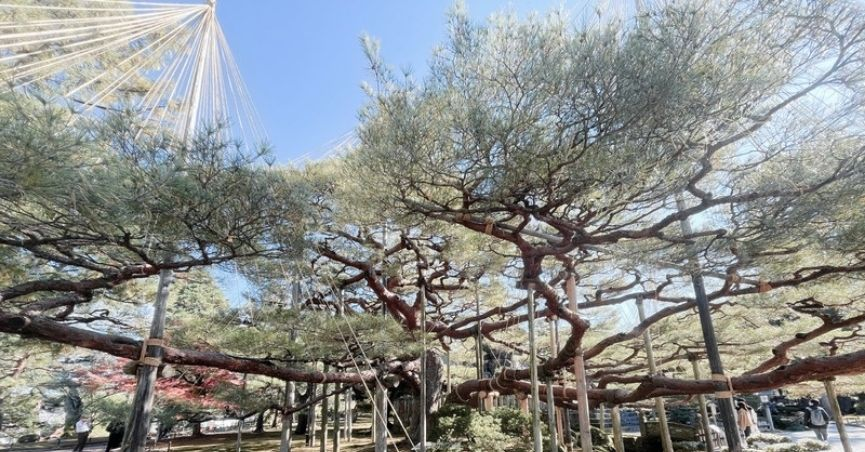
Just across from the castle lies Kenrokuen, considered one of Japan’s three most beautiful landscape gardens. Entry is very affordable (320 yen), and we were lucky to visit in mid-to-late November when the iconic yukitsuri (bamboo and rope structures used to protect trees from heavy snow) were being assembled.
The garden strikes a perfect balance between carefully manicured landscapes and gentle natural wildness—stone lanterns, winding paths, ponds, bridges, and thoughtfully shaped trees create a space that invites slow wandering.
Lunch
You could choose to have lunch near the gardens, which have some good options, though some may be more touristy. Or start heading to your next sight and find something along the way. We ate at Tabe-dokoro Osugi, which is on the road between the castle and gardens. I had a grated yam Udon (be prepared for the yam to be a little slimy), and Mark had a tempura prawn set. It was tasty. It definitely got busy quickly!
Nishi Chaya District, Ninjas & Samurai
From the castle area, walk southwest, crossing the Sai River. It’s time to explore Kanazawa’s ninja and samurai world. Visit the Ninja Weapon Museum. Small but surprisingly engaging, it offers insight into the tools and tactics of Japan’s legendary spies and assassins. Unlike samurai, ninjas relied on stealth, disguise, and multi-purpose weapons—think hidden blades, blow darts, and tools disguised as everyday objects. Akin to James Bond spy gear. A written guide and an enthusiastic museum staff member helped bring the displays to life.
Note: Nearby is the Ninja Temple (Myoryuji), famous for hidden passages and trap doors. Tours are mostly in Japanese and require reservations. This was on our list of ‘didn’t have time’.
You can wander through the Nishi Chaya District as well.
Nagamachi Samurai District
Heading back in the direction of the train station, walk to the Nagamachi Samurai District. Narrow lanes, earthen walls, and preserved residences give insight into the daily life of Kanazawa’s samurai class. It’s especially atmospheric in the late afternoon as the streets quiet down.
Dinner
We had a lovely set meal at Kitchen Hana. It has a counter and traditional seating. The staff were really friendly. Food was fast and tasty! You could also try the alternate option from day 1’s dinner list.


Other sights/activities
These are some of the things that were on our list, but we didn’t have time for or were not open:
- Attend a Noh performance at the Ishikawa Prefectural Noh Theatre
- Kanazawa Noh Museum – Displays of elaborate masks & kimonos used in Noh theatre, a tradition dating to the 14th century.
- National Handicraft Museum –
- Ninja Temple – a temple full of trap doors and secret passageways. You need to make a reservation for a tour. It is unclear if tours are offered in other languages.
- Gold Leaf Museum – we opted for the workshop over the museum, though it would have been interesting and is unique to Kanazawa
Final Thoughts
With its preserved districts, elegant gardens, deep craft traditions, and exceptional food, Kanazawa offers a richer, calmer alternative to Japan’s biggest tourist hubs. Whether you’re drawn by samurai history, geisha culture, or simply the joy of wandering beautiful streets, Kanazawa deserves a spot on any Japan itinerary.
Which part of Kanazawa would you beeline for first — samurai streets or gold leaf everything?
Pin this for later…


You might also want to read…





Leave a Reply