
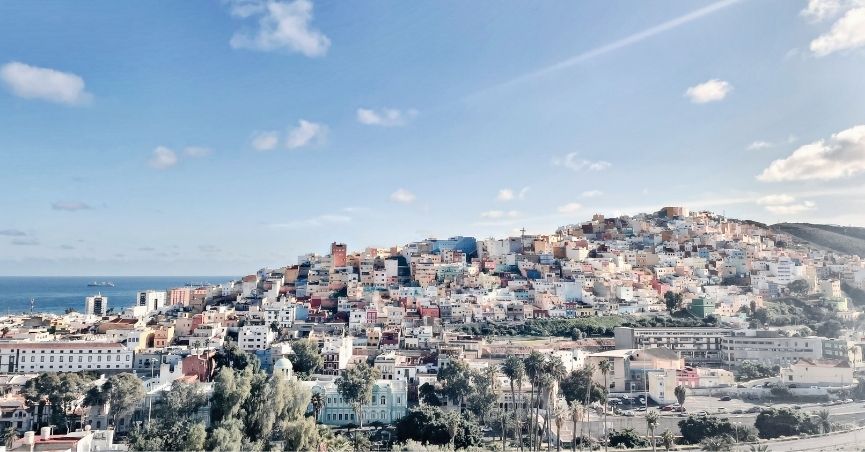
Gran Canaria, often called a “continent in miniature,” lies at the heart of Spain’s Canary Islands — an archipelago of volcanic origin off Africa’s northwest coast. The island’s diversity is striking: sweeping dunes in the south, pine forests and mountain villages in the interior, and vibrant coastal cities like Las Palmas in the north. I visited in November 2022 as part of a nine-day adventure split between Gran Canaria and neighbouring Tenerife.
My journey began after a quick family visit in England — a common pit stop on my route from Vancouver to Europe. The Canary Islands were an easy connection from London, and though I ambitiously thought I had enough time to see both islands fully, I quickly learned otherwise. Gran Canaria, with its varied terrain and less frequent public transport between key sights, would have benefited from a rental car.
Gran Canaria at a glance…
Best for: Beaches, varied landscapes, hiking, warm-weather escapes
Ideal stay: 5+ days
Vibe: Diverse and surprising — desert dunes, mountain villages, and resort coastlines all in one island
Skip if: You want a single “look” or purely historic cities
Good to know: Renting a car makes a huge difference; weather is mild year-round but the interior is cooler and windier
History
Gran Canaria’s history is as layered as its landscapes. Before the arrival of Europeans, it was home to the Canarii, an indigenous people related to the Guanches of Tenerife. They lived in caves, farmed terraced hillsides, and developed distinct customs and beliefs. The Spanish conquest began in the 15th century, with Gran Canaria falling to the Crown of Castile in 1483 after years of resistance.
Following the conquest, the island became a crucial stop for transatlantic voyages, supplying ships and serving as a base for trade, sugar cultivation, and later, cochineal dye production. Its capital, Las Palmas de Gran Canaria, founded in 1478, grew into a cosmopolitan port that attracted merchants, explorers, and, occasionally, pirates. Like the rest of the archipelago, Gran Canaria endured colonial shifts, economic hardship, and emigration before evolving into the modern, autonomous region of Spain it is today, where traces of its indigenous, African, and European heritage still shape island life.
Getting There & Around
Gran Canaria’s main airport, Gran Canaria Airport (LPA), lies just south of Las Palmas and connects with dozens of European cities daily. Ferries also link Gran Canaria to Tenerife (~2 hours, ~50+ euros), Fuerteventura, and Lanzarote, making it a convenient island-hopping base.
Public transportation is efficient between major hubs, with Global buses reaching popular destinations like Maspalomas, Agaete, and Puerto de Mogán. However, to explore the mountainous interior — home to villages like Tejeda and viewpoints like Roque Nublo — a rental car gives you far more freedom. Driving is straightforward, though expect some steep, winding mountain roads with spectacular views.
Where to Stay
I stayed in the capital city of Las Palmas because it was the easiest connection, but it also offers a blend of city life, history, and beach culture. I was in the hotel UrbanSea Bex. It had a really nice rooftop terrace with a bar for happy hour.
Gran Canaria Itinerary
Arrival Day – Las Palmas
I arrived at the ferry port around 3 in the afternoon, so I got to my hotel, dropped my bags and went for a wander to orient myself and search for dinner. I had an awesome meal at Lupe.
Day 2 – Dunas de Maspalomas
Undertaking a big day trip was not really my plan, but when I checked the weather, it was the best day to go, as the Dunes were one of the reasons I decided to split my trip between Tenerife and Gran Canaria.
The Dunas de Maspalomas are a surreal desert-like landscape of rolling dunes that stretches over 400 hectares along the southern coast of the island. It is one of the most iconic natural sights in the Canary Islands, hence my desire to see it!
I set off on the 2-hour bus ride (Global L30) down south, early-ish in the day, with my beach bag packed. I do enjoy a long ride where I get to see different parts of the island. Sadly, the further south we went, the more clouds covered the sun – but I was still determined.
Not sure if it was the time of year, but the atmosphere in the area felt off. The town, Maspalomas, felt abandoned and run down, while also being super touristy. Perhaps I should have ventured farther into Meloneras. I enjoyed the dunes a lot, despite it being overcast and very windy. The wind was actually pretty cool, moving the sand in patterns and gusts.
However, I would not make this area a priority. If you can stop at the dunes, perhaps when heading up to the Pico de las Nieves hiking area, I would do that. It was a long day of bussing from Las Palmas, only to feel a little underwhelmed and disappointed.
I could have headed over to the Maspalomas Lighthouse, which stands at the edge of the beach promenade and marks the start of Meloneras. But I was not feeling the vibe, so I caught the bus back earlier than planned.


Got my beach day afterall
I parked myself at Las Canteras Beach for the rest of the day. This is a lovely, long, golden stretch with calm waters, ideal for swimming or relaxing after a day of exploring. The promenade is packed with tapas bars, seafood restaurants, and gelato shops—perfect for sunset strolls. It’s funny because this is what I was expecting at the Dunes – but this felt touristy for sure, and also more natural in that locals use it too.
The place I had dinner appears to no longer exist. But there are so many restaurants with great ratings near the beach and along


Day 3 – Staying local in Las Palmas
Like any city, there are a variety of neighbourhoods to explore. Triana, the shopping district, is full of boutiques and open-air cafes. Vegueta, the old quarter, is a wanderer and architecture-lover’s dream, and where I spent most of my time. Some of my favourite spots:
- Mirador de San Roque – colourful houses on the mountain
- Plaza de las Ranas – gorgeous tiled plaza
- Plaza Mayor de Santa Ana – plaza outside Santa Ana Cathedral, and a set of dog sculptures
- Gabinete Literario – elegant architecture of a literary cabinet (library, programs)
- San Telmo Park – art nouveau architecture
- Mirador de Agustin Castillo – a different vista of the city
I also visited Casa de Colón, where Christopher Columbus reportedly stayed. It was interesting, and they had 2 parrots living there.


Day 4 – Museo y Parque Arqueológico Cueva Pintada & Galdar
If you’ve read some of my other posts, you might know that I love archaeology and prehistoric sites. So, of course, when I stumbled on this Museum, I built it into my itinerary. It was relatively easy to get there on the bus with line options 100, 103, 105 – taking about 1 hour.
The Cueva Pintada Archaeological Museum and Park houses one of the island’s most fascinating windows into its pre-Hispanic past. The star of the site is the painted cave itself, where geometric red, black, and white designs—created by the island’s Indigenous Canarii people—still cover the stone walls. These vibrant designs are thought to have had symbolic or astronomical meaning, offering a rare glimpse into the spiritual life of Gran Canaria’s earliest inhabitants.
The surrounding archaeological park preserves the remains of an ancient settlement, complete with circular stone houses and storage pits, allowing visitors to imagine daily life here centuries ago. The museum itself provides context with artifacts, reconstructions, and interactive exhibits.
Pairing a visit to Cueva Pintada with a wander through Gáldar’s historic center—its charming main square, colourful façades, and the striking Church of Santiago—makes for a cultural and historical day trip that balances archaeology with local life.


Other Popular Sights & Things to Do on Gran Canaria
Like on Tenerife, due to limited time, I missed out on some sights and activities. This is the list of things that will be on my list for next time (with a car).
- Roque Nublo & Pico de las Nieves – Hike to an iconic volcanic rock and viewpoint in the island’s mountainous center. Combine it with a drive to Pico de las Nieves, the island’s highest point.
- Agaete & Puerto de las Nieves – A charming fishing village on the northwest coast. Visit the natural rock pools.
- Teror – A picturesque mountain town with colourful wooden balconies and the Basilica of Our Lady of the Pine.
- Guayadeque Ravine – A green ravine with cave houses, ancient dwellings, and excellent Canarian food at local cave restaurants.
- Cenobio de Valerón – An impressive pre-Hispanic granary carved into the rock. An archaeological site with insight into the lives of the island’s ancient inhabitants.
Pin me for later…

Read more Canary Islands & Spain posts:

5 Days to Explore Tenerife Island

Volcanic Vines: Discovering Tenerife Wine




Leave a Reply