
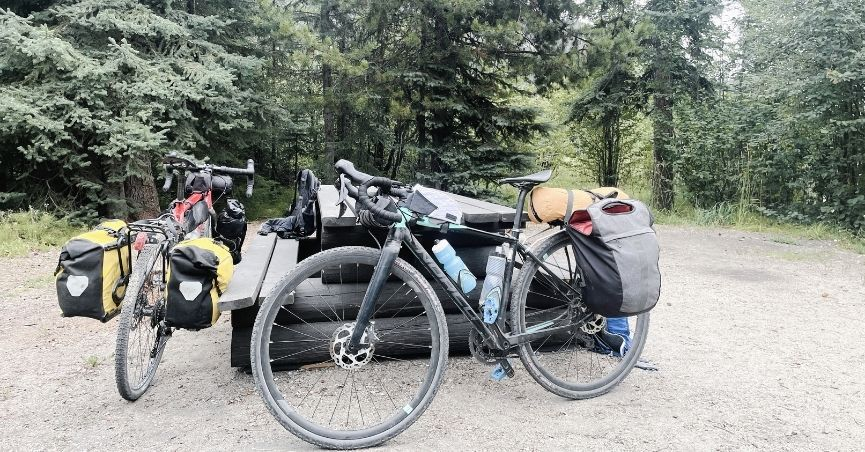
So you are thinking of using the bike for travel. How exciting! There is definitely something about traveling under your own power, carrying what you need and seeing places differently. Its addicting, be careful!
Bike travel sits at that exciting intersection between cycling and adventure. It’s not reserved for elite cyclists or ultra-endurance athletes — it’s for anyone who loves being on their bike and wants to stretch that experience just a little further. Adding bags to your bike isn’t about complicating things; it’s about expanding what’s possible.
Whether you’re dreaming of your first overnight trip or planning a multi-day adventure, understanding the different types of bike bags — and how they fit into cycle touring and bikepacking. The good news? You don’t need all of them at once, and you definitely don’t need every bag you see on the internet.
Before diving into specific bags, it helps to understand the two main styles of bike travel — cycle touring and bikepacking — because they can influence what gear works best.

Cycle Touring vs Bikepacking (What’s the Difference?)
I write a lot about Cycle Touring – this is generally our preferred method of using the bikes for travel, especially for longer durations and out of country. However, when its summer time in BC, we become big bikepackers.
Cycle touring traditionally involves riding longer distances on roads or paved paths, often staying in hotels, guesthouses, or campgrounds. Bikes and setups prioritize comfort and stability, and panniers are common.
Bikepacking may lean more toward off-road riding — gravel, dirt, and mixed terrain. The setups are usually lighter and more compact, using soft bags that strap directly to the bike to keep it narrow and agile.
That said, the lines blur a lot. Many trips (including ours) are a hybrid — paved routes with some gravel, staying in accommodations but still wanting a lighter, simpler setup. That’s where these bags come in.
Bike Travel Bags
Tail Bag (Seat Pack)
A tail bag mounts under your saddle and straps to the seatpost, creating a large, tapered storage space behind you. We used these for our Japan travel. Recommendations:
Why it works well:
- Holds a surprising amount (clothing, shoes, layers)
- Keeps weight centered and off your back
- No racks required
Potential drawbacks:
- Can sway if overpacked or poorly secured
- Accessing items mid-ride is inconvenient
Best for:
Bikepacking and lightweight cycle touring
Great if you want a clean setup without racks

Bento Bag (Top Tube Bag)
A bento bag sits on the top tube near the stem — basically the bike version of a glove compartment. Its nice for everyday longer rides too. Recommendations:
Why it works well:
- Perfect for snacks, phone, sunscreen, lip balm
- Easy one-hand access while riding
- Encourages regular fueling (huge win)
Potential drawbacks:
- Small capacity
- Can interfere with knees on some frames
Best for:
Both cycle touring and bikepacking
Honestly, once you have one, it’s hard to go back


Handlebar Bag
A handlebar bag mounts at the front of the bike and can be either a roll-style bag or a structured pouch. These can be a variety of sizes too. We have pretty small ones. Recommendations:
Why it works well:
- Easy to remove for cafés or accommodations
- Balances rear-heavy setups
Potential drawbacks:
- Can affect steering if overloaded
- Cable routing can be finicky
Best for:
Both, especially bikepacking and minimalist touring
Frame Bag
A frame bag fits inside the main triangle of your bike frame, making use of otherwise “dead” space. Because I have a small frame, this doesn’t really work for my bike, but it does for Mark. Recommendations:
Why it works well:
- Keeps weight low and centered
- Excellent for heavier items (tools, batteries, food)
- Very stable while riding
Potential drawbacks:
- Limits water bottle space
- Frame-specific sizing matters
Best for:
Both cycle touring and bikepacking
One of the most efficient storage options
Fork Bags
Fork bags attach to mounts or cages on the front fork, usually holding small dry bags. These are newer for us, will be trying them out more this spring/summer. Recommendations:
Why they work well:
- Great for spreading weight evenly
- Useful for items you don’t need often
- Keeps the bike balanced front to back
Potential drawbacks:
- Requires fork mounts or adapters
- Can affect handling if overloaded
Best for:
Bikepacking and extended touring
Especially helpful on longer, self-supported trips


Panniers
Panniers attach to racks over the rear or front wheel and are the classic image of cycle touring. We used these for our Croatia trip. I prefer the tail bag over the panniers. It is really easy to overload these. Recommendations:
Why they work well:
- Massive capacity
- Easy organization and access
- Very stable for heavy loads
Potential drawbacks:
- Heavier and less aerodynamic
- Wider profile (less ideal off-road)
- Can impact balance if only using one
Best for:
Cycle touring
Especially if staying in accommodations or carrying more gear


A Final Thought on Bike Travel Bags
There’s no “right” setup — only what works for your body, your bike, and your trip. You can start with one bag and build from there. You can mix touring and bike packing gear. And you can absolutely adjust as you learn.
Bike travel bags should make it easy to carry what you need so you can focus on the ride, the scenery, and the freedom that comes with moving through the world under your own power.
Pin me for later…

More posts on bike travel:

Cycling the Kettle Valley Rail Trail: To Myra Canyon

Cycling the famous Shimanami Kaido route in Japan

Exploring Croatia by Bike in 10 Days

Lake Biwa: A 3-Day Guide To Japan’s Iconic Lakeside Loop





Leave a Reply