
Tucked into the lush mountains of northeastern Puerto Rico, El Yunque National Park is the only tropical rainforest in the U.S. National Forest System—and one of the island’s most iconic natural treasures. It was on the list of top sights/activities of nearly everything I read about Puerto Rico. Spanning just about 29,000 acres, it’s a wonderland of waterfalls, mist-covered peaks, and dense vegetation that feels worlds away from the beaches and cities below.
El Yunque’s name comes from the Taíno word Yu-ke, meaning “white lands,” likely a reference to the ever-present clouds that shroud its highest summits. The Taíno people believed the mountain was home to Yúcahu, the benevolent spirit of fertility and rain. Later, during Spanish colonization, the forest became known as the Luquillo Forest Reserve and was designated a protected area as early as 1876, making it one of the oldest reserves in the Western Hemisphere.
Today, El Yunque remains one of Puerto Rico’s most biodiverse regions—home to hundreds of plant species, including giant tree ferns, bamboo groves, and the endangered Puerto Rican parrot (Amazona vittata).

Tips for Visiting El Yunque
- Entry: While entry is free, it is limited daily due to construction and parking limitations. Aim to arrive by mid-morning before the crowds (and afternoon rain).
- Bring Rain Gear: True to its name, El Yunque sees frequent rainfall year-round. A light rain jacket or poncho is a must.
- Wear Sturdy Shoes: Trails can be muddy and slippery, especially after rainfall. Hiking sandals or trail shoes are ideal.
- Stay Hydrated: Even though the temperature is cooler in the mountains, the humidity is high. Carry plenty of water and snacks.
- Be Mindful of Weather: Afternoon showers are common, and trails may close during storms or heavy rain for safety.
- Facilities: The El Portal Visitor Center offers restrooms, a café, exhibits, and maps to help you plan your route.
How to get there
Driving to and in El Yunque is the best option, unless you want to hire a guide/join a tour. While the distances between attractions are not long, they are long enough. In addition, there are limited pedestrian paths between attractions, meaning you are always walking on a narrow road. Public transport is limited.
It is about a 45-minute drive from San Juan. From San Juan, take Route 26 east toward Carolina, then merge onto PR-66, which becomes PR-3. Follow the signs for “El Yunque National Forest” and turn onto PR-191 in Palmer — the road winds uphill into the heart of the rainforest.
Of course, a downside of driving is finding parking; some of the lots have a 30-minute time limit. The limit is okay for many of the attractions, but if you are hiking or hiking, swimming or having a picnic, it is less than ideal. This is also why there is limited entry each day.
La Mina Recreation Corridor
Officially known as 191 North Recreational Corridor – Río Grande, this is the area you are most likely to visit. It has the most attractions and recreational options. Here is a link to the area map. There is ongoing maintenance and construction, so check for closures and availability here.
Your first stop is the El Portal Visitor Center. Starting here allows you to learn about the park’s ecosystems, wildlife, and history. The center was rebuilt after Hurricane Maria and now features beautiful open-air exhibits, local artisans, and a café overlooking the forest canopy.
I’ve listed the sights below in the order you will come across them. Hikes are listed in their own section at the end. As I mentioned above, construction and repairs are ongoing, so some sights we were able to visit are currently closed.
First Stops
After leaving the Visitor Centre, your first welcome into the park is Coca Falls. A dramatic cascade right off the main road. For me, a waterfall is the best possible welcome. Because it’s right off the road, you really only need a quick pause to admire the falls and snap a few photos. (Currently, parking for Coca Falls is under construction – you can likely get a drive-by photo.)
A little further in is the trailhead for La Coca Trail. Details in the Hiking section below.
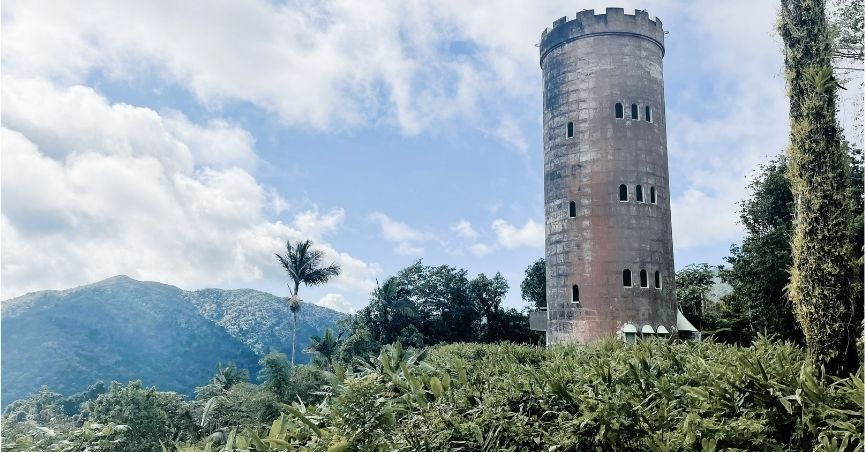
From there, head further into the park (750 meters) to reach the Yokahú Tower. Built in 1963 and standing 69 feet tall. The observation deck at the top offers sweeping views of the canopy, rolling mountains, and—on clear days—the Atlantic Ocean in the distance. According to the El Yunque website, four types of forest can be viewed from this tower: Colorado (smooth to the south), Tabonuco (irregular surrounding with white-leaved Yagrumos), Palm (on the steep slopes) and Cloud Forest (on the ridges).


Time for a Dip
Cool off at Juan Diego Creek, where crystal-clear pools invite you in for a refreshing dip. There is a short and accessible trail leading to Juan Diego Falls, a set of two-tiered waterfalls surrounded by ferns and moss-covered rocks. The lower falls are easy to reach, while the upper tier requires a bit of scrambling – but totally worth it!


Continuing on…
Next, you will come across the Sierra Palm Picnic Area, which has bathrooms, food options and picnic benches. Nearby is also the Palo Colorado Information Center, where you can pick up maps, check trail conditions, and learn about El Yunque’s unique ecosystem through displays on its flora, fauna, and history.
Keep going to Baño Grande, a stunning, man-made stone pool built in the 1930s by the Civilian Conservation Corps. Once used for recreation, this emerald-hued pool now serves as a historical landmark and scenic stop for visitors. Surrounded by dense ferns and moss-covered trees, it’s easy to imagine travellers from decades past cooling off here after exploring the trails. Though swimming is no longer allowed, Baño Grande remains one of the most picturesque spots in El Yunque.
Similar to Baño Grande, Baño de Oro is a former swimming hole that is now a popular spot for photo opportunities. Also built in the mid-1930s, it turned previously excavated pits (by Spanish gold seekers) into pools. Its name means ‘bath of gold’, because of the gold mining that occurred during the 16th century. (Currently, Baño de Oro is closed for construction/repairs.)


Now for the hikes!
- La Coca Trail – moderately challenging 4 km (one way) that is often slippery heading towards the Mameyes River. The reward? Quiet, jungle-draped scenery and the soothing sounds of running water — a great trail for those seeking a bit of solitude.
- El Yunque Trail – the park’s classic hike, climbing steadily through misty cloud forest to near the summit of El Yunque Peak. The 4.2 km route (one way) is moderately difficult. On clear days, the views stretch to the Atlantic Ocean and even as far as the Virgin Islands.
- Los Picachos Trail – Branching off from the El Yunque Trail, this short 0.3 km (one way) but steep spur leads to one of the park’s most spectacular viewpoints. The name “Los Picachos” refers to the rocky peaks that jut out above the forest canopy.
- Mt. Britton Trail – We did this one! Paved but steep 1.3 km (one-way) trail leads to the iconic Mount Britton Tower. The path passes through cloud forest, where mist and moss give everything a dreamlike quality. The reward at the top — sweeping views over El Yunque and the coastline.
- Mt. Britton Spur Trail – Connecting the Mt. Britton Trail with the El Yunque Trail, this short connector path is often used by those continuing their climb toward El Yunque Peak.
- Roca El Yunque Trail – A lesser-travelled extension near the El Yunque summit, this rugged trail leads to the rocky outcrop that gives the mountain its name. “Roca El Yunque” is said to resemble an anvil, and this is where early Taíno people believed the gods resided.
Currently Closed Trails
- La Mina Trail – Perhaps the park’s most famous trail, it descends through lush rainforest to the beautiful La Mina Falls. The 1.1 km (one way) route follows the La Mina River and was once a favourite for those wanting to cool off in the waterfall pool below.
- Big Tree Trail – One of the most accessible and family-friendly hikes, Big Tree Trail leads to La Mina Falls from a different direction. About 1.3 km (one way), the path is paved in sections and winds past giant trees, ferns, and wildflowers. It’s a wonderful introduction to El Yunque’s ecosystem.
- Tradewinds Trail – Located in the quieter southern section of the park, this offers a more remote hiking experience. The trail is 17 km long and ideal for serious hikers. You’ll pass through multiple forest zones, with far fewer crowds. It’s a great way to experience El Yunque’s vast ecological diversity.
- Caimitillo Trail – Short, shaded, and peaceful, Caimitillo is a 0.5 km loop near the Palo Colorado Information Center. It’s perfect for families or anyone wanting a taste of the rainforest, as it features interpretive signs explaining the native flora and fauna.


El Yunque is one of Puerto Rico’s true gems—a lush, living reminder of the island’s natural and cultural heritage. Whether you’re chasing waterfalls, hiking misty ridges, or simply soaking in the forest’s peaceful energy, a day in El Yunque offers a refreshing contrast to the island’s beaches and cities.
I hope you enjoy your day in El Yunque as much as we did.
Pin me for later






Leave a Reply