
Kyoto is considered the heart of traditional Japan. With over a thousand temples, quiet wooden streets, refined cuisine, and centuries-old rituals woven into daily life, it’s a city that rewards finding small moments under the hum of modern Japan – lantern-lit canals, incense drifting from temples, and the rhythm of seasons shaping everything from gardens to food.
Kyoto served as Japan’s imperial capital for more than 1,000 years, from 794 until 1868. Originally called Heian-kyō, the city was designed following Chinese geomantic principles and became the political, cultural, and spiritual center of the country. Because Kyoto was largely spared from bombing during World War II, many historic temples, shrines, and districts remain intact today. This preservation has allowed Kyoto to retain its deep connection to traditional arts, religion, and architecture, making it one of Japan’s most historically rich cities.

Kyoto at a glance
Best for: Temples, shrines, gardens, historic streets, cultural immersion
Ideal stay: 3–4 nights
Vibe: Traditional, serene, slightly touristy but manageable
Don’t miss: Fushimi Inari Taisha, Kiyomizu-dera, Arashiyama Bamboo Grove, Gion District
Skip if: You want urban nightlife — focus is historic and scenic
Good to know: Public transport is easy; early mornings are best to beat crowds.
How to Get There
- From Tokyo city:
- Shinkansen (Tokaido line) to Kyoto Station, ~2 hours 15 minutes direct.
- From Tokyo Narita Airport [NRT]:
- bus or train lines to the Shinkansen-Tokaido line ~3.5-4 hours
- From Tokyo Haneda Airport [HND]:
- Keikyu Airport Line – Shinkansen-Tokaido line ~ 2 hours 35 minutes
- From Osaka city:
- JR Special Rapid Service ~30minutes
- From Kansai Airport [KIX] (closest international airport):
- Haruka Express train ~75-90 min
- From Osaka Itami Airport [ITM] (mostly domestic):
- Airport Shuttle Bus ~ 50 minutes
- Osaka Monorail – Takarazuka Line – Hankyu-Kyoto Line ~ 1 hour
Likely, you will arrive at Kyoto Station. It is a large — but beautifully organized — station. Most sights are easy bus/metro rides – or walks – from here.
Itinerary at a Glance
1 – Eastern Kyoto (Higashiyama & Gion)
Temples, preserved streets, and classic Kyoto atmosphere.
2 – Southern Kyoto (Fushimi & Uji)
Torii gates, sake culture, and matcha country.
3 – Central Kyoto
Castles, markets, gardens, and modern craft.
4 – Western & Northern Kyoto
Bamboo groves, Zen temples, and iconic landmarks.
I don’t have 4 days – what should I prioritize?
Hot tip: have cash for Kyoto, many of the temples,other sights and smaller restaurants were cash-only
Detailed Itinerary for Kyoto
1: Higashiyama & Gion (Classic Kyoto)
Morning
- Kiyomizu-dera
- Start your morning here – and start early (06:30)- as it gets busy! One of Kyoto’s most famous temples, Kiyomizu-dera, sits dramatically on wooden stilts overlooking the city. The views are beautiful year-round, and the temple complex is large enough to feel immersive rather than crowded if you explore side paths. We were here in the fall, and the leaves were starting to change. It was particularly magical in the morning glow – and I would imagine it would be equally magical during golden hour.
- Sannenzaka & Ninenzaka Preserved Streets
- These preserved stone streets are lined with traditional burnt wood buildings housing shops, sweets, and teahouses. They’re touristy—but undeniably atmospheric—especially if this is your first historic encounter (other amazing options are in Kanazawa and/or Takayama). While quieter and more picturesque in early morning or near sunset, we found that shops are not necessarily open. So it might be a good idea to revisit this space later in the day.
- Kōdaiji Temple
- A refined Zen temple known for its landscaped gardens and seasonal illuminations. It’s calmer than nearby sights and a lovely place to slow down after the bustle of Higashiyama. There was also a small bamboo forest to wander through.
Afternoon
- Yasaka Shrine
- Open 24 hours and beautifully lit at night, Yasaka Shrine marks the gateway between Higashiyama and Gion. It’s a great evening stop when lanterns glow and crowds thin. Nearby in the park was a small food market, selling various street foods. Likely pricier as a busier tourist spot, but it smelled amazing and fun to try different foods.
- Shirakawa Canal
- A peaceful canal lined with willow trees and traditional buildings. This area feels especially magical at dusk and is one of the prettiest walking routes in Gion. We saw many people dressed in traditional kimonos. Even though they were not true Geisha, the colourful garments still added to the atmosphere.
Optional Add-Ons or Swaps
- Kyoto National Museum
- Kyoto Railway Museum
- Ginkaku-ji + Philosopher’s Path
- Enkō-ji (particularly amazing for autumn foliage)


2: Fushimi & Uji (Torii Gates, Sake & Tea)
Morning
- Mount Inari & Fushimi Inari Taisha Loop
- Walking through thousands of vermilion torii gates is one of Kyoto’s most iconic experiences. For us, this is a must-do in Kyoto. We didn’t experience anything like it anywhere else. The full loop takes you away from the crowds, but you still get the Torii Gates. It will take an hour or two, as you are walking up and around a mountain. Start early!
- Uji Matcha Shops & Roasting
- Uji is famous for some of Japan’s best matcha. Roasteries and tea shops let you sample everything from ceremonial matcha to matcha desserts. Some of the shops on the main street are original and hundreds of years old, which for us was enough of a reason to wander in. We arrived not being so sure of matcha, but left being pretty obsessed with all things matcha! Uji is a direct train away from Fushimi Inari in the Nara direction.
- Byōdō-in Temple
- While in Uji, also make sure to check out this UNESCO World Heritage Site and one of Japan’s most beautiful temples. The Phoenix Hall—featured on the ¥10 coin—reflects perfectly over its pond. There is a lovely museum attached to the temple grounds. Additional fees to enter the temple itself.
- Tea Ceremony
- Whether in Uji or Kyoto proper, a tea ceremony adds cultural depth to your visit. It’s a calm, intentional pause in an otherwise full day. Ceremonies we looked at attending:
Afternoon
- Gekkeikan Ōkura Sake Museum (optional)
- A well-curated introduction to sake brewing history and techniques, with tastings included. A great add-on if you want deeper context. We opted just to visit the Sake Village, but this museum has great reviews and a tasting. Both of the sake-related stops are also on a direct train line from Uji back towards Kyoto.
- Fushimi Sake Village
- Fushimi is one of Japan’s top sake-brewing districts thanks to its soft spring water. Small breweries, tasting rooms, and museums make this a fun and educational stop. We tried the 18-sake sampler and now have a very good idea of the types of sake we each like. I recommend ordering food and/or sharing this sampler – they are full tasters.
Optional Add-Ons or Swaps
Day trip to Nara (bowing deer and Tōdai-ji) – you could go all the way to Nara, then add Uji and/or Sake tasting on your way back. Or go Uji – Nara – Sake tasting – Kyoto.


3: Central Kyoto (Castles, Markets & Craft)
- Nijō Castle
- Once home to the Tokugawa shoguns, this castle is known for its “nightingale floors” that chirp underfoot. The interiors offer rare insight into feudal Japan. We also really enjoyed walking through the gardens.
- Kunjyukan Incense Museum
- A small but fascinating, free museum dedicated to Japanese incense culture. It’s interactive and sensory. The museum is next to an incense shop – I highly recommend stopping in there. Had I had room in my bag for souvenirs, I would have bought a lot more!
- Kyoto Imperial Palace & National Garden
- A complex with wide courtyards and traditional architecture. Entry is free, though check opening days/times. It offers a sense of Kyoto’s imperial past. Surrounding the Imperial Palace, this vast green space is surprisingly quiet. It’s ideal for a post-lunch stroll.
- House of KI NO BI Gin Distillery
- Kyoto-made gin using local botanicals and pure water. Tastings here are intimate and informative, even for non-gin enthusiasts. The space is very beautiful and upscale. Upstairs, there is a small museum on the gin-making process.
- Nishiki Market
- Kyoto’s kitchen stretches several blocks with street food, pickles, sweets, and seafood. Go hungry and sample as you wander. Note: It is best etiquette to eat near the stall you purchased from.
Optional Add-Ons or Swaps
- Kyoto National Museum
- Kyoto Railway Museum
- Ginkaku-ji + Philosopher’s Path
- Enkō-ji (particularly amazing for autumn foliage)


4: Arashiyama, Northern Kyoto & Zen Icons
Morning
- Arashiyama Bamboo Forest & Park
- The bamboo grove is famous for its ethereal and serene feel. But it is smaller than I expected and crowded. Definitely go early (before 9 AM). Two perks: it is free and does not have opening/closing hours, so you can go whenever. The surrounding park and river area are absolutely worth lingering in.
- Kimono Forest
- An art installation of illuminated pillars wrapped in kimono textiles. A quick but photogenic stop near the station.
- Giō-ji Temple
- A moss-covered temple tucked away from the main path. Quiet, atmospheric, and deeply serene. I loved this one!
- Adashino Nenbutsu-ji Temple
- Known for its thousands of stone statues commemorating the dead. It feels spiritual, a little eerie, and very memorable. It also has a small bamboo forest walkway – maybe save this one for the photos!
Afternoon
- Ryōan-ji
- A beautiful setting with a garden, a walking path around Kyōyōchi Pond and a small teahouse. The main attraction is the Zen Buddhist temple, best known for its karesansui (dry rock) garden, often called the most famous rock garden in Japan. I feel this one needs a little explanation:
- It’s a long rectangle of raked white gravel with 15 rocks arranged in five clusters. From any single viewing point, you can only see 14 rocks at a time—one is always hidden. This is often interpreted as a Zen lesson about perception, imperfection, or enlightenment (you’ll see the 15th rock only when you “change perspective”). Minimalist, contemplative, and best appreciated slowly.
- A beautiful setting with a garden, a walking path around Kyōyōchi Pond and a small teahouse. The main attraction is the Zen Buddhist temple, best known for its karesansui (dry rock) garden, often called the most famous rock garden in Japan. I feel this one needs a little explanation:
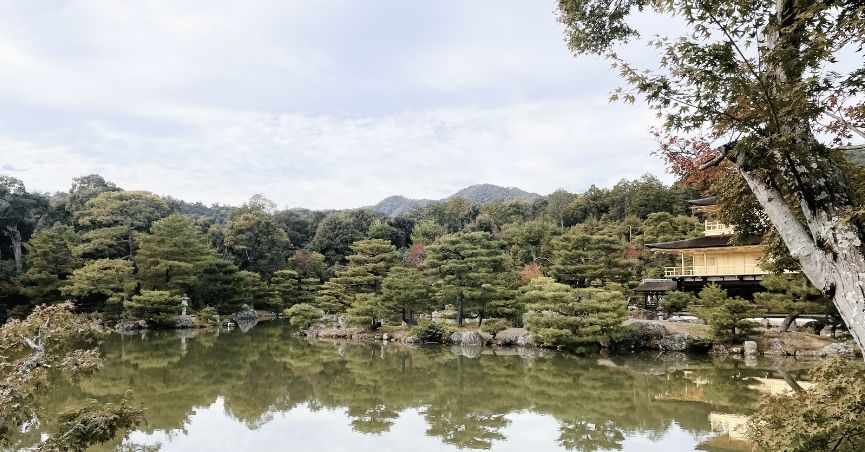
- Kinkaku-ji (Golden Pavilion)
- One of Kyoto’s most recognizable sights, covered in gold leaf and reflected in a tranquil pond. This sight is nearly always crowded. The path is a one-way walk offering purposeful framed viewpoints of the pavilion on the pond. It is undeniably stunning, either contrasted with red leaves, winter snow or alight in sunset glow. It is interesting to visit both Kinkaku-ji and Ryōan-ji on the same day, as they greatly contrast each other, zen minimalism and aristocratic excess.
Optional Add-Ons or Swaps
- Sagano Scenic Railway (Arashiyama views)
- Otagi Nenbutsu-ji (quirky statues)


I Don’t Have 4 Days for Kyoto!
If you don’t have 4 days in Kyoto, don’t worry. We actually felt like 4 was too much. We had already decided that even before we saw comparable sights in other places (Kanazawa and Takayama in particular).
I would prioritize visiting Mount Inari & Fushimi Inari Taisha Loop. Yes, it is time-consuming to walk the whole loop. But, for us, it was one of those things that was very much unique to Kyoto. The farther up the mountain we went, the fewer people we encountered. So if you are looking for some iconic photos, do the full loop. I also recommend reading this blog post explaining the temple and the Shinto religion.
The rest really depends on what you are interested in. I loved Giō-ji, Adashino Nenbutsu-ji and Kōdaiji Temples. These are definitely not the most commonly listed as “must-visit”, but maybe that’s why I like them more. Others might really want to do a Geisha tour or see the Bamboo Forest, and that is awesome. The point is to get the best out of your trip, for you.
Food in Kyoto
Of course, amidst those busy days, you also need to eat! There are so many options in the city, but these were our standout favourites!
- Breakfast Udon Express – one of the few ‘breakfast’ places we found. It was our first meal in Japan and set the bar very high for the rest. Small and authentic. Cash only.
- Gyukatsu Kyoto Katsugyu Teramachi Kyogoku – order the set meal, you grill your own meat and try the variety of sauces. It does get very busy, so you might have to wait, but super tasty and fun!
- Sukemasa – specializing in Gyoza – but specific to Kyoto flavours and ingredients. Also, a great place to try local side dishes and traditional vegetables. Also, small and had an opening line.
- Ike no Chaya – this one is a small, authentic, family-run restaurant across from Hirosawa Pond. We stopped here on our walk from the Arashiyama area to the Golden Pavilion (day 4).
Generally, we did not have breakfast, but were well fueled on coffee and then ready for lunch around 1130-1200. Which often meant we beat the big lunch crowd.
If you are curious about Japanese Food or looking for ideas on your trip, here is our Japanese Food Guide for Beginners & Visitors.
Final Thoughts
Four days in Kyoto is enough to see the icons—but also to slow down, wander side streets, and experience the quieter textures of the city. Grouping sights by neighbourhood keeps days manageable and leaves room for unexpected moments, which is where Kyoto really shines.
What surprised you the most in Kyoto? Which is your favourite temple? Let me know in the comments!
Pin this for later…


You might also want to read…





Leave a Reply