
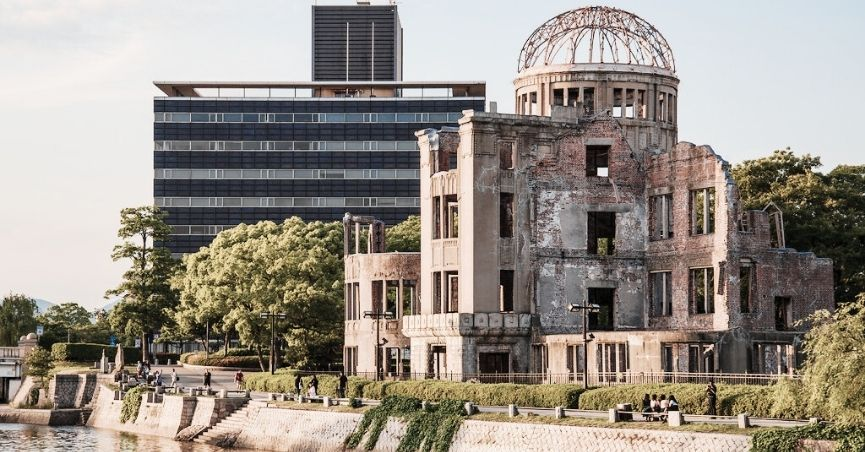
Hiroshima is an emotionally complex place to visit. Once a university, cultural, and military growing city, the Atomic Bombing in 1945 reshaped Hiroshima forever. Today, it has once again become a city that is full of life, cafés, university energy, and one of the most powerful peace museums. Hiroshima never hides from its past – but uses it as a reminder and message to the world.
Built on a delta of six rivers flowing into the Seto Inland Sea, Hiroshima developed as a “water city” with bridges, canals, and a relatively flat layout. Its a pretty cool place to walk around. We took the Shinkansen from Kyoto (awed at how fast it is) and checked into an Airbnb. We had one full day and a half day (arrival day). I think one more full day would have been good, but not sure about more than that. Here’s our itinerary and suggestions for Hiroshima!
Hiroshima at a glance
Best for: History, reflection, peace parks, local food
Ideal stay: 1–2 nights
Vibe: Serious, contemplative, modern city rebuilt with care
Don’t miss: Peace Memorial Park & Museum, Atomic Bomb Dome, Miyajima Island day trip
Skip if: You’re seeking nightlife or shopping-centered travel
Good to know: English signage is generally good; ferry to Miyajima takes ~45 minutes.
How to get there
From Kyoto/Osaka/Tokyo: Sanyo Shinkansen to Hiroshima Station (1h45 from Osaka / 4h from Tokyo).
The Hiroshima station is attached to a large shopping center. Head to the top floor for food-court-style variety, but with a full restaurant experience. We had some amazing ramen and mezesoba.
Itinerary for Hiroshima
Day 1 – Memorial
Hiroshima is likely on your list because of the Atomic Bomb. Personally, I think it is extremely important to visit sites that, while horrific and emotionally heavy, are instrumental in shaping the country.
Instead of fading away, Hiroshima rebuilt itself into a symbol of global peace. The Peace Memorial Park and Museum preserve the city’s history while honouring its message: “Never again.” Take your time in the museum, and be prepared for it to be busy. The museum houses real stories, recovered items and shares the dangers of and work against nuclear bombs. Again, it is heavy. When you are done, take some time to walk through the Park and Gardens. Note the colourful paper cranes at the Children’s Peace Monument – a symbol of peace with a meaningful story of a 12-year-old girl. Head toward the Bomb Dome, enjoy the beautiful park, river and modern developments beside the remnant of devastation.
You can go up to the top of Orizuru Tower for a different view of the Bomb Dome and Peace Park. Here, you can also fold your own crane, adding it to the Orizuru Wall. A similar monument shares thoughts and prayers from around the world.
Afterwards, consider walking through the covered shopping and food areas of Hondori. We stopped at Sumibi Harebare Craft Beer hall, then, as it was dinner time, sought out to try Okonomiyaki, Hiroshima style. We ate at Okonomiyaki Teppan-yaki Momiji-Tei. Google says it’s a manga-themed eatery, but really it’s just decorated with cool stuff. It gets busy and can have long waits. But it is so delicious and so fun to watch them make.
We don’t have many photos from this day. I feel quite strongly that places of significance and memorials (like this, or WW2 concentration camps, or the Killing Fields in Cambodia, for some examples) are not ones to casually snap photos. They are meant for you to be present and feel the weight of it.


Other bomb associated sites:
- Hypocenter Monument – The Hypocenter Monument marks the approximate point directly beneath where the atomic bomb detonated 600 meters above the city on August 6, 1945. Located near Shima Hospital, it is a quiet, easily missed plaque set into the street
- Miyuki Bridge – spans one of Hiroshima’s rivers and was one of the structures that survived the blast, though badly damaged. It became an early refuge point where injured survivors gathered in the chaotic hours after the bombing.
Day 2 – Miyajima Island
A day trip to Miyajima Island is on every blogger’s list of things to do in Hiroshima. We were a little skeptical of an obviously big tourist activity, but decided to do it anyway. We are so glad we did. So glad. We were both smiling and had that satisfied feeling of a really good travel day. So – don’t skip Miyajima. It will be busy, and parts are very touristy, but you can get away from the crowds, and it is worth it. I am going to write a separate post on Miyajima, but below are the highlights.
There are two options to catch the ferry to the island. First is at Hiroshima Port, which means only a short tram ride through the city to the Port. It leaves every hour at 25 after, taking about 30 minutes. It costs ¥4,400 ($38 CAD) round-trip. The other option is taking the train or tram from the city to Miyajimaguchi pier. From here, there are 2 ferry companies, each offering multiple trips per hour, with a 10-minute trip costing ¥400 ($3.50 CAD) round-trip. If you have an active JR West Pass, you can use the JR ferry for free. *You still have to pay the ¥100 tourist fee per person – this applies to every option.
Miyajima Highlights
- Itsukushima Shrine
- O-torii Gate
- Miyajima Ropeway & Walking Course
- Momijidani Park
- Daishoin Temple *highlight
- Aquarium
- History & Folklore Museum
- Daiganji Temple
- Traditional Crafts Centre
- Eat local seafood dishes!
- Enjoy the goofy deer – but watch your food!


Other things to do in Hiroshima:
- Shukkeien Garden is a beautifully landscaped Edo-period garden originally created in 1620. It was heavily damaged by the atomic bomb but later restored, and today its ponds, tea houses, and winding paths offer a peaceful contrast to the city’s tragic history.
- Hiroshima Castle – first built in the late 16th century- was destroyed by the atomic bomb and reconstructed in 1958. The current structure houses a museum focused on samurai culture and the history of Hiroshima as a castle town.
- Museum of Art – features a circular gallery design and an impressive collection of modern European and Japanese works. It provides a cultural counterbalance to the nearby Peace Memorial sites, highlighting the city’s creative and artistic resilience.
- Hondori Shopping Street – a lively covered arcade filled with shops, cafes, and restaurants. Rebuilt after the war, it represents the everyday vitality of modern Hiroshima and shows how the city has transformed into a thriving urban center.
Final Thoughts
A visit to Hiroshima offers perspective, understanding, and inspiration. Experience its museums, memorials, and spirited neighbourhoods—and support its enduring mission of peace by travelling with empathy and awareness.
If you’ve been — which part of Hiroshima moved you the most?
Pin this for later…

You might also want to read…





Leave a Reply