
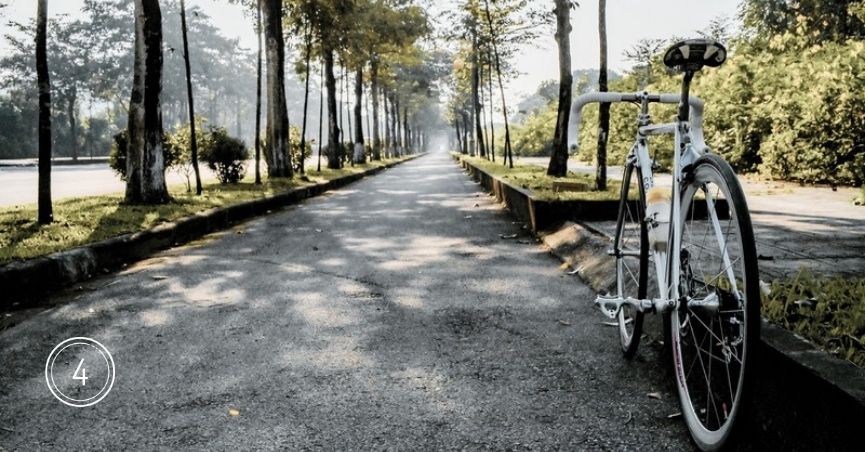
For new cyclists, the hardest part isn’t necessarily always fitness — it can also be feeling safe and confident on the ride. The good news? Thoughtful route planning can dramatically reduce stress and make riding feel enjoyable instead of intimidating.
Now the bulk of my experience comes from riding in the Fraser Valley of BC (southeast of Vancouver). We have some biking infrastructure, but it is still being developed, so it’s not always consistent, which was quite nerve wracking for me at the start. Would there be traffic? How big was the shoulder? It took me some time to be comfortable riding on the road and taking the lane, but I got there!
This post shares nine tips for route planning and building with beginners in mind.
1. Start With Separation From Cars
When confidence is low, physical separation can be your best friend. This may or may not be entirely feasible where you live, but it doesn’t hurt to try and find some routes.
Look for:
- Multi-use paths
- Bike-only paths or greenways
- Protected bike lanes (with barriers)
- Seawalls, river paths, rail trails
These routes let you focus on pedaling, shifting, and breathing — not traffic.
Two routes in the Vancouver area:
- Seymour Demonstration Forest – a 20 km out-and-back designated bike path that winds through the forest. It’s super beautiful and peaceful with gentle rolling hills.
- Central Valley Greenway – a 45 km loop through parts of Vancouver, Burnaby and New Westminster. It is 32 km of cycleway, 5 km of ‘quiet road’ and 5 km of ‘road. There is a 3.5 km gravel section, but it is flat and well-maintained.’
A few things to be conscious of even on separated paths:
- On multi-use paths, pedestrians might not expect a bike, especially one behind them. It might be beneficial to have a bell and generally anticipate that it will be you giving right of way.
- Some separated bike lanes just end and shoot you onto the road with traffic anyway. Hopefully, this will change as bike infrastructure increases. You could take the sidewalk if needed.
Tip: Early morning rides often feel safer and calmer, even on shared roads.

2. Use Cycling-Specific Route Tools (Not Google Maps Alone)
Google Maps isn’t terrible, but it’s not designed for cyclists.
Better beginner tools:
- Strava Route Builder – shows popular cycling routes (heatmaps)
- Komoot – excellent for filtering by surface, elevation, and bike type
- Ride with GPS – very detailed and customizable
- Garmin Connect – good if you already use a Garmin device
Why this matters:
Popular cycling routes usually mean safer, calmer roads that other riders trust. You can also plan routes that are realistic in length and elevation.
3. Learn to Read the Heatmap
Heatmaps show where cyclists actually ride — and more importantly, avoid. Strava has a heatmap. We used this for planning our route in Croatia.
What to look for:
- Thick, bright lines = commonly ridden
- Sparse or no data = roads cyclists tend to avoid
- Loops near parks, rivers, or suburbs = beginner-friendly gold
If hundreds of cyclists ride there every week, it’s usually not a terrifying road.

4. Watch the Elevation
Steep climbs can increase stress. Combine that with traffic – my nightmare.
A good beginner rule:
- Avoid routes with long or steep climbs early on
- Choose flatter routes until your gearing and cadence feel natural
- If you do use Google Maps, do not trust it when it says “mostly flat.” This is an average – look at the entire elevation profile.
Most route planners show elevation profiles — read them, don’t just glance at the spikes in the line. For example, the 2 ride profiles below have similar spikes, which, upon glancing, would make you think lots of ups and downs with lots of elevation gain. However, one has a total gain of 154 m (rolling hills), whereas the other has a total gain of 1875 m (climbs).
Confidence grows faster on flatter rides.


5. Choose “Bailout” Routes
When starting, plan routes with:
- Multiple turn-off and shortening options
- Cafés, parks, or transit nearby
- Short loops instead of long out-and-backs
Knowing you can stop or shorten the ride lowers anxiety — even if you don’t use the option.
6. Do a “Scout Ride”
If a route feels intimidating:
- Drive it first
- Walk a short section
- Ride it once during very quiet hours
Once your brain recognizes the route as familiar, fear drops significantly.
7. Build a Personal “Safe Route Library”
As you ride more and more you can build up your go-to or safe routes, which might include:
- Favourite calm roads
- Good bike paths
- Safe connectors between neighborhoods
You’ll slowly stitch these together into longer, more adventurous rides — without ever feeling thrown into traffic chaos. Another nice thing about riding the same route over and over – you can track improvements, such as your speed or power. Plus, if you are motivated by achievements, Strava offers a ‘local legend’ title for frequently ridden segments and personal best tracking/comparison on routes.
8. Ride with Someone (at first)
If possible:
- Ride with a partner or friend
- Join a beginner or women’s cycling group
- Follow an experienced rider’s wheel
Confidence is contagious.
So is route knowledge. I still rely on Mark to be the route architect and navigator.


9. Get a Phone Mount
While you don’t necessarily want to be distracted while riding, if you are riding in a new area or are navigationally challenged (me!), then having a map is helpful. Just remember to keepyour eyes on the road. If you really need to check the map closely, consider stopping on the side.
Some cycling computers allow you to upload rides directly to them and will alert your directions. But this assumes you purchased a cycling computer, which was on my list of ‘nice to have in the future’ items.
10. Accept that some Nerves are Normal
Feeling nervous on the road doesn’t mean you’re “bad at cycling” — it means you’re human. When we started commuting home on our bikes, I was adamant in my stance of avoiding highways due to fear, even though it was a more direct route.
Fear usually fades as:
- Your handling improves
- You are comfortable doing shoulder checks on the bike
- Your speed becomes more predictable
- You understand where cars expect cyclists to be
You don’t need to be fearless — just willing to build confidence one ride at a time. Turns out, highway riding is not bad. Personally, I find it a little safer as there are fewer intersections, no parked cars pulling out, and they generally have wider shoulders. But it took me nearly 2 years to feel that way!
Simple Beginner Route Planning Formula
For your first few weeks, months, or more of riding, aim for:
- 60–80% separated paths or quiet roads
- Flat to rolling terrain
- One café or rest stop
- A route you can shorten if needed
That’s it.
What’s the scariest part of route planning for you — traffic, hills, getting lost, or something else? Share in the comments, and I’ll help you problem-solve it.
Pin Me for later

Other posts in the Beginner Cycling Series:

From Running Shoes to Pedals: How I Fell in Love with Cycling

Cycling Gear 101: What You Actually Need (and What You Don’t)

Understanding your Road Bike Gears & Cadence

Fueling on the Bike & Avoiding Bonking

8 Tips for Building Mental Toughness on the Bike

Beginner Bike Maintenance: Pre-Ride Checks
Other Cycling posts:





Leave a Reply